


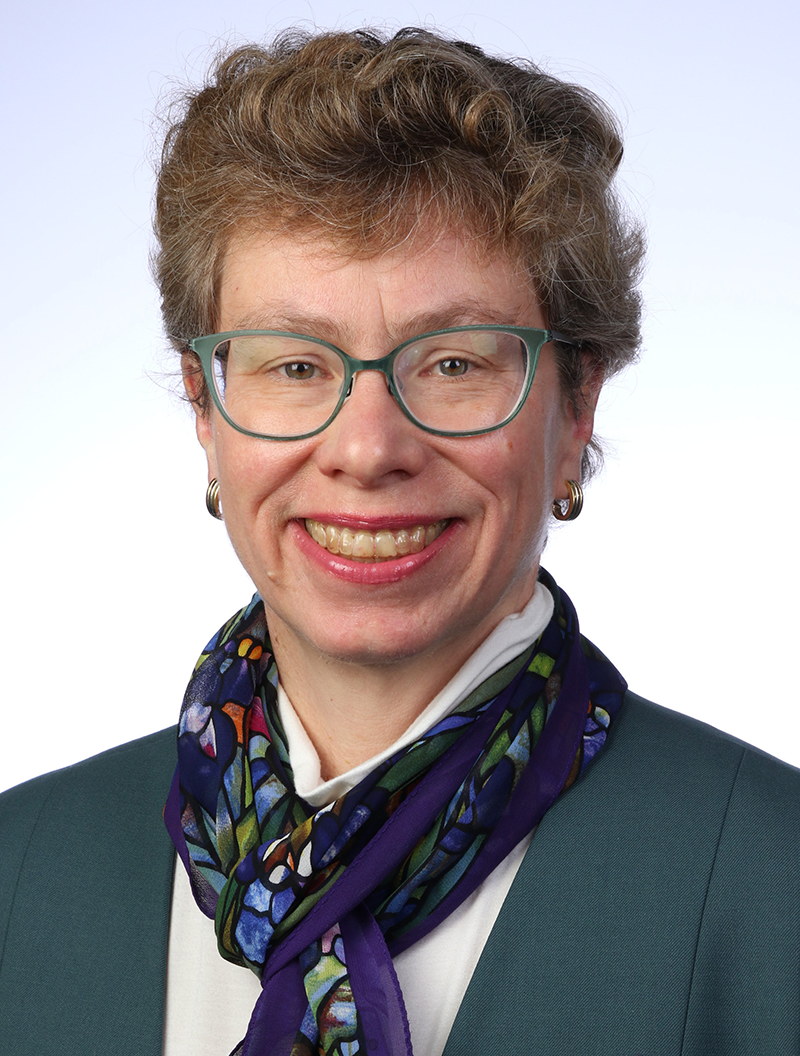
In this episode, we sit down with Jennifer R. Brown, MD, PhD, Dana-Farber Cancer Institute, Boston, MA, to unpack the AMPLIFY trial that is reshaping chronic lymphocytic leukemia (CLL) treatment. She explains how this new oral combination isn’t just effective but patient-friendly, cutting down on complexity and paving the way for more accessible care. Tune in to hear how this breakthrough is setting the stage for the future of CLL therapy.
Transcript
Welcome to Cancer, Clearly, a podcast about the cancer experience told from every angle. From patients and survivors to clinicians, navigators, researchers, and advocates, this series explores how lived experience and professional expertise come together in the cancer space. Whether cancer has touched your life personally, professionally, or somewhere in between, we're glad you're here.
I'm your host, Hina Mehreen, and in today's episode, we are joined by Dr. Jennifer Brown, Director of the CLL Center and Institute Physician at Dana-Farber Cancer Institute and the Worthington and Margaret Collette Professor of Medicine at Harvard Medical School. She was also lead investigator in the AMPLIFY trial.
Dr. Brown, it’s an honor to have you on our podcast. For listeners who may not live and breathe clinical trial data every day, what's the biggest takeaway from the results of the AMPLIFY trial that you think the oncology community, including patients, should understand?
The AMPLIFY trial was the clinical trial that's led to the approval of acalabrutinib and venetoclax by the FDA. And like most trials that lead to registration for new medicines, this was a randomized trial where people with similar disease situations are randomly assigned to different treatment arms, and then the outcomes are compared.
So in AMPLIFY, the treatment arms included the acalabrutinib-venetoclax combination (which was recently approved), acalabrutinib and venetoclax with an additional drug called obinutuzumab, and then the control arm was chemoimmunotherapy, FCR or BR. And the results showed that the acalabrutinib-venetoclax, with or without the obinutuzumab, significantly improved what we call progression-free survival, the duration of time that the disease stays away and the people are alive and well, by about 10% for the acalabrutinib and venetoclax compared with the chemoimmunotherapy.
How do the side effects of the new combination compare with what we see with other treatments?
What was most striking to me and AMPLIFY about the acalabrutinib and venetoclax combination was really how well tolerated it was, particularly from an infection standpoint.
This trial was done at the height of the COVID pandemic, and it was still well tolerated in this treatment arm for infections. We normally see in most of our frontline trials that maybe 20% to 25% of people have a significant infection during the treatment, but that was only 10% or 12% with the acalabrutinib and venetoclax. So it was really much better, which makes this regimen something that can be applied to people who are much older, people with comorbidities… really, it's a safe regimen for any CLL patient.
How might this approval change the conversation you're having with someone newly diagnosed with CLL?
CLL is a little bit unique compared to many cancers in that people who are newly diagnosed, we usually don't have to treat. So our conversation with a newly diagnosed patient is usually about the fact that CLL really can be like a chronic disease that we observe people for certainly at the time until they meet criteria for needing treatment. Then they get treated. They're in remission for a long time. Eventually they may come out of remission and then they get treated again. And so it's this sort of serial process of treatment over time.
But that often means that people who have been diagnosed years ago have gotten used to not needing treatment. And so then when it's time to start talking about treatment, that becomes a very involved conversation. And so this new approval actually alters that conversation quite a bit. And in the sense that prior to the approval, we had the continuous BTK inhibitors, like acalabrutinib given indefinitely, as 1 treatment option. We had venetoclax with the antibody obinutuzumab for 12 months as another main treatment option. And those were the 2 main treatment options.
So, this is a whole third category, which is 2 oral drugs, the BTK inhibitor acalabrutinib plus the BCL-2 inhibitor venetoclax. And then that has the advantage of being entirely oral, but also time-limited, 14 months. The venetoclax-obinutuzumab is a lot of work for patients to start because they have to come to clinic more or less every week for a full day to a day and a half for eight weeks. Whereas with this new regimen, they start the acalabrutinib by itself, which is very, very easy and doesn't require many visits at all.
And then 2 months later, they do start the venetoclax, which does require some weekly visits. But by the time they start it, it's easier because the disease has already been brought under control by the acalabrutinib.
Do you feel personally that this will have a positive impact on treatment adherence among patients?
That's interesting. I think that treatment adherence is pretty good with these drugs because they're pretty well tolerated. And then I think the fact that people can come off them and they know they're going to come off in 14 months also helps with treatment adherence. So in that sense, yes.
For example, with the continuous BTK inhibitors, people may forget that they're going to be on it forever. And so after a year or two, they're sort of like, “Well, when do I get to stop this?” And they might lose a bit of interest… and so that might not help so much with adherence, right?
Whereas this, they know I do it for this length of time and then I get to stop. That, I think, does encourage adherence. And then the fact that the drugs are pretty well tolerated too.
What should community oncology care teams be thinking about as they consider incorporating this regimen into practice?
So, it is important to remember that with the venetoclax, it's still necessary to do the laboratory monitoring during the escalation of the dose, which takes place over 5 weeks in that third month of treatment. This is to check for any sign of tumor lysis, which is much less likely when people start the acalabrutinib a couple months ahead, but it can still happen. So it's still important to check those labs and to plan for that as part of the treatment regimen and also to warn the patients about it.
Venetoclax management also, sometimes patients will have low neutrophil counts occasionally, and that can usually be dealt with pretty readily with growth factor shots. And we tend not to hold the drug as long as the counts come up with the growth factor shots. And then it usually doesn't come back.
It may happen just a couple times during treatment and it's easily managed and you don't really have to change anything. So don't jump to treatment modifications based on these occasional findings.
As someone who has been deeply involved in advancing CLL research, what are the next questions you and your colleagues are hoping to answer?
I think one of the biggest ones is which patients should get which treatment. Right now, we often choose just based on patient preference, which is, of course, very important. But patients always ask, which is the best treatment for me, specifically?
And we do have a lot of prognostic factors that we understand in CLL that describe how the disease will behave over time. But we don't always have the best information about which of these various treatment options is the best one for a given set of prognostic factors.
And so that's something that I think we'll be continuing to delve into with longer follow-up with AMPLIFY as well as some other trials and try to get a better understanding of that. And then there's still the question of, can we use these treatments to get more toward cure?
So, for example, when we added the obinutuzumab and AMPLIFY to the acalabrutinib and venetoclax, we did get deeper remissions, but this was associated with some more infectious toxicity. And so can we rearrange the drugs or figure out how best to use them to get these deep remissions and sustain them even longer over time, which may also involve some type of consolidation after the initial therapy, which there are some novel treatments coming out now that utilize the immune system to help eradicate the last residual CLL cells. And that might be a way that we can get to cure in the coming years.
That is brilliant to hear. And thank you so much, Dr. Brown, for sharing all of this enlightening information about the AMPLIFY trial, the findings from the trial, and what this means for the CLL treatment landscape as a whole. It’s truly been a pleasure.
Thank you so much for inviting me to participate in this Cancer, Clearly podcast. I'm honored to be one of your first few guests and happy to talk about our recent latest approval in the CLL space. So thank you.
You’ve been listening to Cancer, Clearly. Our hope is that each episode leaves you better informed, more connected, and reminded that clarity is always within your reach. If this episode resonated with you, be sure to subscribe and share it with a colleague, a family member, or a friend. Thank you for showing up, for listening with care, and for being a part of this community.
This has been Cancer, Clearly.