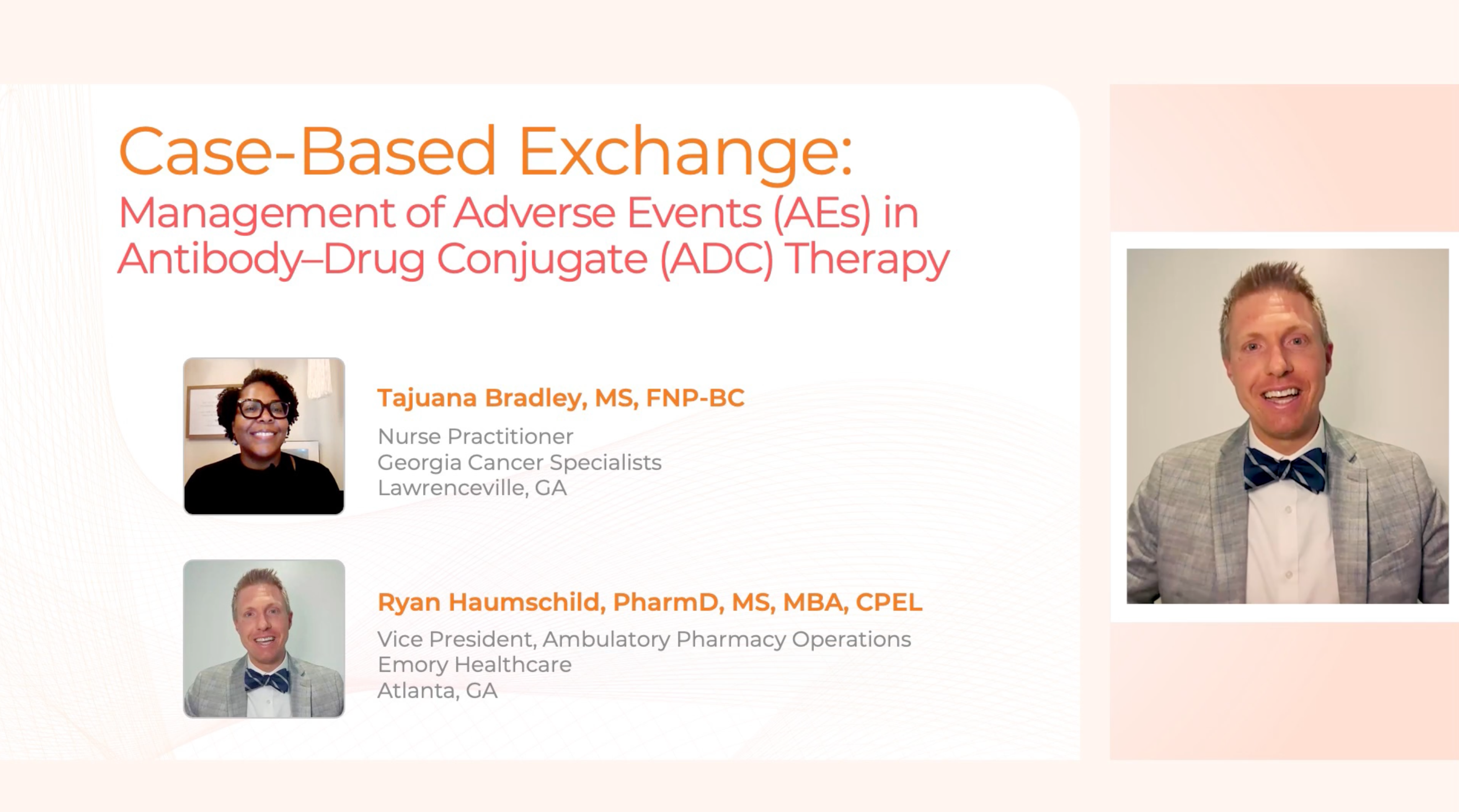
Ryan Haumschild, PharmD, MS, MBA, CPEL
Antibody–drug conjugates (ADCs) have emerged as a cornerstone of targeted cancer therapy, blending monoclonal antibodies with cytotoxic agents to achieve selective destruction of malignant cells.1 This innovative approach reduces off-target toxicity and enhances therapeutic precision.2 However, ADC therapy is accompanied by a spectrum of adverse events (AEs) that must be meticulously managed to ensure optimal patient outcomes and adherence to treatment protocols. Pharmacists hold a pivotal role in addressing these challenges, leveraging their clinical expertise to anticipate, identify, and mitigate AEs as part of a collaborative healthcare team.
The unique mechanism of ADC therapy, while advantageous, is inherently linked to its AE profile. The antibody component confers specificity to tumor antigens, yet the cytotoxic payload can adversely affect normal tissues, resulting in both common and severe toxicities.3,4 Frequently observed AEs include nausea, diarrhea, fatigue, and neutropenia, while rarer complications, such as interstitial lung disease (ILD), demand immediate intervention due to their potential severity.5,6 Pharmacists, as medication management specialists, are uniquely equipped to navigate these complexities, from proactive risk management to real-time therapeutic adjustments.
Ryan Haumschild, PharmD, MS, MBA, CPEL, Vice President of Ambulatory Pharmacy at Emory Healthcare and the Winship Cancer Institute, underscores the necessity of early recognition in AE management. He states that when AEs are identified at the earliest stage, it can open doors to preemptive interventions that can preserve the continuity of treatment and maximize treatment adherence. These interventions may involve dose adjustments or supportive measures. In either case, pharmacists play a critical role in ensuring patients remain on therapy while avoiding unnecessary interruptions, emphasizing the pharmacist’s integral role in proactively safeguarding therapeutic efficacy for patients utilizing ADC therapy.
Pharmacists’ contributions begin before the initiation of ADC therapy, where patient education serves as a cornerstone of AE prevention and management. By providing detailed counseling, pharmacists prepare patients to recognize symptoms promptly and understand the significance of reporting them. Dr Haumschild highlights the importance of patient education by stating that patients benefit immensely when they understand not only the clinical and safety data but also how the data relate to their individual goals of care. He further adds that ensuring patient understanding builds a critical foundation that fosters better engagement by ensuring the patient is an active participant in their treatment journey, allows them to recognize common and serious AEs more rapidly, and equips them to navigate the challenges of therapy more effectively.
Once treatment commences, pharmacists transition to rigorous monitoring, relying on both laboratory findings and patient-reported outcomes to detect emerging toxicities throughout the patient’s treatment journey. Routine hematologic and biochemical assessments such as complete blood counts are critical tools for identifying trends indicative of treatment-related toxicities.7 Dr Haumschild utilizes laboratory data to provide an invaluable window into the patient’s physiological response and potential toxicities to therapy. For example, early observed signs of neutropenia may allow for timely corrective action, whether through dose modification or growth factor support. Pharmacists use laboratory information to craft interventions tailored to the specific needs of each patient.
Neutropenia, a common toxicity associated with ADCs, presents significant risks, including heightened susceptibility to infection and exacerbation of fatigue.8 Pharmacists collaborate with other healthcare providers to mitigate neutropenia by employing strategies such as dose reduction, the administration of granulocyte colony-stimulating factors, or prophylactic antibiotics.8,9 Timely intervention by pharmacists is crucial in the management of neutropenia and other toxicities. Dr Haumschild believes that rather than adhering to a rigid schedule of visits, additional monitoring at critical junctures can help with preemptive identification and treatment of AEs.
Fatigue, another frequently encountered AE, necessitates a multifaceted approach to management. Pharmacists advise patients on practical measures to conserve energy, including structured rest periods, light physical activity, and delegation of daily tasks. Pharmacists may also make medication adjustments to both cancer-related and non-cancer medications to reduce the cumulative amount of fatigue the patient faces. Dr Haumschild often sees how fatigue can have profound implications for the quality of life of the patient. He highlights that the goal of pharmacists is to ensure that patients can maintain their normal routines without feeling overwhelmed by the symptoms related to their treatment. These factors are key to supporting adherence but also promote overall well-being.
Gastrointestinal toxicities, such as nausea and diarrhea, are similarly prevalent in ADC therapy and require careful attention.7 Pharmacists often prescribe antiemetics to prevent nausea and antidiarrheal agents such as loperamide to address these toxicities. Lifestyle changes such as dietary modifications may be recommended by the pharmacist to minimize discomfort. For nausea, Dr Haumschild states that the management of nausea should be anticipatory rather than reactive, and further adds that by providing patients with tools to address nausea before it escalates, pharmacists can reduce the likelihood of disruptions to the patient’s treatment regimen. He also comments on managing diarrhea, stating it is paramount to address diarrhea early to prevent patient adherence issues. Dietary counseling frequently includes recommendations for smaller, more frequent meals and avoidance of foods that may exacerbate symptoms.
Rare but severe toxicities, such as ILD, necessitate heightened vigilance and interdisciplinary coordination. Pharmacists play an essential role in educating patients about respiratory symptoms that may signal ILD, including persistent cough and dyspnea, and ensuring that diagnostic evaluations, such as chest imaging, are conducted promptly.4 Dr Haumschild recognizes ILD as one of the most serious complications associated with ADC therapy. He further iterates that the early detection and management of ILD require a concerted effort from the healthcare team, and pharmacists are instrumental in facilitating this process through patient education and collaboration with other healthcare team members such as pulmonologists.
In addition to addressing the physiological aspects of AEs, pharmacists provide psychological and emotional support to patients navigating the challenges of ADC therapy. Dr Haumschild recognizes that patients may be reluctant to report symptoms out of concern that their therapy will be discontinued. His role as a pharmacist is to reassure patients that symptom reporting is not a barrier to treatment but rather a pathway to optimizing care. By fostering trust, pharmacists empower patients to remain engaged with their healthcare team and report symptoms of AEs, whether serious or minute.
Documentation is another critical function performed by pharmacists, ensuring that AEs are comprehensively recorded and communicated across the multidisciplinary care team. Dr Haumschild describes documentation as a modality for allowing a longitudinal perspective on the patient’s treatment journey, enabling the care team to make informed decisions that are responsive to the patient’s evolving needs. By maintaining detailed records, pharmacists contribute to the continuity and personalization of care.
In conclusion, the management of AEs in patients receiving ADC is a sophisticated process requiring proactive intervention and interdisciplinary collaboration. Pharmacists occupy a central role in this paradigm, employing their pharmacologic expertise to monitor, educate, and support patients throughout the treatment lifecycle. Dr Haumschild encapsulates the pharmacist’s contribution as extending far beyond dispensing medications; the role of the pharmacist encompasses comprehensive management of AEs, patient advocacy, and the integration of evidence-based strategies to enhance therapeutic outcomes. As the field of oncology continues to evolve, the role of pharmacists will remain indispensable in addressing the complexities of ADC therapy and advancing patient care.
References
- Fu Z, Li S, Han S, et al. Antibody drug conjugate: the “biological missile” for targeted cancer therapy. Signal Transduct Target Ther. 2022;7:93.
- Akram F, Ali AM, Akhtar MT, et al. The journey of antibody-drug conjugates for revolutionizing cancer therapy: a review. Bioorg Med Chem. 2025;117:118010.
- Aggarwal D, Yang J, Salam MA, et al. Antibody-drug conjugates: the paradigm shifts in the targeted cancer therapy. Front Immunol. 2023;14:1203073.
- Zhu JY, Jiang RY, Zhang HP, et al. Advancements in research and clinical management of interstitial lung injury associated with ADC drugs administration in breast cancer. Discov Oncol. 2024;15:843.
- Markides DM, Hita AG, Merlin J, et al. Antibody-drug conjugates: the toxicities and adverse effects that emergency physicians must know. Ann Emerg Med. 2025;85:214-229.
- Virginia Cancer Institute. Neutropenia. Accessed June 3, 2025. www.vacancer.com/diagnosis-and-treatment/side-effects-of-cancer/neutropenia/
- D’Arienzo A, Verrazzo A, Pagliuca M, et al. Toxicity profile of antibody-drug conjugates in breast cancer: practical considerations. EClinicalMedicine. 2023;62:102113.
- WebMD. Neutropenia: causes, symptoms, treatment. Accessed June 3, 2025. www.webmd.com/a-to-z-guides/neutropenia-causes-symptoms-treatment
- Kang S, Kim S-B. Toxicities and management strategies of emerging antibody–drug conjugates in breast cancer. Ther Adv Med Oncol. 2025 Mar 24:17:17588359251324889.