

The economic burden of cancer care in the United States is significant. According to the National Cancer Institute's Annual Report to the Nation on the Status of Cancer, the economic cost associated with cancer care in the United States in 2019 was $21.09 billion.1 A portion of this burden ($4.87 billion) was patients' time costs associated with traveling to and from appointments, receiving care, and spending time in the hospital.1
Receiving cancer-directed therapy in the ambulatory care setting allows patients and their families to spend more time at home. However, many chemotherapy regimens have traditionally required the patient to be in the inpatient setting because of the complexity of the associated supportive care.2 One potential component of the supportive care regimen is extended-infusion intravenous (IV) fluids. These fluids are required for various purposes, including to diminish renal adverse events resulting from the chemotherapy by providing the patient with large amounts of hydration that they would not be able to administer enterally, to provide medications that protect the body against toxic metabolites of chemotherapy (eg, the administration of mesna to protect against the cyclophosphamide or ifosfamide metabolite acrolein, which can damage the bladder), to achieve urinary alkalization and promote timely excretion of methotrexate, and to replace electrolytes that are excreted at higher rates because of the current chemotherapy regimen.
A proportion of these postchemotherapy extended IV fluid infusions can be administered within the home, with the aid of a small, portable IV pump, because of a home hydration (HH) workflow that has been implemented in the clinic. The pump, which is approximately the size of a cellphone, delivers fluids through a central line. The whole hydration system (including the fluid bags) can be carried in a backpack, aiding the patient's mobility. Previous studies have examined the impact of home IV hydration programs for children with cancer, although not in the setting of a large, tertiary ambulatory care center.3
Methods
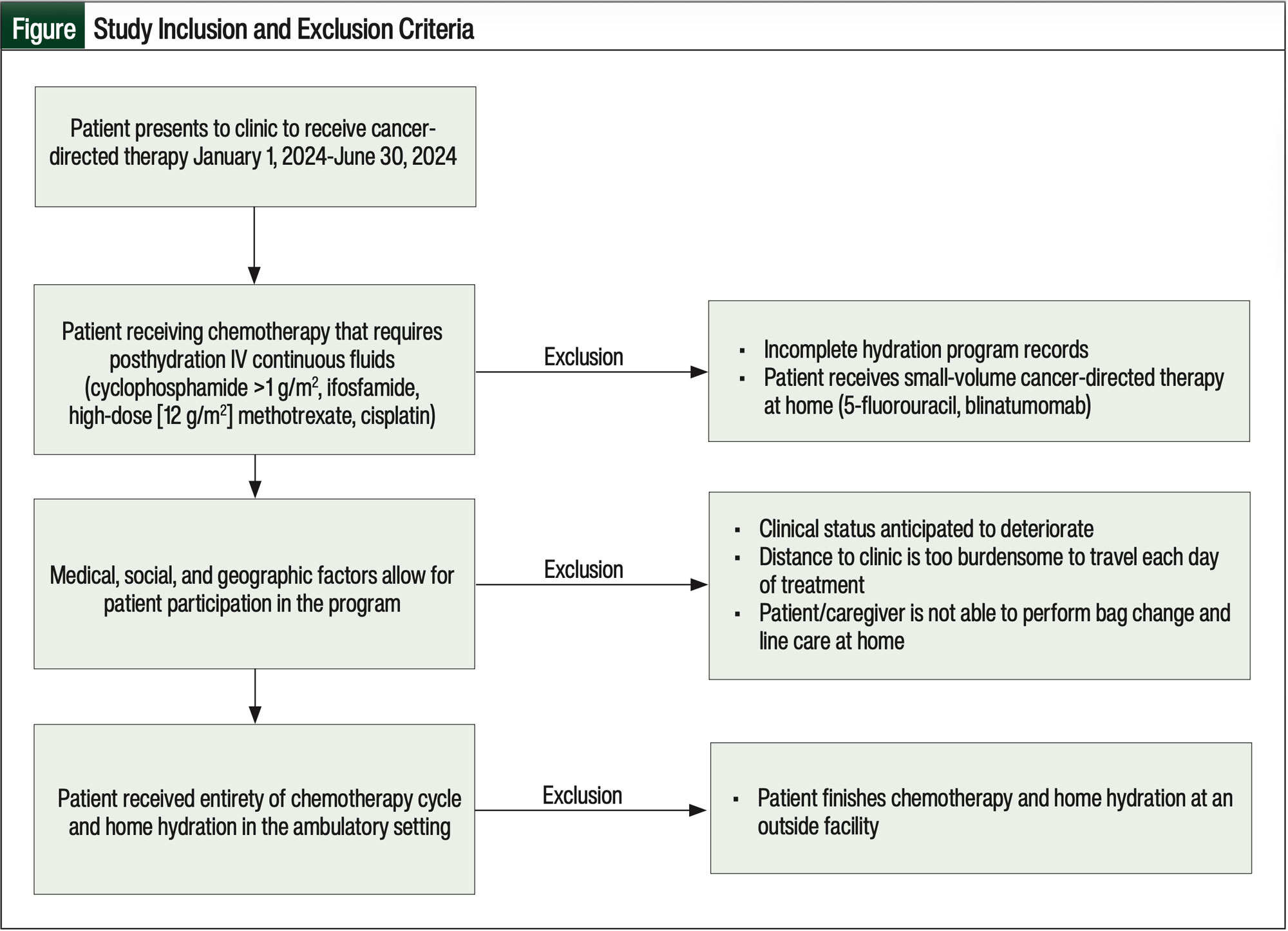
After institutional review board approval, patients receiving HH were identified, and infusion-related characteristics were retrospectively evaluated for patients participating in the program during a 6-month period from January 1, 2024, to June 30, 2024, at a pediatric oncology ambulatory clinic. The presence of infusion HH pump rental paperwork triggered an electronic medical record review. The study included all patients treated in the ambulatory oncology clinic who received the entire course of their cancer-directed therapy and corresponding HH in the outpatient setting. Patients were excluded if they received their cancer-directed therapy outside of the ambulatory clinic or if investigators were unable to account for all HH preparations. Patients using a portable pump at home for the delivery of anticancer treatment, such as 5-fluorouracil or blinatumomab, rather than supportive care IV fluids were also excluded.
The HH program was started in approximately 2011 with the goal of delivering more care in the ambulatory setting. At the discretion of the care team, and after discussion with the family, patients receiving certain cancer-directed therapy regimens were selected to participate in the program (Figure). After review of laboratory values and a physical examination, the providers composed the chemotherapy order and corresponding HH. The pharmacy team then compounded the preparations in a laminar (vertical flow) hood. A discrete subset of preparations was compounded at an outside facility and was delivered to the clinic.
The first bag in the hydration sequence was spiked, with the tubing attached, and the HH pump was programmed by a pharmacist (and subsequently double-checked by a second pharmacist) with the rate of infusion (in mL/hour) and total volume (in mL) to be infused over the next 24 hours. The patient also received a backpack to hold the fluids, a line clamp, an extra set of batteries, instructions on how to troubleshoot common errors that occur with the pump, and a sheet instructing the family when to change the bags. Nursing staff performed this education as well as hooked up the patient to the pump.
On subsequent days, the patient presented to the clinic and delivered their hydration pump to an infusion nurse to be sterilized. The pump would then be given to the pharmacy staff to reprogram the pump, connect the first bag of fluids for the next 24 hours, and package the pump with all of the corresponding compounded fluid bags into the patient's backpack. A new bag change instruction sheet was also provided. This process was repeated until the patient no longer required fluids for the current treatment cycle according to the assigned protocol. If the patient's pump malfunctioned during a period when the clinic was not open and they were not able to troubleshoot on their own, they were instructed to present to the emergency department.
Connecting Science to Practice
The purpose of this study was to quantify the impact on patients who participated in the pediatric oncology clinic home hydration (HH) program. The HH ultimately prevented 40 patients from spending 357 nights in the hospital over the 6-month study period. This retrospective study demonstrates the benefit that an HH program can have through saving patients and their families time in the hospital. Increased adoption of programs such as this may help to improve patients' quality of life and ease the burden associated with the national decrease in inpatient pediatric beds.
Once eligible patients were identified, the investigators collected the data related to the patient's demographics (age, sex, diagnosis, body surface area), HH preparation and administration (dose, drug, infusion duration, diluent type), and dates of administration, when applicable. The primary objective of this review was to quantify how many patients participated in the HH program during the study period. The secondary objectives included examining what disease groups and patient populations participated most in the HH program, determining the volume and type of fluids dispensed, and estimating the time and financial impact the program had on the local healthcare system. The primary metric used to estimate this impact was hospital days prevented. This was calculated by measuring each 24-hour period that the patient received fluids at home, beginning with the first day they received cancer-directed therapy in clinic. Descriptive statistics were used to analyze the data.
Results
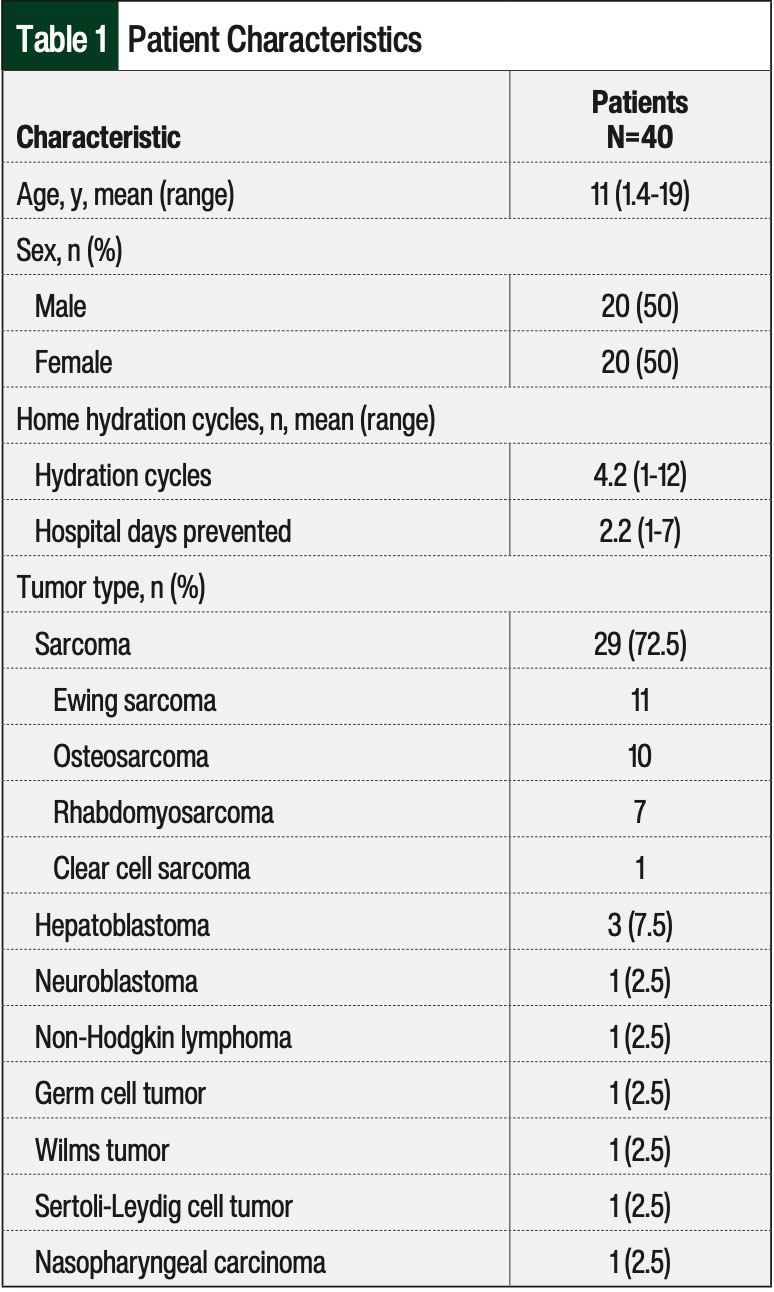
During the study period, 40 unique patients were identified who participated in the HH program. In total, there were 167 new HH starts, because many patients participated in the program multiple times (range, 1-12 times). The mean age of a patient receiving HH was 11 years (range, 17 months-19 years), and 50% of the patients were male (Table 1). The most common diagnosis of the patients receiving HH was Ewing sarcoma, followed by osteosarcoma and rhabdomyosarcoma (Table 1). The most common reason for requiring HH was for the delivery of mesna and post-mesna fluids to prevent damage associated with the toxic metabolites of cyclophosphamide and ifosfamide (n=111). In all, 34 HH patients received fluids to achieve urinary alkalization and promote the timely excretion of methotrexate.
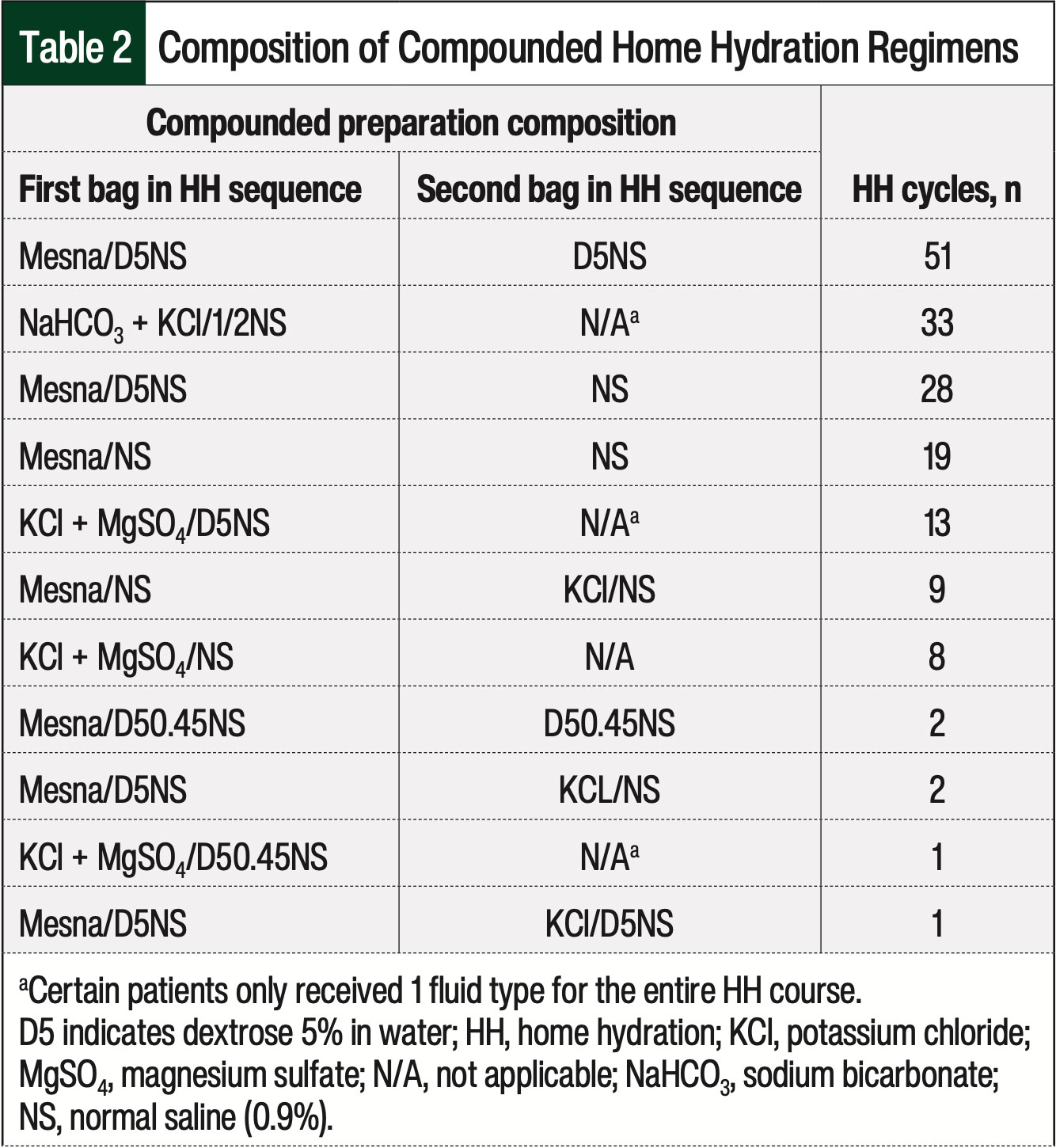
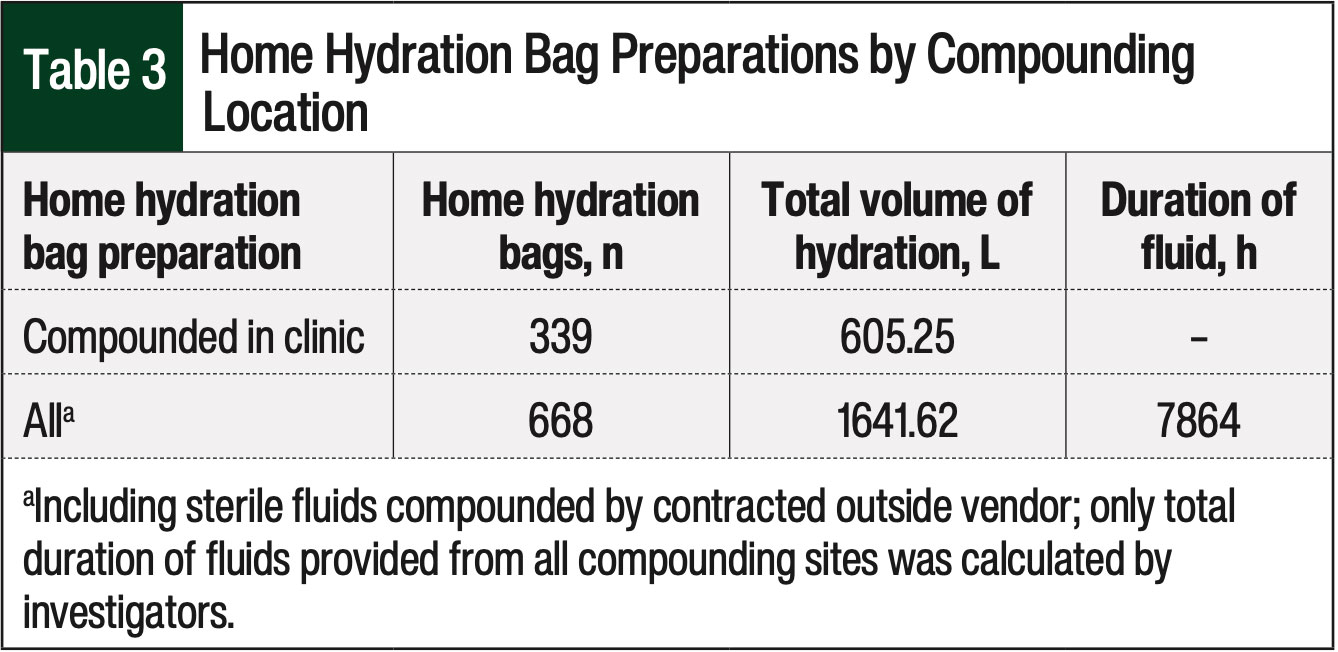
The most common type of fluid dispensed was mesna diluted in dextrose 5% in water and 0.9% sodium chloride followed by sodium bicarbonate (40 mEq/L) with potassium chloride (10 mEq/L) diluted in 0.45% sodium chloride (Table 2). A total of 1641.62 L of fluid were dispensed. The mean amount of fluid dispensed per patient HH course was 9.9 L. The mean duration of HH fluid per treatment course was 47.4 hours (range, 13-168 hours). In all, 73 patients received 23 hours of fluid. A total of 668 compounded HH preparations were dispensed, of which 339 (50.7%) were manually compounded by the ambulatory pediatric oncology pharmacy (Table 3). The most common (n=100) reason for ambulatory pediatric pharmacy compounding was the need to prepare mesna bags that our external vendor was unable to compound because of stability considerations.
A total of 357 inpatient hospital days were prevented during the 6-month study period as a result of the HH program. The average length of hospitalization prevented was 2.2 days (range, 1-7 days).
Discussion
Increasing the number of pediatric patients who can receive treatment in the outpatient setting will continue to be of great importance as the availability of pediatric inpatient service in the United States continues to decrease. According to a 2021 report from the American Academy of Pediatrics, pediatric inpatient units in the United States decreased by 19.1% and pediatric inpatient unit beds decreased by 11.8% from 2008 to 2018.4 The distance to the closest pediatric inpatient unit has also increased for 24.7% of children in the United States.4 Without the application of this program, it is possible our pediatric patients with cancer would have faced treatment delays while waiting for an inpatient bed to become available.
The HH program in this pediatric oncology ambulatory care clinic was able to help optimize the resources within a healthcare system. As previously highlighted, Healthcare Cost and Utilization Project (HCUP) data show the average daily cost of all pediatric inpatient stays with a principal diagnosis of cancer was $3400.5 The mean hospitalization cost of pediatric patients with a primary diagnosis of cancer was $40,400, which was approximately 5 times higher than the average pediatric inpatient cost in the United States.5 The families of children 1 to 5 years after a primary oncology diagnosis are also more likely to have a parent or caregiver quit or change a job because of the impact of frequent hospitalizations.6
Using the 2009 HCUP data, considering only direct hospitalization costs, our HH saved 40 patients approximately $1,213,800 over a 6-month period. Considering these results, the current study represents a higher impact on patient volume and corresponding financial savings than what has been reported in the current literature. A 2023 study conducted in Australia, which took place over a much longer 34-month period, identified 16 children who received HH.3 Investigators estimated the program avoided 116 hospital bed days and an associated cost of $105,521.3
Although the HH program did relieve economic and social burdens from patients and our inpatient hospital partner, this program added time and financial obligation to the ambulatory care team. The infusion pharmacy is outfitted with only 2 vertical laminar flow hoods that are required to compound the HH and chemotherapy preparations. Both chemotherapy and HH preparations were made in each hood. Compounding a large-volume HH bag without the aid of a compounding pump and removing air from the final product would occupy 1 or both hoods for more than 1 hour. During this time, no other chemotherapy or large-volume parenteral preparations could be made for patients in the clinic.
Because this led to patient care delays, the decision was made to outsource some of the large-volume HH parenteral compounding to an outside vendor. However, to receive these bags from the outside vendor, the staff pharmacists had to follow a multistep process involving several manual transcriptions. It should also be noted that 50.7% of the preparations were not eligible to be outsourced because of stability issues (n=110) or short turnaround times required by the treatment plans (n=229).
Complications with the HH preparations and pumps occurred during the study period, which required 2 patients to present to the emergency department during off-clinic hours. One asymptomatic patient presented overnight with a self-reported air embolus. The patient was observed for several hours and then sent home. Another patient reported that their hydration bag ran empty before it was time to hook up the next fluid bag. No hospital admission or need for additional inventions were required.
Limitations
This study has several limitations, including the inability to calculate indirect costs the HH program saved patients and their families. The direct cost to the institute that was needed to maintain the HH program could not be calculated. The study was also unable to capture the number of patients who were eligible for the HH program but deferred participation. Patient and caregiver satisfaction and quality-of-life data were not collected because of the retrospective nature of the study.
Conclusion
This retrospective study demonstrates the benefits of an HH program by saving patients and their families time in the hospital as well as providing access to care that they may not otherwise have received because of hospital capacity issues. Increased adoption of programs such as this one may help ease the burden associated with the national decrease in inpatient pediatric beds.
Areas for future study would be to capture additional socioeconomic factors, including if a parent had to quit or change their place of employment, the total travel and gas expenses, ambulance or helicopter use, and the percentage of public versus private insurance.
Author Disclosure Statement
Dr McBride has no conflicts of interest to report.
References
- Yabroff KR, Mariotto A, Tangka F, et al. Annual Report to the Nation on the Status of Cancer, Part 2: patient economic burden associated with cancer care. J Natl Cancer Inst. 2021;113:1670-1682. doi:10.1093/jnci/djab192
- Genge B, Carasco T, Young L, et al. Can high-dose methotrexate be safely administered to outpatients? J Clin Oncol. 2021;39. Abstract 34. doi:10.1200/JCO.2020.39.28_suppl.34
- Orford R, Slater P, Spencer B, et al. One hundred times better, at home in our own beds: implementation of home intravenous hydration after chemotherapy in children with cancer. J Pediatr Hematol Oncol Nurs. 2023;40:265-276. doi:10.1177/27527530221147880
- Cushing AM, Bucholz EM, Chien AT, et al. Availability of pediatric inpatient services in the United States. Pediatrics. 2021;148:e2020041723. doi:10.1542/peds.2020-041723
- Price RA, Stranges E, Elixhauser A. Pediatric cancer hospitalizations: 2009. In: Healthcare Cost and Utilization Project (HCUP) Statistical Briefs [Internet]. Rockville (MD): Agency for Healthcare Research and Quality (US). Statistical Brief #132. February 2006. www.ncbi.nlm.nih.gov/books/NBK52651/
- Warner EL, Kirchhoff AC, Nam GE, Fluchel M. Financial burden of pediatric cancer for patients and their families. J Oncol Pract. 2015;11:12-18. doi:10.1200/JOP.2014.001495