

Connecting Science to Practice
This study provides insight to optimize chemotherapy with
immunotherapy for patients with early-stage triple-negative
breast cancer (TNBC). Outcomes show that, when paired
with pembrolizumab, an increased dose intensity of doxorubicin
and cyclophosphamide did not improve clinical outcomes
and led to an increase in adverse events for patients
with newly diagnosed, early-stage TNBC.
Systemic chemotherapy is the preferred treatment strategy for most patients with high-risk, early-stage triple-negative breast cancer (TNBC), with the strongest consideration for tumors >1 cm. Neoadjuvant chemotherapy improves tumor resectability, breast conservation, and event-free survival and is therefore recommended in patients with TNBC who have larger tumors or node-positive disease.1,2 Historically, doxorubicin with cyclophosphamide (AC) has been the chemotherapy regimen of choice in this setting. For early-stage TNBC, AC is dosed at doxorubicin 60 mg/m2 plus cyclophosphamide 600 mg/m2 every 2 or 3 weeks for 4 cycles. The NCCN guidelines prefer administering AC every 2 weeks, referred to as dose-dense AC, as a result of improved outcomes, including disease-free survival (DFS) and overall survival (OS) when compared with AC cycled every 3 weeks (DFS risk ratio [RR], 0.74; P=.01, and OS RR, 0.69; P=.013).2,3
Practice has evolved to include immunotherapy as part of neoadjuvant and adjuvant systemic treatments. KEYNOTE-522 evaluated pembrolizumab in combination with chemotherapy for untreated stage II or III TNBC.4 Patients were randomly assigned to receive neoadjuvant chemotherapy paired with pembrolizumab 200 mg every 3 weeks or with placebo. Neoadjuvant chemotherapy consisted of 2 phases: 4 cycles of carboplatin plus paclitaxel, followed by 4 cycles of AC administered every 3 weeks. After neoadjuvant treatment, patients would undergo definitive surgery and then continue to receive adjuvant pembrolizumab for up to 9 cycles to complete a total of 17 cycles (ie, 1 year) of immunotherapy.
The results of KEYNOTE-522 demonstrated an improved pathologic complete response (pCR) rate at the time of surgery (64.8% vs 51.2%; 95% confidence interval [CI], 5.4-21.8; P<.001), as well as improved progression-free survival (91.3% vs 85.3%; hazard ratio, 0.63; 95% CI, 0.43-0.93).4 Despite the inclusion of this regimen in clinical practice guidelines based on the dosing and schedule of KEYNOTE-522, questions remain regarding the optimal frequency of AC when used with pembrolizumab. There is interest in using dose-dense AC with this regimen based on the improved outcomes with dose-dense AC compared with every-3-week AC in previous trials.
A retrospective study evaluated the use of dose-dense AC with pembrolizumab for the treatment of early-stage TNBC.5 To simplify the treatment schedule, pembrolizumab was dosed at 400 mg every 6 weeks in the dose-dense AC group, instead of 200 mg every 3 weeks as in KEYNOTE-522. The rates of pCR were 64.3% with AC versus 81.8% with dose-dense AC. No excessive adverse events (AEs) were observed when dose-dense AC was combined with pembrolizumab. The most common immune-related AEs were thyroid derangements (37.5%) and rash (37.5%). There were no grade 3 or 4 immunotherapy-induced AEs. The main limitations to this study include a small sample size of 25 patients and a lack of details regarding dose modifications, the ability to make it to surgery, and the long-term clinical outcomes. This study aims to further characterize the efficacy and safety of dose-dense AC compared with AC administered every 3 weeks in combination with pembrolizumab.
Methods
This is a single-site, retrospective-cohort study evaluating the use of dose-dense AC compared with conventional every-3-week AC within the KEYNOTE-522 regimen between August 1, 2021, and December 1, 2023. A report was generated using the electronic health record to screen for patients with a diagnosis of breast cancer and documentation of receiving pembrolizumab in the neoadjuvant setting. All patients were planned to receive neoadjuvant treatment with pembrolizumab 200 mg every 21 days paired with 2 chemotherapy regimens. Chemotherapy included 4 cycles of weekly carboplatin area under the curve of 1.5 and paclitaxel 80 mg/m2 administered on days 1, 8, and 15 every 21 days, followed by 4 cycles of AC. AC was administered every 3 weeks, as studied in KEYNOTE-522, or as dose-dense AC with a shortened frequency of every 2 weeks. Patients completed definitive surgery after the completion of neoadjuvant treatment.
pCR, which was defined as pathologic disease stage ypT0/Tis ypN0 according to the AJCC Cancer Staging Manual, 8th edition,6 was determined at the time of surgery. Patients were eligible for study inclusion if they were aged ≥18 years with newly diagnosed, previously untreated, nonmetastatic TNBC and received neoadjuvant treatment with the KEYNOTE-522 regimen, including AC administered dose dense or every 3 weeks. Patients must have received at least 1 cycle of pembrolizumab and completed surgical resection to be included. Patients were excluded from the study if they required immunosuppression with at least 10 mg of prednisone or equivalent for at least 1 month or if they had known active tuberculosis, hepatitis B, or hepatitis C.
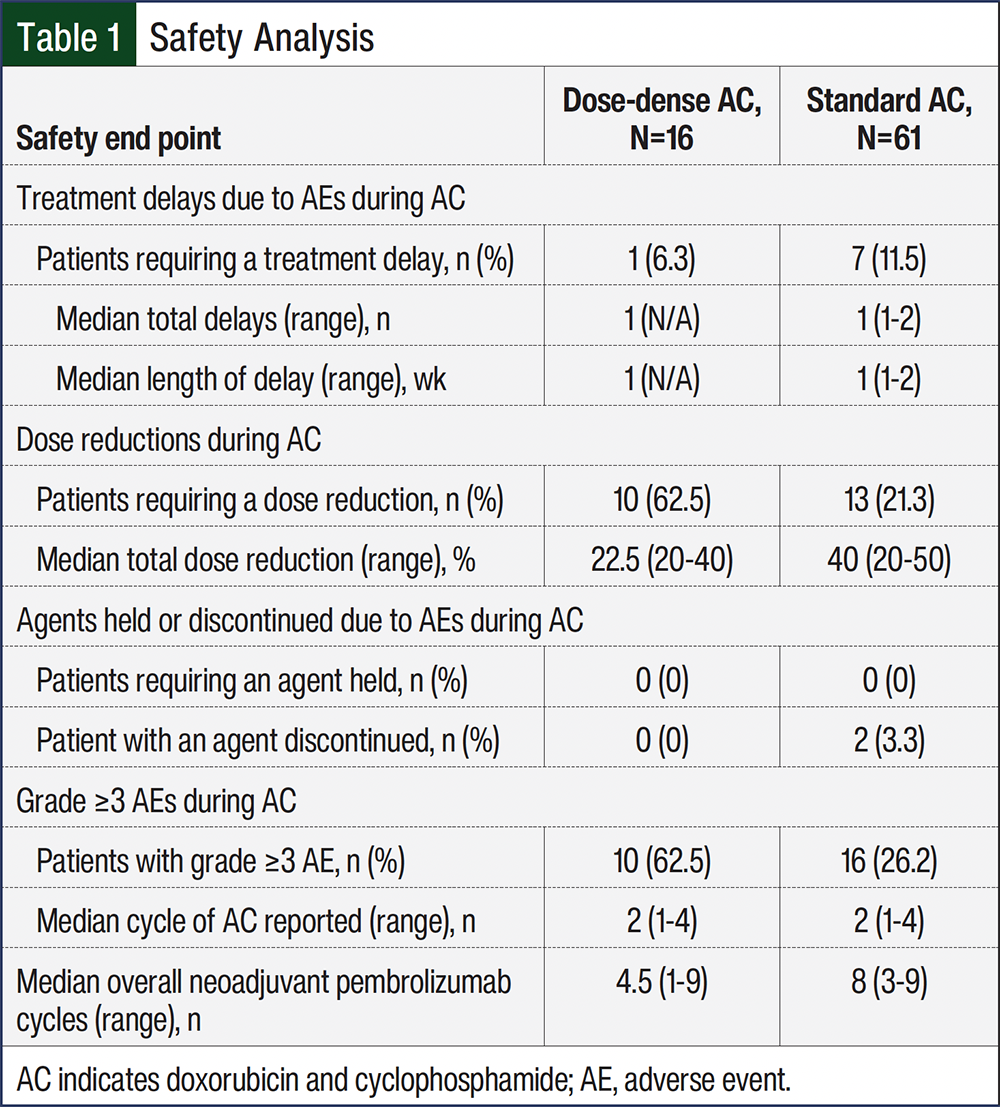
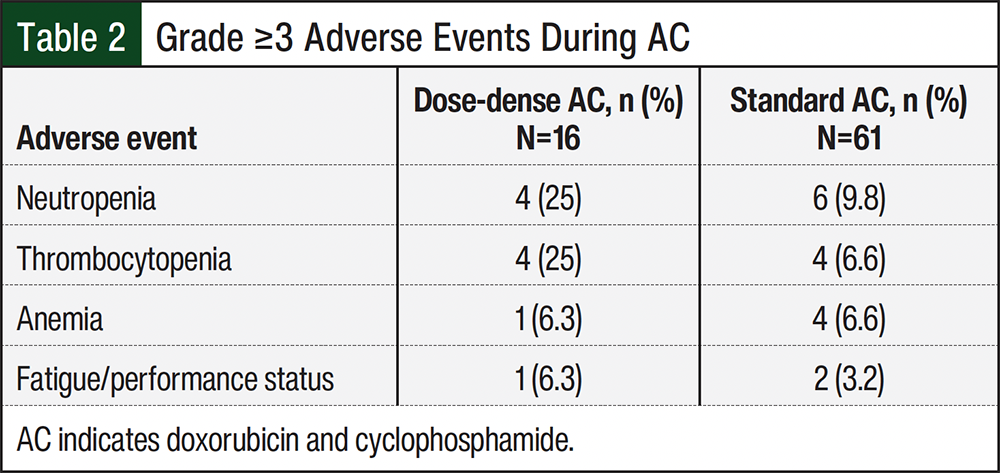
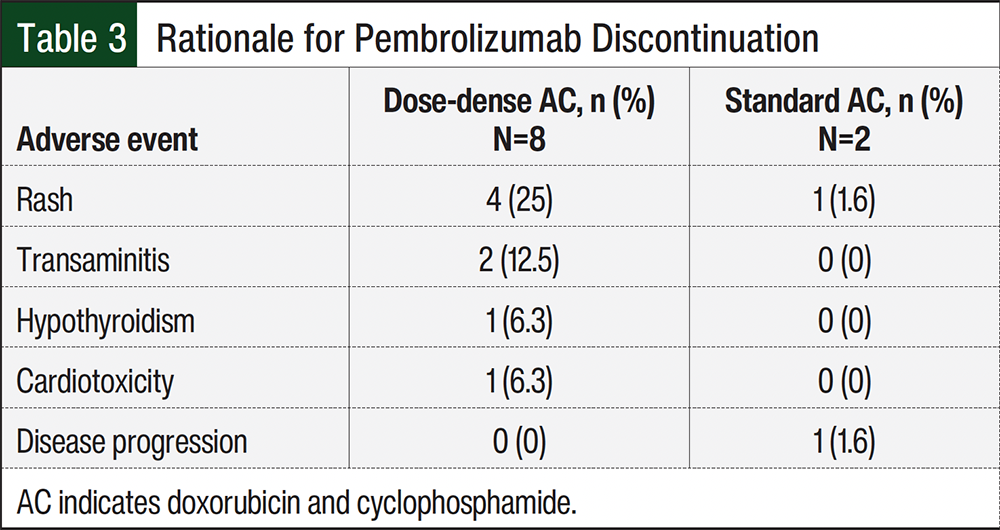
The primary objective was to compare the rates of pCR between the patients receiving dose-dense AC versus standard AC administered every 3 weeks, within the KEYNOTE-522 regimen. The secondary objectives were to evaluate the AEs and safety profile of dose-dense AC with pembrolizumab compared with conventional every-3-week AC. The secondary end points included the number of treatment delays and dose reductions during the AC phase of treatment, the total number of neoadjuvant pembrolizumab cycles, the rates of treatment discontinuation, and the grade ≥3 AEs with AC, including hematologic (neutropenia, anemia, and thrombocytopenia), hepatic, and institutional AE assessments before every infusion (Tables 1-3; Appendix Table S1).7 The primary end point, the rate of pCR, was analyzed by chi-square test, and the secondary safety outcomes were evaluated using descriptive statistics.
Results
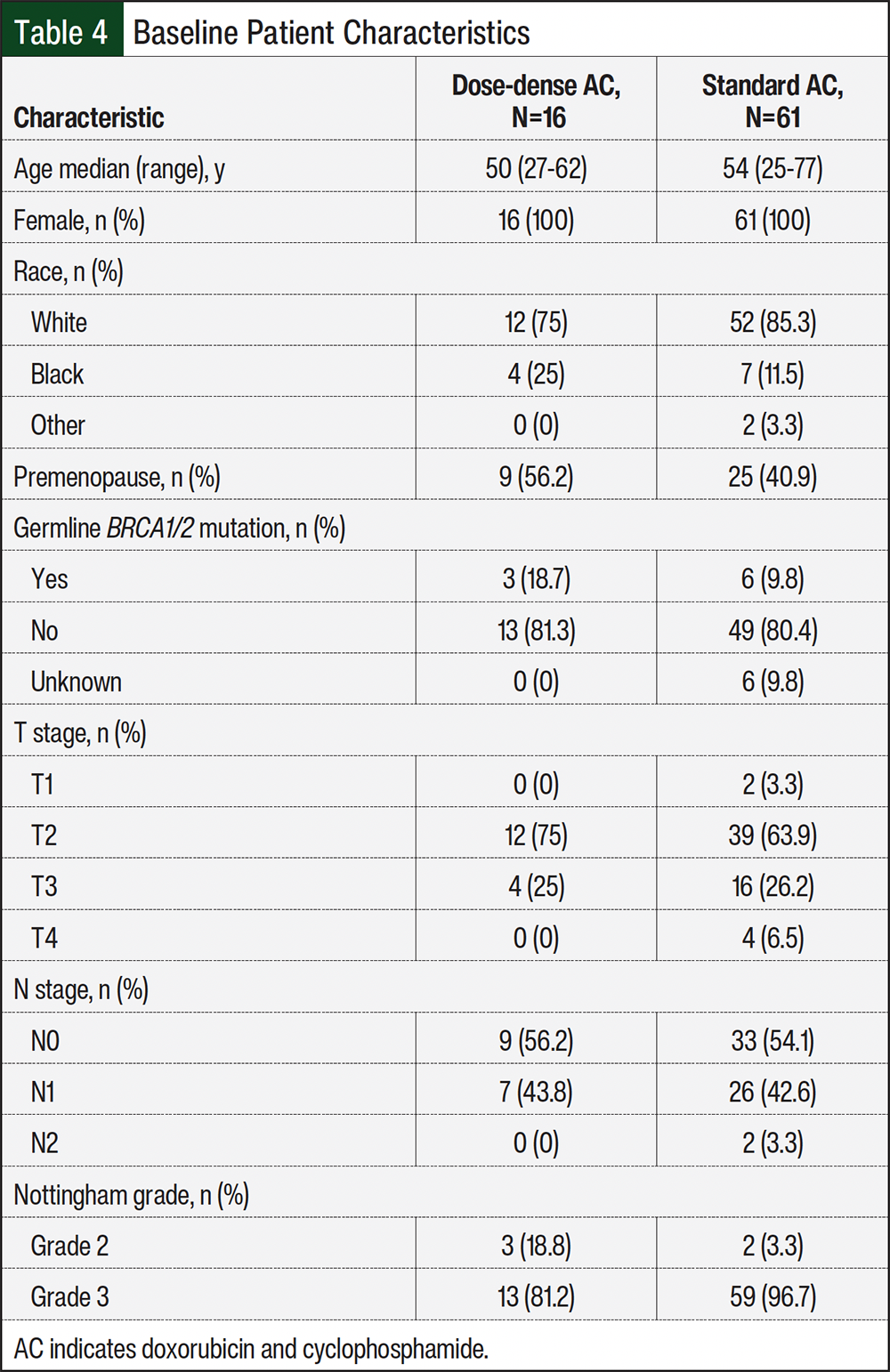
A total of 87 patient charts were screened and 77 patients met the criteria for study inclusion. A total of 10 patients were excluded from the study because they did not complete surgery at the time of review (n=4), did not receive the AC portion of treatment (n=4), or completed part of their treatment at another institution (n=2). Of the 77 patients included, 16 received dose-dense AC and 61 received standard AC administered every 3 weeks. The patients’ baseline characteristics and clinical staging at diagnosis were consistent with expectations and were well-balanced between the groups (Table 4). Most notably, the dose-dense AC group included a higher percentage of premenopausal patients (56.2% vs 40.9%, respectively) and had higher rates of germline BRCA mutations (18.7% vs 9.8%, respectively) versus the standard AC cohort, and all patients were aged <65 years.
pCR was achieved by 10 (62.5%) patients in the dose-dense group and by 40 (65.6%) patients in the standard AC group (χ2 [1, N=77]=.05; P=.82). There was no significant difference in pCR between the 2 groups.
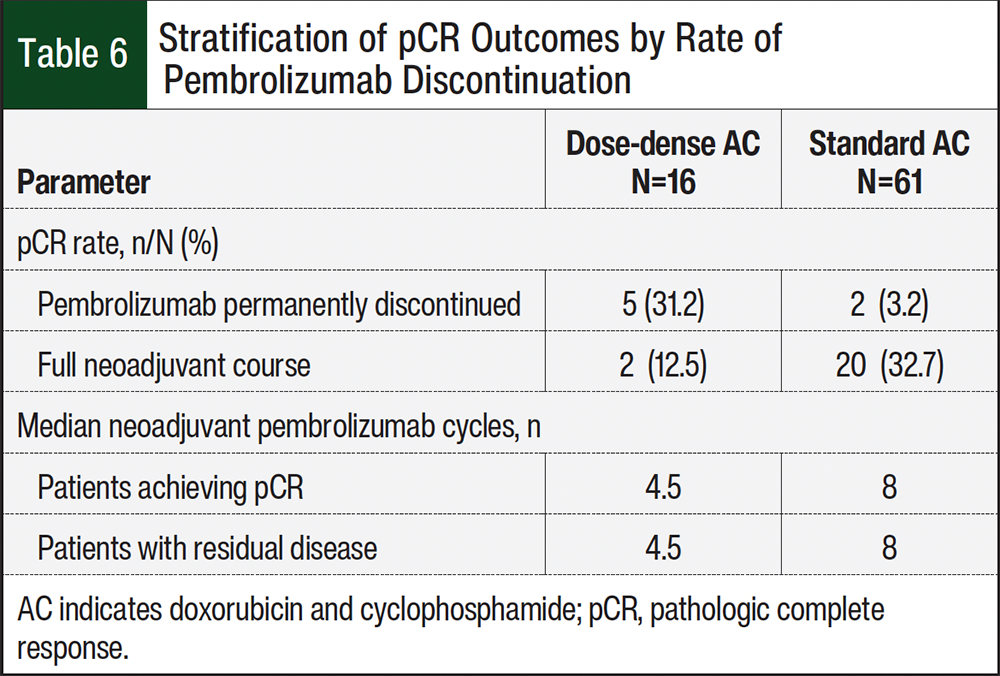
The safety profiles were consistent with expectations, including a higher rate of AEs in the dose-dense AC group (Table 1). Patients receiving dose-dense AC required more dose reductions of doxorubicin or cyclophosphamide (62.5 % vs 21.3%, respectively) and demonstrated increased rates of grade ≥3 AEs (62.5% vs 26.2%, respectively) compared with the standard AC group. The most common AE in both groups was neutropenia (grade ≥3; 25% vs 9.8%, respectively; Table 2). Pembrolizumab was also permanently discontinued more frequently in the dose-dense group (n=8, 50% vs n=2, 3.2%), with a median of 4.5 neoadjuvant cycles compared with a median of 8 neoadjuvant cycles with standard AC. The most common reason for pembrolizumab discontinuation was rash (n=4, 25% vs n=1, 1.6%; Table 3).
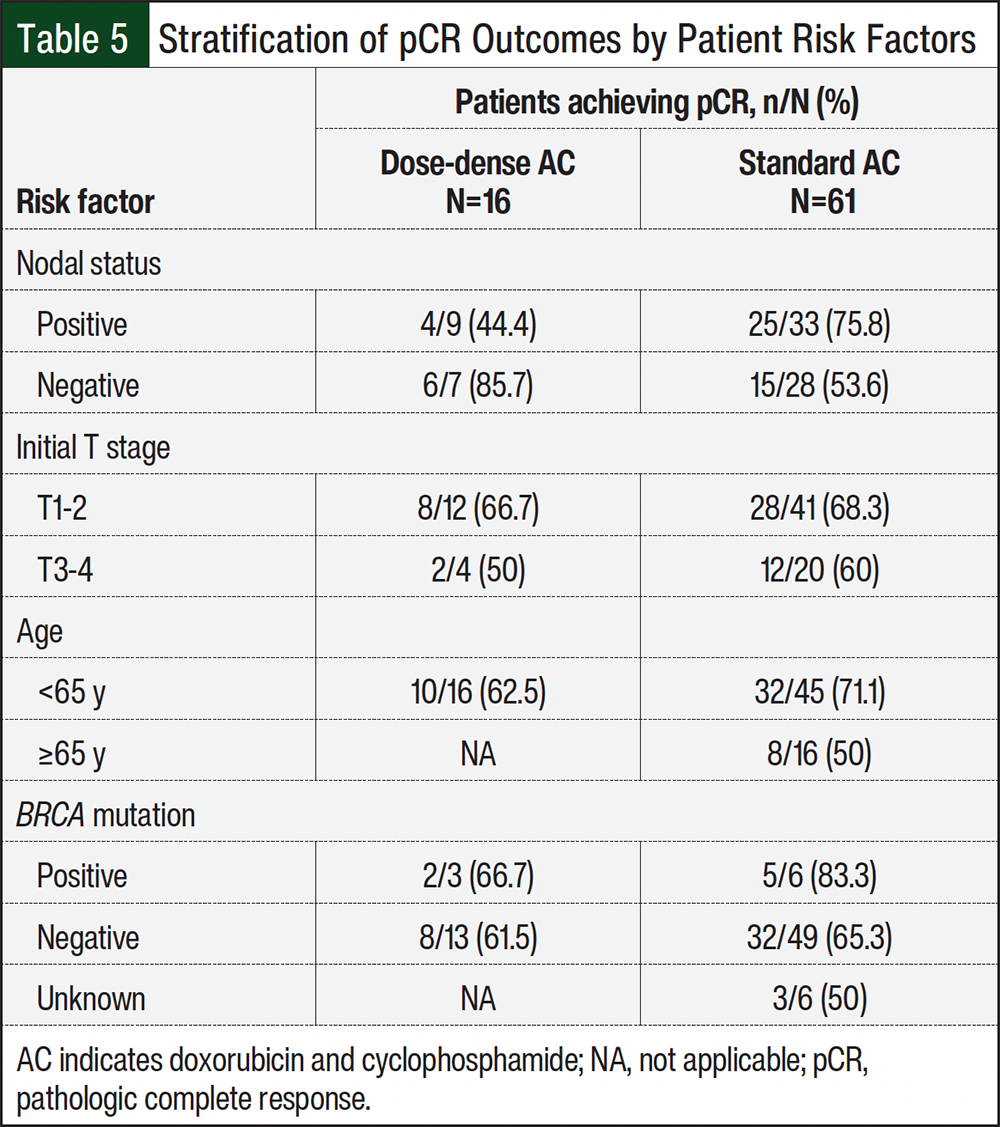
Analysis of outcomes by various subgroups is limited in this study because of the small sample size; however, the pCR rate was not significantly different based on nodal status, initial tumor size, age, or BRCA status (Table 5). The effect of pembrolizumab discontinuation on pCR rates is presented in Table 6, although the outcomes were difficult to assess because of the disproportionate comparator groups. The median number of neoadjuvant pembrolizumab cycles was equivalent in the patients who achieved pCR and those with residual disease, at 4.5 cycles with dose-dense AC and 8 cycles with standard AC.
Discussion
This study shows no significant difference in the pCR rates between dose-dense AC and every-3-week AC as part of neoadjuvant chemoimmunotherapy for untreated, nonmetastatic TNBC. The pCR rates in both groups were consistent with the results of KEYNOTE-522. The safety profiles were similar to previously reported trials,3,5 with a higher incidence of dose reductions and grade ≥3 AEs in the dose-dense AC group than in the standard AC group. The rates of growth factor utilization between the groups were not collected, although all of the patients in the dose-dense AC group received prophylactic growth factor with pegfilgrastim because of the known high risk for febrile neutropenia with every-2-week dosing.2,3 There was no clear increase in immunotherapy-related AEs with dose-dense AC. Pembrolizumab was discontinued more frequently with dose-dense AC than with conventional AC, most frequently for rash (25% vs 1.6%, respectively) and transaminitis (12.5% vs 0%, respectively); however, the discontinuation rates did not significantly impact the pCR rates in this population.
Limitations
The limitations to this study include a nonrandomized design and short-term follow-up. pCR was the only efficacy end point evaluated; therefore, it is not clear how interventions may impact recurrence rates and long-term survival outcomes. This study was also retrospective, leading to a small total sample size and imbalanced sample sizes between the comparator groups. In addition, the use of dose-dense AC within the KEYNOTE-522 regimen at our institution is limited to select physicians specializing in breast cancer; therefore, the results may be influenced by variations in providers’ preferences, such as lower thresholds for drug discontinuation.
In current practice, the ideal adjuvant therapy for TNBC after neoadjuvant chemoimmunotherapy is largely unknown. Patients with residual disease at surgery may subsequently receive adjuvant pembrolizumab, but other treatment strategies have been developed since the publication of KEYNOTE-522. NCCN2 recommends adjuvant capecitabine or olaparib maintenance for select patients with residual disease on the basis of the CREATE-X8 and OlympiA trials.9 These data were not available during the design of KEYNOTE-522, therefore it is unclear how to integrate these agents into clinical practice.
New evidence for neoadjuvant pembrolizumab in TNBC has been published since the conclusion of this study. In a case-control study, 97 patients with early-stage TNBC received neoadjuvant treatment with the KEYNOTE-522 regimen or dose-dense AC without immunotherapy.10 The patients who received the KEYNOTE-522 regimen had a higher likelihood of achieving pCR (RR, 1.43; 95% CI, 0.89-2.28), although there was no significant difference in any outcome (1-year EFS, 1-year OS, or pCR).
Conclusion
The rates of pCR did not differ between the dose-dense AC and conventional AC groups, administered every 3 weeks, within the KEYNOTE-522 regimen. There was a higher incidence of AEs in the dose-dense AC group. A more robust comparison with a larger sample size is necessary to confirm any clinical differences between patients who receive dose-dense AC and those who receive conventional AC.
Disclosure Statement
Dr Roman is a consultant to Astellas, Daiichi Sankyo, and Genentech; Dr Hilton is on the Advisory Board of AstraZeneca, Biotheranostics, and Gilead, and is on the Speaker’s Bureau of AstraZeneca and Daiichi Sankyo; Dr Eross, Dr Mirabile, and Dr Nadour have no disclosures to report.
References
- Huang M, O’Shaughnessy J, Zhao J, et al. Evaluation of pathologic complete response as a surrogate for long-term survival outcomes in triple-negative breast cancer. J Natl Compr Canc Netw. 2020;18:1096-1104. doi:10.6004/jnccn.2020.7550
- National Comprehensive Cancer Network. NCCN Clinical Practice Guidelines in Oncology: breast cancer. Version 2.2026. February 27, 2026. Accessed April 22, 2025. www.nccn.org/professionals/physician_gls/pdf/breast.pdf
- Citron ML, Berry DA, Cirrincione C, et al. Randomized trial of dose-dense versus conventionally scheduled and sequential versus concurrent combination chemotherapy as postoperative adjuvant treatment of node-positive primary breast cancer: first report of Intergroup Trial C9741/Cancer and Leukemia Group B Trial 9741. J Clin Oncol. 2003;21:1431-1439. Erratum in: J Clin Oncol. 2003;21:2226. doi:10.1200/JCO.2003.09.081
- Schmid P, Cortes J, Pusztai L, et al. Pembrolizumab for early triple-negative breast cancer. N Engl J Med. 2020;382:810-821. doi:10.1056/NEJMoa1910549
- White O, Dent SF, Westbrook KE, Moore H. Assessment of efficacy and safety of dose-dense doxorubicin and cyclophosphamide (ddAC) in combination with pembrolizumab in early-stage, triple-negative breast cancer. J Clin Oncol. 2023;41(16 suppl):e12618. doi:10.1200/JCO.2023.41.16_suppl.e12618
- Amin MB, Edge SB, Greene FL, et al, eds. AJCC Cancer Staging Manual. 8th ed. New York: Springer; 2017.
- US Department of Health and Human Services. Common Terminology Criteria for Adverse Events (CTCAE). Version 5.0. November 27, 2017. Accessed April 22, 2025. https://dctd.cancer.gov/research/ctep-trials/for-sites/adverse-events/ctcae-v5-5x7.pdf
- Masuda N, Lee SJ, Ohtani S, et al. Adjuvant capecitabine for breast cancer after preoperative chemotherapy. N Engl J Med. 2017;376:2147-2159. doi:10.1056/NEJMoa1612645
- Tutt ANJ, Garber JE, Kaufman B, et al. Adjuvant olaparib for patients with BRCA1- or BRCA2-mutated breast cancer. N Engl J Med. 2021;384:2394-2405. doi:10.1056/NEJMoa2105215
- Barbi M, Noel J, Lee CS, et al. Real-world comparison: neoadjuvant pembrolizumab (pembro-NACT) vs. dose-dense neoadjuvant chemotherapy (ddNACT) in early stage triple-negative breast cancer (TNBC). J Clin Oncol. 2024;42(16 suppl):e12615. doi:10.1200/JCO.2024.42.16_suppl.e12615