

Connecting Science to Practice
This retrospective chart review examined the frequently used,
but not well studied, practice of patients receiving pegfilgrastim
on the day of 5-fluorouracil (5-FU) pump disconnection.
The FDA recommends that pegfilgrastim be administered
more than 24 hours after chemotherapy has been completed,
but by giving pegfilgrastim on the same day as 5-FU pump
completion, patients could still maintain their normal cell
counts and avoid a second visit to an infusion center solely
for pegfilgrastim administration. This study demonstrated
that pegfilgrastim may be safe and effective when given on the
day of 5-FU pump disconnection and could be used to positively
affect patient satisfaction and convenience while decreasing
costs for the institution and allowing more time for
other patients to be seen in the clinic.
Pegfilgrastim, received via injection or using an on-body injector, stimulates the proliferation and differentiation of neutrophils and promotes the ability of neutrophils to carry out their traditional functions.1 Pegfilgrastim is used in many oncologic disease states to reduce the depth of neutropenia and the amount of time patients spend in a neutropenic state. Many chemotherapy agents can cause neutropenia, often for long periods of time, which warrants the use of a white blood cell growth factor, such as pegfilgrastim, to reduce the risk for infection, hospitalization, and other complications that may arise from neutropenia. Although pegfilgrastim is mostly used as primary prophylaxis, it can also be secondary prophylaxis for patients who had profound neutropenia or febrile neutropenia (FN) after receiving cycles of chemotherapy.1 Certain tumor types and chemotherapy regimens also carry a higher risk for FN than other disease states or chemotherapies, ultimately necessitating the use of primary prophylaxis with pegfilgrastim. Chemotherapy regimens can be stratified into low, intermediate, and high risk, with regimens classified as high risk requiring growth factor injections to prevent FN.2
If administered using the FDA-approved dosing regimen, pegfilgrastim should be administered at least 24 hours after chemotherapy is completed and no later than 14 days before subsequent chemotherapy treatment.1 This dosing schema results from the initial studies of pegfilgrastim.1 Although scientifically sound, this dosing regimen can cause issues for patients traveling long distances to reach a clinic for therapy, and it can be a burden for patients to return to the clinic 24 hours after their chemotherapy infusion only to receive pegfilgrastim.
On-body injector use is also a consideration that can ease the travel burden for patients; however, on-body injectors may not be covered by insurance, and the acquisition costs of on-body injectors can be a burden on institutions. In addition, sensitivity to adhesives and on-body injector device malfunctions can further limit their use. To remedy these issues, the same-day administration of pegfilgrastim on chemotherapy days has been investigated. Receiving pegfilgrastim in this way eliminates the need for return clinic visits and eases the burden on patients by avoiding travel to and from multiple appointments.
Burris and colleagues published an analysis of 4 different studies that compared same-day with next-day administration of pegfilgrastim, with the primary outcome of the duration of cycle-1 severe neutropenia.3 A total of 272 patients received chemotherapy and ≥1 doses of pegfilgrastim. The results of the studies analyzed varied, with the breast cancer cohort having a longer duration of severe neutropenia in the same-day pegfilgrastim group, the non–small-cell lung cancer cohort having overall low rates of neutropenia, and the lymphoma cohort also having a longer duration of neutropenia in the same-day pegfilgrastim group. Despite the statistical analysis showing that same-day administration was noninferior to next-day administration, the conclusion was that next-day administration of pegfilgrastim is preferred.3
Cheng and colleagues conducted a retrospective, single-center, nonrandomized cohort study that examined same-day pegfilgrastim in 141 patients with non-Hodgkin lymphoma who received cyclophosphamide, doxorubicin, vincristine, and prednisone chemotherapy with or without rituximab.4 This study showed that the incidence of FN was significantly higher in the same-day pegfilgrastim group than in the next-day administration group (9.4% vs 5.1%, respectively; P=.03). Although Cheng and colleagues’ study shows a benefit with next-day administration, they concluded that further studies are needed to confirm this result.4
Billingsley and colleagues demonstrated mixed results with same-day pegfilgrastim.5 Their retrospective study included 421 patients with a variety of gynecologic malignancies, with a primary outcome of the incidence of grade 3 or 4 neutropenia and the secondary outcomes of dose delay, regimen change, hospitalizations resulting from neutropenia, and the incidence of FN. The study was unable to establish noninferiority with same-day administration of pegfilgrastim for grade 3 and 4 neutropenia and dose modification, but the rate of treatment delays was lower in the same-day pegfilgrastim group than in the next-day administration group. Based on the variety of the results, this study demonstrates that same-day pegfilgrastim is a reasonable option for patients.5
A small number of studies examined a patient population that is similar to our study.6-9 Eckstrom and colleagues’ single-arm, retrospective study included patients with gastrointestinal (GI) cancers who received the combination of 5-fluorouracil (5-FU), leucovorin, and oxaliplatin or 5-FU, leucovorin, and irinotecan, both of which include continuous-infusion 5-FU.6 All patients in the data collection group received same-day pegfilgrastim, and the next-day pegfilgrastim cohort was a historical comparator. The study included 109 patients, and the primary outcome was the incidence of FN over 4 chemotherapy cycles. The study showed that there was a low rate of the incidence of FN (3.7%), as well as low rates of the secondary end points, including grade 3 or 4 neutropenia (11.9%), dose reduction because of neutropenia or FN (10.1%), and hospitalizations resulting from neutropenia or FN (4.6%). Although this study used a historical comparator group, it showed a possible benefit of same-day pegfilgrastim in patients with colorectal cancer who received 5-FU.6
Matera and colleagues also conducted a single-institution, retrospective trial that included patients with GI malignancies who received same-day pegfilgrastim within 1 hour of chemotherapy completion.7 The study included 69 patients, encompassing a total of 536 chemotherapy cycles, and showed that patients had grade 1 or 2 neutropenia in 6 (1%) of the chemotherapy cycles, with no FN, grade 3 or 4 neutropenia, dose reductions or delays, hospitalizations, or antibiotic use. This study concluded that same-day pegfilgrastim may be as effective and safe as next-day administration in patients with GI malignancies.7
Last, retrospective, single-arm, single-institution studies by Draper and colleagues and Donkor and colleagues had similar patient populations and specifically examined patients who received continuous-infusion 5-FU.8,9 Draper and colleagues suggested that pegfilgrastim can be received on the day that continuous 5-FU infusion is completed because of low rates of grade 3 or 4 neutropenia and FN.8 Donkor and colleagues’ study examined whether patients receiving continuous-infusion 5-FU for >46 hours could receive pegfilgrastim <14 days from their next scheduled chemotherapy cycle.9 They concluded that receiving pegfilgrastim <14 days from the next scheduled chemotherapy cycle is safe and effective.9
Same-day pegfilgrastim is administered by individual providers in the University of Colorado Health (UCHealth) system, but it is not common across the entire healthcare system. This study aimed to compare the administration regimens of pegfilgrastim in patients receiving continuous-infusion 5-FU across the entire UCHealth system population, which encompasses different disease states, to inform the practice of pegfilgrastim administration throughout the health system. In addition, this study aims to confirm the results of studies that have been conducted on the safety and efficacy of same-day pegfilgrastim in patients with cancer.
Methods
This multicenter, retrospective, observational chart review included patients with cancer aged ≥18 years within the UCHealth system who received continuous-infusion 5-FU and pegfilgrastim in the same regimen from September 1, 2017, to September 1, 2022. Patients received pegfilgrastim on the day of 5-FU infusion completion or ≥24 hours after the completion of 5-FU infusion. Patients must have received at least 2 doses of 5-FU, with at least 1 dose of pegfilgrastim in between the doses, to be included. There were no other exclusion criteria for this study. This study was approved by the Colorado Multiple Institutional Review Board. The initial data were provided by Health Data Compass, an integrated data warehouse, and additional data were collected using Epic (Epic Systems; Verona, WI) and REDCap.
The primary end point of this study is the incidence rate of hospital admission for FN between the 2 groups. FN is defined as a single temperature of ≥38.3 °C or ≥38 °C over 1 hour, in addition to neutrophils ≤500/µL or <1000/µL, with an expected decline to ≤500/µL in the next 48 hours. The secondary end points include the delay of future cycles of chemotherapy due to neutropenia and hospital admission for other non-FN infection–related diagnoses. The safety outcomes include the incidence of adverse events, including bone pain and grade 3 or 4 cytopenias. Cytopenia was graded according to the Common Terminology Criteria for Adverse Events, version 5.0.
Statistical Analysis
For the categorical variables, a univariate chi-squared test was used to determine statistical significance. For the continuous variables, a Kruskal-Wallis test was used to test for statistical significance. The P value used was .05. The statistics were completed by statisticians at the University of Colorado Skaggs School of Pharmacy and Pharmaceutical Sciences.
Results
In total, 683 patients were included in the study with 362 patients receiving pegfilgrastim on the same day as 5-FU completion and 321 patients receiving pegfilgrastim ≥24 hours after the completion of 5-FU. A total of 89 patients were evaluated and ultimately excluded because they received only 1 dose of 5-FU, received pegfilgrastim with chemotherapy regimens that only included a bolus administration of 5-FU, self-injected pegfilgrastim, or received pegfilgrastim at a non-UCHealth clinic. Although many of the patients who received pegfilgrastim outside of a UCHealth clinic would fall into same-day or next-day administration groups, it was not possible to determine via the Epic patient records when exactly pegfilgrastim was administered. Patients who received same-day and next-day pegfilgrastim were included, with the most frequent method of administration corresponding to the group they were included in.
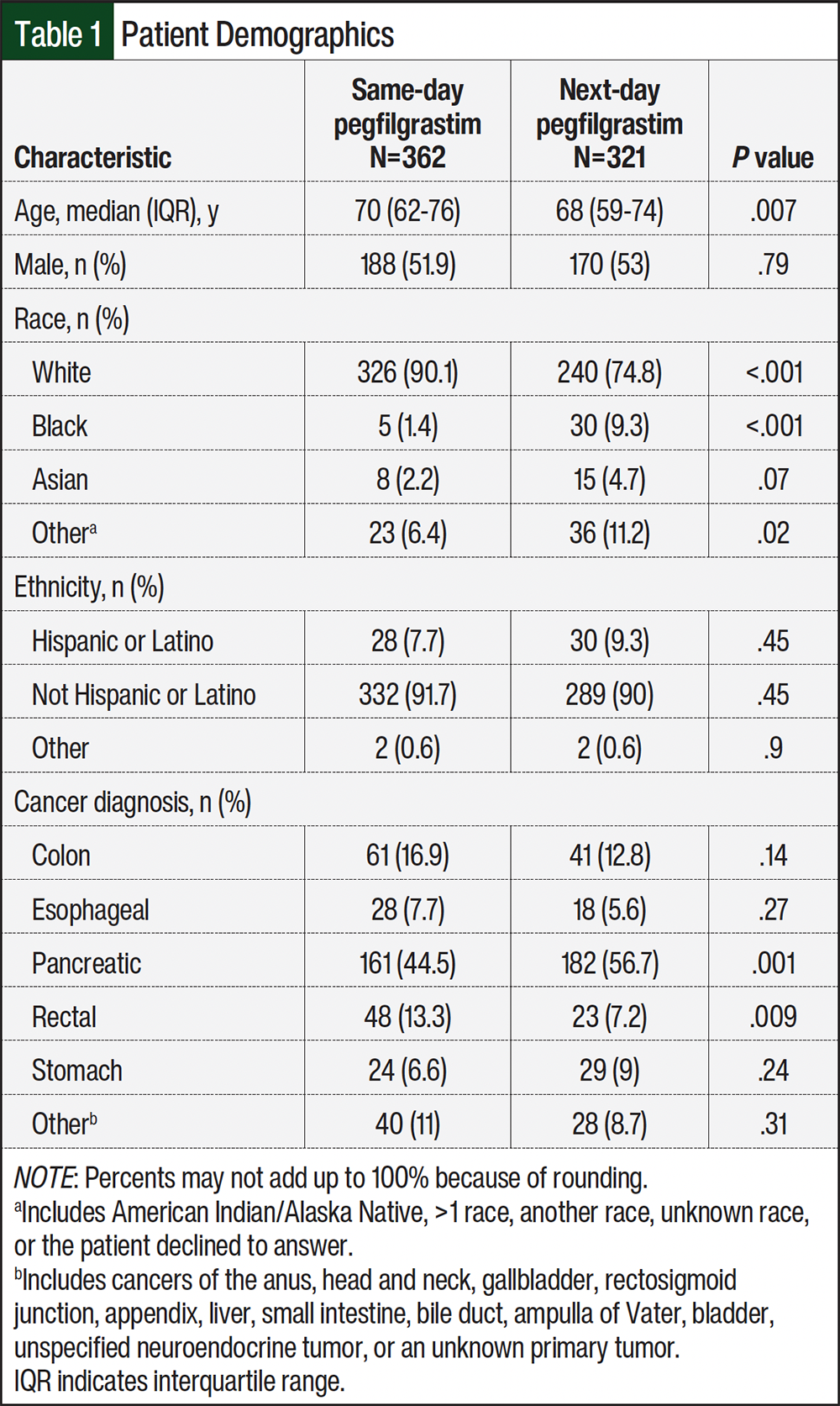
The patients’ demographics are shown in Table 1. There were some significant differences between the groups. The same-day administration group had a significantly higher median age of 70 years versus 68 years in the next-day administration group. There were many significant differences in race between the groups, with the same-day administration group having a significantly higher proportion of White patients than the next-day administration group (90.1% vs 74.8%, respectively), but a significantly lower proportion of Black patients (1.4% vs 9.3%, respectively) and other races (6.4% vs 11.2%, respectively). The proportion of cancer diagnoses were also different, with a significantly higher proportion of rectal cancers (13.3% vs 7.2%, respectively) and a significantly lower proportion of pancreatic cancers (44.5% vs 56.7%, respectively) in the same-day administration group versus the next-day administration group.
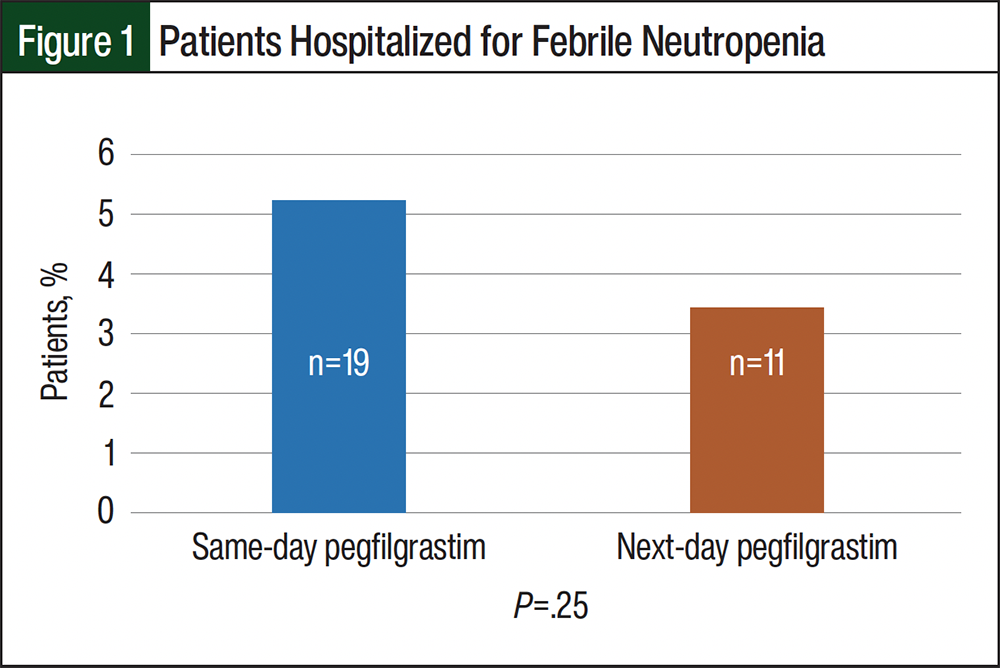
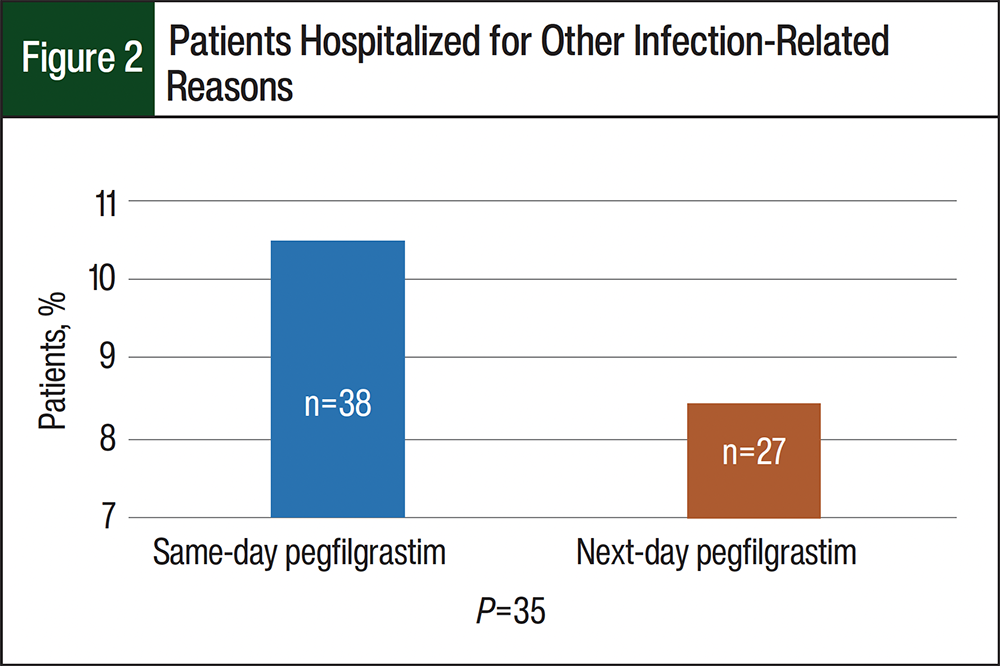
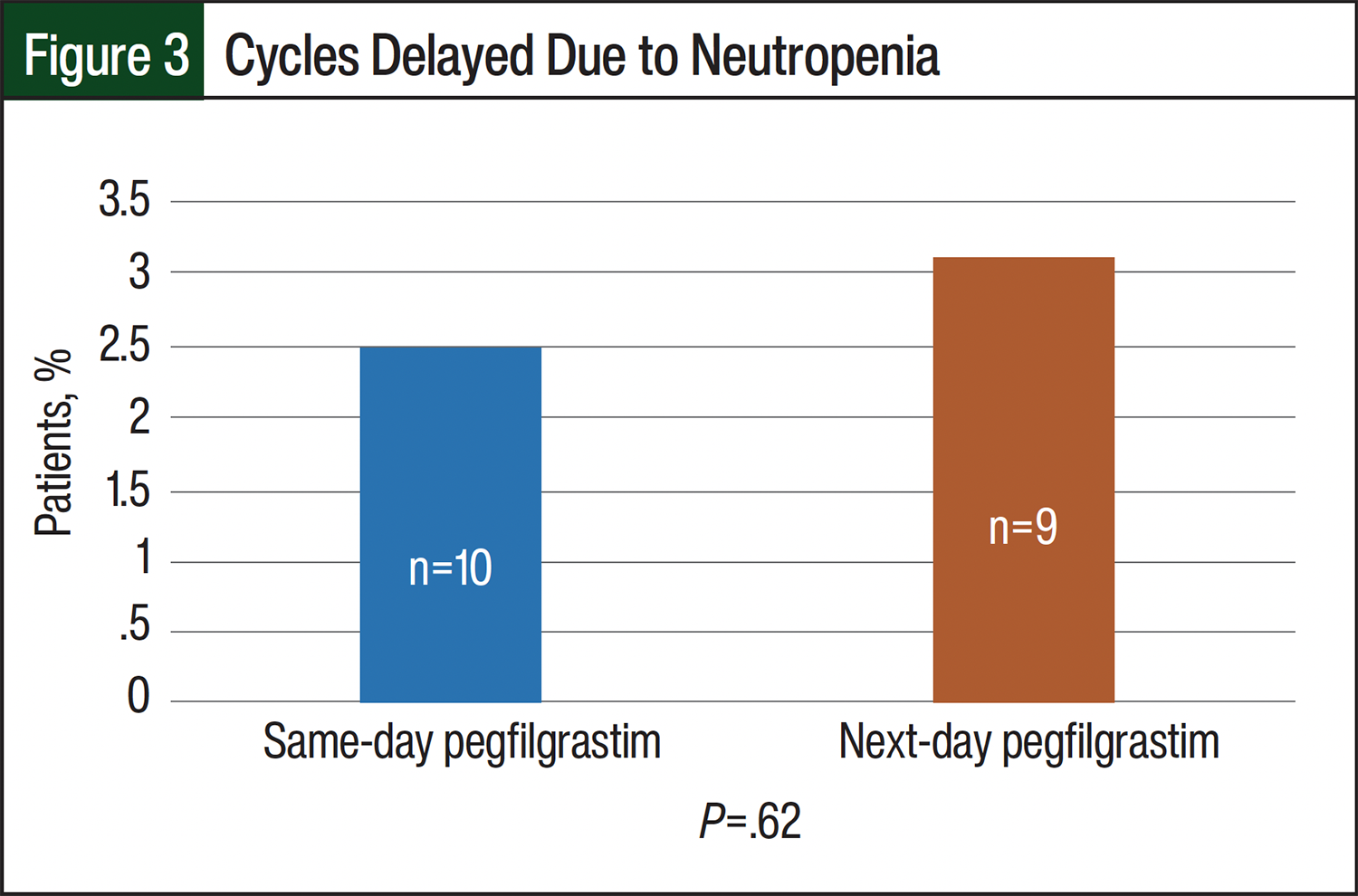
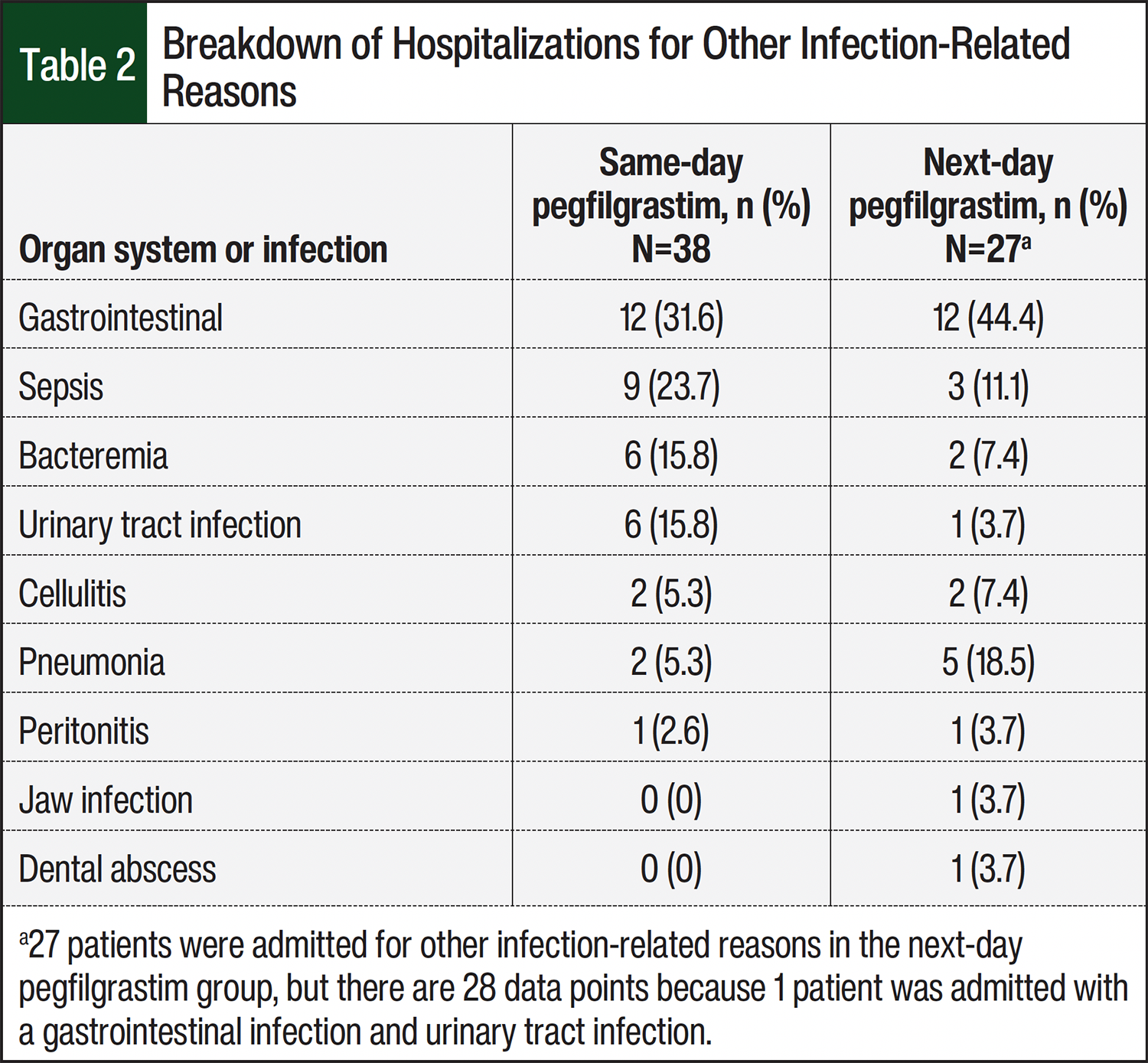
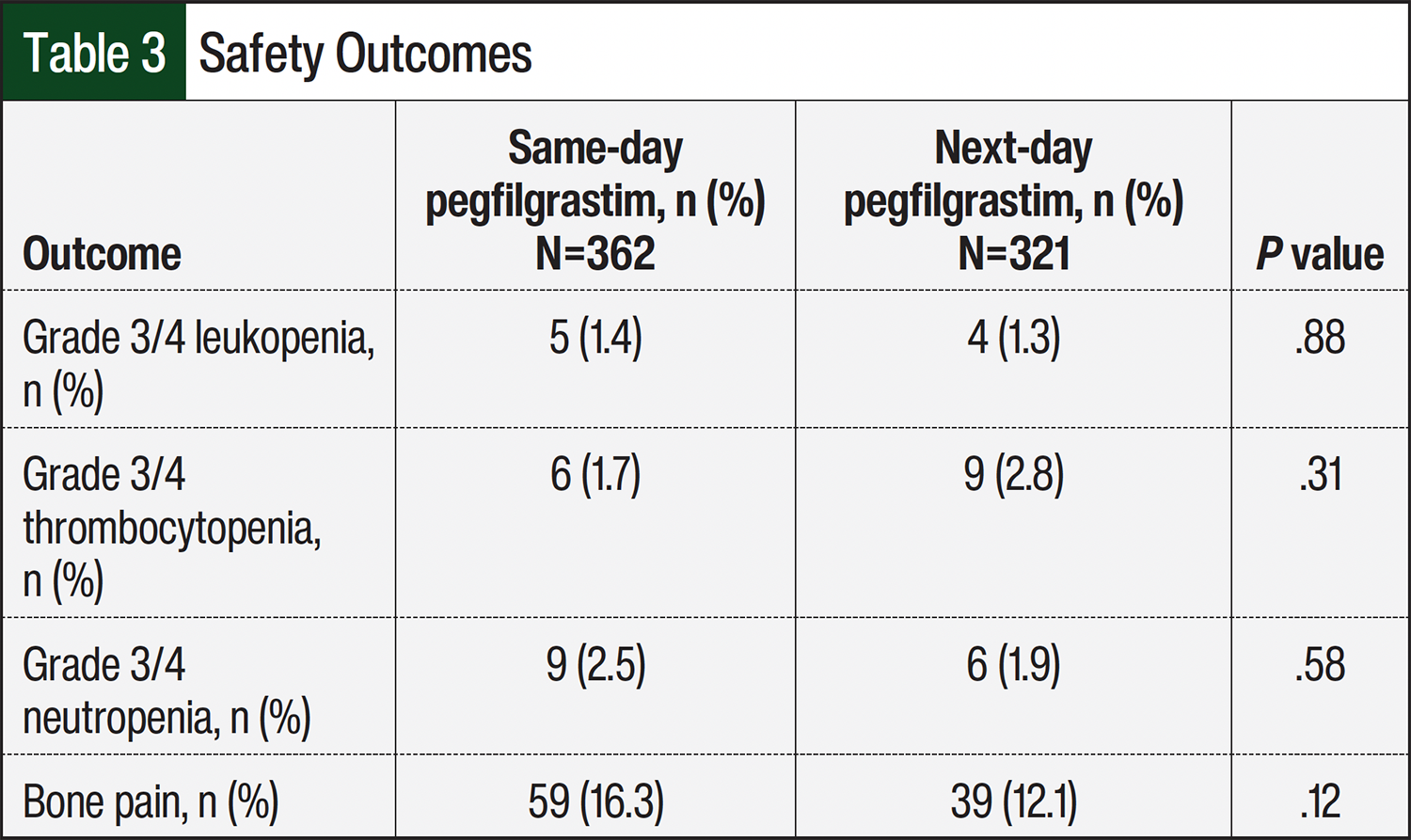
The primary outcome of hospital admissions due to FN was not statistically significant. The same-day administration group had an admission rate of 5.25% (19 of 362 patients), and the next-day administration group had an admission rate of 3.43% (11 of 321 patients; P=.25; Figure 1). The secondary outcomes of hospital admissions due to other infectious diagnoses (ie, infection without concurrent FN) and delay of future cycles of 5-FU due to neutropenia were also not statistically significant (Figure 2). A total of 38 patients in the same-day administration group were admitted for other infection-related reasons versus 27 patients in the next-day administration group (10.5% vs 8.4%, respectively; P=.35; Figure 3). In all, 10 patients had future cycles delayed due to neutropenia in the next-day administration group compared with 9 patients in the same-day administration group (3.1% vs 2.5%, respectively; P=.62. Table 2 shows the details of the other infectious reasons for admission. Safety outcomes between the 2 groups were also not statistically significant; these results are listed in Table 3.
Discussion
When synthesizing the information from relevant previous literature,3-9 the conclusion can be drawn that further literature is needed, but also that pegfilgrastim may be safe and effective when administered on the same day as the completion of continuous-infusion 5-FU in contrast to the FDA-approved dosing schedule. This is another study that adds to the body of literature and supports the use of same-day pegfilgrastim, but notably has a larger sample size than any of the other comparable studies3-9 that we are aware of, with 683 patients included in the study. This study also provides the largest cohort of comparative data on this topic that we are aware of, because most of the existing literature4,7-9 are single-arm studies.
There are some notable differences that need to be addressed in the patient population in this study. Notably, the percents of 3 of the 4 race categories are significantly different. The reasons for these differences likely lie in the institutions where these methods are used. Same-day pegfilgrastim administration is much more frequently used in clinics located in suburban areas, which, in the context of the Denver metropolitan area, has a higher proportion of White residents, whereas traditional next-day dosing is still used frequently at the Anschutz Medical Campus, which, overall, has a more diverse patient population in the immediate vicinity.10 The use of same-day pegfilgrastim in suburban areas also likely results from the decreased capacity of these administering facilities compared with the main campus, resulting in the saved chair time and appointments having a greater benefit for these facilities. The differences in the cancer types in the demographics likely result from the specializing physician’s practice as well as the location where they practice.
Although there was no obvious benefit for either administration method in this study, there were a few notable trends. Hospitalizations resulting from FN and non-FN infection–related reasons favored the traditional next-day dosing model. Although not significant, this may validate the traditional dosing model. The same-day administration group also had a higher proportion of patients who had bone pain, although this also was not significant. In contrast, all the other outcomes, inclusive of the cytopenia safety outcomes and the delayed chemotherapy cycles secondary outcome, favored the same-day administration or the numbers were comparable between the 2 groups.
There are a few reasons why this discrepancy in the outcomes may exist. Although this is not a statistical difference, hospitalizations resulting from infection-related causes were numerically higher in the same-day dosing group, which suggests the proportion of patients with other risk factors for severe infection-related complications may have been higher in this group. In addition, referring to the demographics that were previously discussed, more hospitalizations could have been reported in the same-day pegfilgrastim group because these patients are more inclined to go to a hospital rather than an outpatient center for initial evaluation. Patients who are located closer to the University of Colorado Hospital may be more inclined to seek care at the hospital emergency department initially, rather than go to an urgent cancer care clinic or the oncology clinic, which could lead to more of these patients being hospitalized. However, patients who may live further away from the main hospital may be more inclined to go to a local outpatient facility to avoid going to the hospital. Taking all of this into account, and knowing that neither group had a significantly superior outcome, it is reasonable that the administration of pegfilgrastim on the same day as a 5-FU pump disconnect can be a safe and effective alternative to the traditional dosing of pegfilgrastim.
Limitations
There are limitations to this study, primarily that it is a retrospective chart review with few exclusion criteria, which allows for potentially confounding variables. Also, because of the retrospective chart review nature of the study, there are potentially missed incidences of the safety outcomes. This study also did not differentiate the results based on the specific cancer type or regimen, which would be a beneficial analysis in future studies concerning the same-day administration of pegfilgrastim, because the specific regimen or cancer type may influence the patients’ risk for FN and skew the results of one or both groups of patients.
This study also did not collect data on the previous line of therapy or whether there were empiric dose reductions before the first cycle of chemotherapy. The most common regimens that were included were 5-FU, leucovorin, and oxaliplatin; 5-FU, leucovorin, and irinotecan; 5-FU, leucovorin, irinotecan, and oxaliplatin; and 5-FU, leucovorin, oxaliplatin, and docetaxel. The most common cancer was pancreatic cancer. This study gives an appropriate baseline with a large sample size to consider same-day pegfilgrastim administration in this cohort of regimens and cancer types and adds to the body of evidence to support further studies of same-day pegfilgrastim administration.
Conclusion
Future directions in this area of study should include a prospective study, which would greatly contribute to the robustness of the literature regarding the same-day administration of pegfilgrastim. There are no published prospective studies on this topic to date. Expanding the data set to patients throughout multiple health systems would also be a great benefit to the literature, because this study only focused on a single health system. A cost-effectiveness analysis of same-day pegfilgrastim administration is also a necessary addition to the literature about this topic, because it is unknown if there is universal insurance coverage of this method of administration. This analysis is also pertinent to determine the healthcare cost benefit associated with fewer next-day pegfilgrastim administration appointments and the resulting increased chair time available.
This study adds to the literature regarding same-day pegfilgrastim, particularly for any patients receiving continuous-infusion 5-FU. Our results correlate with the results of several studies for this patient population and validate the current practice principles of individual providers in the UCHealth system. These results may also allow other providers within the health system to begin using this method of administration. Although further studies are needed to appreciate the true benefits of same-day administration of pegfilgrastim, this study provides preliminary evidence that this method may be as safe and effective as the traditional dosing method for patients receiving continuous-infusion 5-FU.
Disclosure Statement
Dr O’Bryant is a consultant to Intera Oncology; Dr McVinney and Dr Wittig have nothing to disclose.
References
- Neulasta (pegfilgrastim) injection, for subcutaneous use [prescribing information]. Amgen Inc; August 2025. Accessed June 29, 2026. www.accessdata.fda.gov/drugsatfda_docs/label/2025/125031Orig1s209lbl.pdf
- National Comprehensive Cancer Network NCCN Clinical Practice Guidelines in Oncology (NCCN Guidelines): hematopoietic growth factors. Version 3.2026. Accessed July 2, 2026. https://www.nccn.org/guidelines/guidelines-detail?category=3&id=1493
- Burris HA, Belani CP, Kaufman PA, et al. Pegfilgrastim on the same day versus next day chemotherapy in patients with breast cancer, non-small-cell lung cancer, ovarian cancer, and non-Hodgkin’s lymphoma: results of four multicenter, double-blind, randomized phase II studies. J Oncol Pract. 2010;6:133-140. doi:10.1200/JOP.091094
- Cheng C, Gallagher EM, Yeh J-Y, Earl MA. Rates of febrile neutropenia with pegfilgrastim on same day versus next day of CHOP with or without rituximab. Anticancer Drugs. 2014;25:964-969. doi:10.1097/CAD.0000000000000115
- Billingsley CC, Jacobson SN, Crafton SM, et al. Evaluation of the hematologic safety of same day versus standard administration (24- to 72-hour delay) of pegfilgrastim in gynecology oncology patients undergoing cytotoxic chemotherapy. Int J Gynecol Cancer. 2015;25:1331-1336. doi:10.1097/IGC.0000000000000487
- Eckstrom J, Bartels T, Abraham I, et al. A single-arm, retrospective analysis of the incidence of febrile neutropenia using same-day versus next-day pegfilgrastim in patients with gastrointestinal cancers treated with FOLFOX or FOLFIRI. Support Care Cancer. 2019;27:873-878. doi:10.1007/s00520-018-4373-0
- Matera RM, Relias V, Saif MW. Safety and efficacy of same-day administration of pegfilgrastim in patients receiving chemotherapy for gastrointestinal malignancies. Cancer Med J. 2021;4:6-11.
- Draper AS, Lafollette J, Kim C, Wu CS. Retrospective study evaluating the safety of administering pegfilgrastim on the final day of 5-fluorouracil continuous intravenous infusion. J Oncol Pharm Pract. 2021;27:1159-1164. doi: 10.1177/1078155220945771
- Donkor KN, Selim JH, Waworuntu A, Lewis K. Safety and efficacy of pegfilgrastim when given less than 14 days before the next chemotherapy cycle: review of every 14-day chemotherapy regimen containing 5-FU continuous infusion. Ann Pharmacother. 2017;51:840-847. doi: 10.1177/106 0028017714554
- QuickFacts. United States Census Bureau. July 1, 2024. Accessed January 17, 2025. www.census.gov/quickfacts/fact/table/cherrycreekcdpcolorado,lonetreecitycolorado,highlandsranchcdpcolorado,auroracitycolorado/PST045225