

Connecting Science to Practice
This study examined whether using a closed-system drugtransfer
device (CSTD) could safely extend the microbiologic
stability of single-dose vials of high-cost injectable medications.
Vials were sampled at defined intervals up to 28 days
and were tested under controlled cleanroom and refrigerator
conditions using standard sterility media. No microbial
growth was detected during the study period, supporting the
notion that a CSTD may provide an added mechanical barrier
against contamination. These findings suggest a practical
opportunity for hospital pharmacies to reduce medication
waste, optimize costs, and enhance safety when handling
expensive injectable therapies. The results can guide institutional
risk assessments and policy development for safe
medication compounding and storage practices within regulated
sterile environments.
A closed-system drug-transfer device (CSTD) is a type of connector used to ease the transfer of medication from one container to another without spilling or microbial contamination. CSTD is recommended for use in compounding hazardous drugs per the United States Pharmacopeia (USP)
Chapter <797> Pharmaceutical Compounding—Sterile Preparations1 and USP Chapter <800> Hazardous Drugs—Handling in Healthcare Settings.2 For compounding personnel, the CSTD reduces the occupational risk for exposure to hazardous drugs by eliminating the possibility of spills during aspiration from the vials, and it saves compounders time compared with traditional methods of manual aspiration and injection.3 In addition, this device can be used for other purposes in the compounding processes, including extension of microbiologic stability by acting as a mechanical preservative that prevents the transfer of environmental contaminants into the system.4-6
We selected days 7 and 14 as checkpoints for sterility assessment, as is supported by evidence from 2 complementary lines of work. First, device-level microbial ingress simulations show that CSTDs can resist contamination for 7 days under worst-case conditions (the vial port is deliberately contaminated and then disinfected, and the system is repeatedly accessed across 1 week); a limitation is that these are manufacturer-run studies outside of routine clinical compounding and not drug-specific.6 Second, in-use or simulated compounding studies in oncology practice4,5,7 show that sterility can be maintained for up to 14 days when using CSTDs under ISO Class 5 conditions with USP <71>–recommended media and incubation.
In a 2-site investigation at Trillium Health Partners, vials accessed with the ICU Medical ChemoLock CSTD were repeatedly punctured and incubated in tryptic soy broth (TSB) and fluid thioglycollate medium (FTM) at 20°C to 25°C and 30°C to 35°C alongside positive and negative controls.7 No microbial growth was observed across 14 days, even though both compounding environments were only partially compliant with regulatory air quality standards.7 These findings demonstrate that CSTDs can effectively preserve the sterility of partially used vials, although generalizability may be limited to similar workflows and environments. In parallel, the results of a large, 592-sample audit of extended vial use showed that 1.86% of the sample plates had a single colony-forming unit that did not persist on repeat culture, which is consistent with plating contamination rather than vial ingress.8 Taken together, these 7- and 14-day data justify our time points and show how CSTD acts as a mechanical barrier.
Other investigations also demonstrated microbiologic integrity during extended vial use for 28 days. Wilkinson and colleagues reported that the Tevadaptor CSTD preserved the microbiologic sterility and physicochemical stability of hazardous drugs for up to 28 days after the first puncture.9 Similarly, Terkola and colleagues showed that the Chemfort CSTD prevented microbial contamination during repeated vial access over a 28-day period under controlled conditions.10 Our study extends previous research by testing across different air qualities and temperatures, and including a confirmatory subculture to adjudicate any ambiguous turbidity, which directly addresses common gaps and limitations in previous work.4,5,7,9,10
We extend the sterility assessment to 28 days using the ChemoLock CSTD, making this, to our knowledge, the first 28-day evaluation with this device and across different air qualities. We tested actual monoclonal antibody vials (not just media vials) of bevacizumab, cetuximab, nivolumab, ramucirumab, pertuzumab, and rituximab that were handled under routine practice. We compared 2 real storage environments, including an ISO Class 5 hood at room temperature and refrigeration outside the cleanroom (unclassified air), reflecting daily workflow. We sampled the same vials at 0, 7, 14, and 28 days with repeated re-entries, and then incubated using USP <71> methods (2 media, FTM at 30-35 °C and TSB/soybean casein digest medium at 20-25 °C for 14 days) with positive and negative controls,11 and we added a confirmatory subculture on tryptic soy agar (TSA) to catch faint growth, which is an extra safeguard that was not used in earlier studies.4,5,7,9,10 The design was balanced (n=20 vials: 2 media types, 2 storage conditions), conducted in a USP <797>– or USP <800>–compliant, Joint Commission International (JCI)-accredited facility, and we only included drugs that were preverified for 28-day chemical or physical stability (based on 2 internal reports from ICU Medical from November 1, 2007, and December 18, 2008) and compatible with the ChemoLock/ChemoClave CSTD materials, as demonstrated in manufacturer compatibility evaluations to avoid a third-variable bias.12-14 Together, these features address previous gaps and limitations (single environment, media-vial surrogates, no confirmatory culture) and provide more evidence for extended vial use with a CSTD.
The cost of cancer medications has been increasing; it is estimated that the global economic burden of cancer from 2020 to 2050 will be approximately $25.2 trillion in international dollars (at constant 2017 prices).15 This indicates high annual spending on cancer medications and expected further annual increases in cost, especially considering that many cancer treatments, such as biologics and targeted therapies, are formidably expensive. It is therefore economically wise to reuse the remaining volume from single-dose vials for future compounding, as long as the stability and sterility of the drug are not affected.
In addition, using the remaining volume of hazardous drugs reduces the need for the disposal of large amounts of hazardous drug waste. Hazardous drug vials would be disposed of empty rather than partially filled. This technique transforms the type of waste from large hazardous drug waste to trace hazardous drug waste, thus creating less environmental hazard; it also reduces the complexity of the handling method, which may result in further cost-savings during the disposal process. Chemotherapy waste is considered a significant environmental pollutant if improperly handled; it can cause harmful contamination to soil, water sources, and air.16 The toxic chemicals present in chemotherapy waste can persist in the environment, causing long-term harm; this necessitates implementing enforceable regulations for proper management of waste. Efficient and sustainable waste management strategies can help minimize and overcome the long-term cost encountered in minimizing environmental health hazards and ensuring sustainability and public well-being.17
Methods
The samples for this study were collected by a certified compounding pharmacist at a hazardous cleanroom that was adherent to USP <797> and USP <800> in a cancer center that is accredited by JCI. The cleanroom is microbiologically validated internally every 6 months per the USP <797> standards,1 whereas other environmental monitoring parameters are validated annually by an external third-party validator. The classification of the cleanroom is category 2, which means that it contains buffer and anterooms with ISO Class 7 air quality. We carried out the aseptic processes of the study in ISO Class 5 air quality in a biological safety cabinet type II A2 or compounding aseptic containment isolator. The samples included were from monoclonal antibodies (bevacizumab, cetuximab, nivolumab, ramucirumab, pertuzumab, rituximab), had a minimum of 4 mL of remaining volume after aspirating the patients’ doses, and were compatible with CSTD. Compatibility with CSTD was defined as compatible while maintaining chemical and physical stability for 28 days (based on internal reports from ICU Medical; November 1, 2007, and December 18, 2008) and compatible with the ChemoLock/ChemoClave CSTD materials.12-14 The 2 types of media that were chosen included TSB—also called soybean casein digest medium—and FTM; per the USP Chapter <71> sterility test, they are suitable for the detection of aerobes, anaerobes, and fungi.11
In the typical practice of compounding anticancer medications at our institution using CSTD, some vials are stored at room temperature and others are refrigerated per the manufacturers’ recommendations. Thus, after use, the CSTD-accessed vials containing the remaining volume of medications are stored in an ISO 5 hood if the medication’s storage condition states room temperature or it is contained in a resealable, zip-top plastic bag in a dedicated refrigerator for anticancer medication located outside the cleanroom in an unclassified air quality if it states it should be refrigerated.
At the end of the compounding shift, we collected vials of anticancer medications accessed by CSTD that contained the remaining volume of 4 mL minimum, which is enough for repeated sampling of 1 mL over 4 different intervals. A total of 20 samples were collected at different intervals and were divided into 2 groups of 10 vials each (Figure). Group 1 was tested using TSB growth medium and group 2 was tested using FTM.
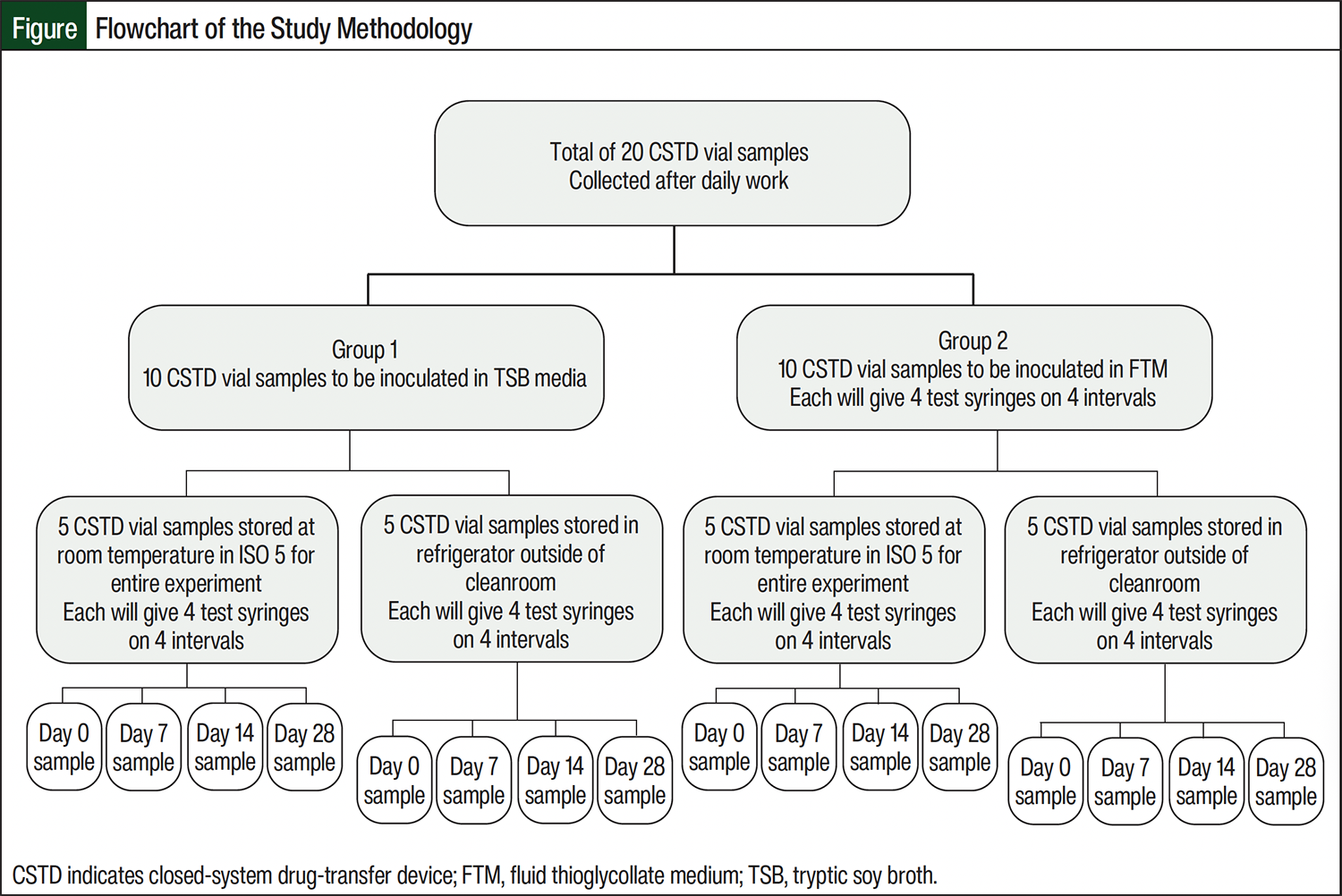
Simulating the normal daily practice of handling and storage conditions for the remaining volume in CSTD-accessed vials, groups 1 and 2 were equally divided into 2 subgroups of 5 vials each to be placed under different storage conditions. Five vial samples of each group were stored at room temperature in an ISO Class 5 hood for the entire study; the other 5 vial samples of the same group were refrigerated outside of the cleanroom to test the effect of temperature and air quality on maintaining sterility (Figure).
Under standard aseptic compounding procedures, from a total of 20 single-dose vials already accessed for use in patients using ChemoLock universal vented vial spike and containing remaining volumes of ≥4 mL, 1 mL from each sample CSTD-accessed vial was aseptically withdrawn by a certified compounding pharmacist at each specified interval using a syringe connected to a ChemoLock CSTD port, followed by aspiration of 20 mL of growth media in the same syringe using a ChemoLock CSTD injector; the color of the resultant solution was clear yellow. This step took place on day 0, 7, 14, and 28 intervals (Table 1).
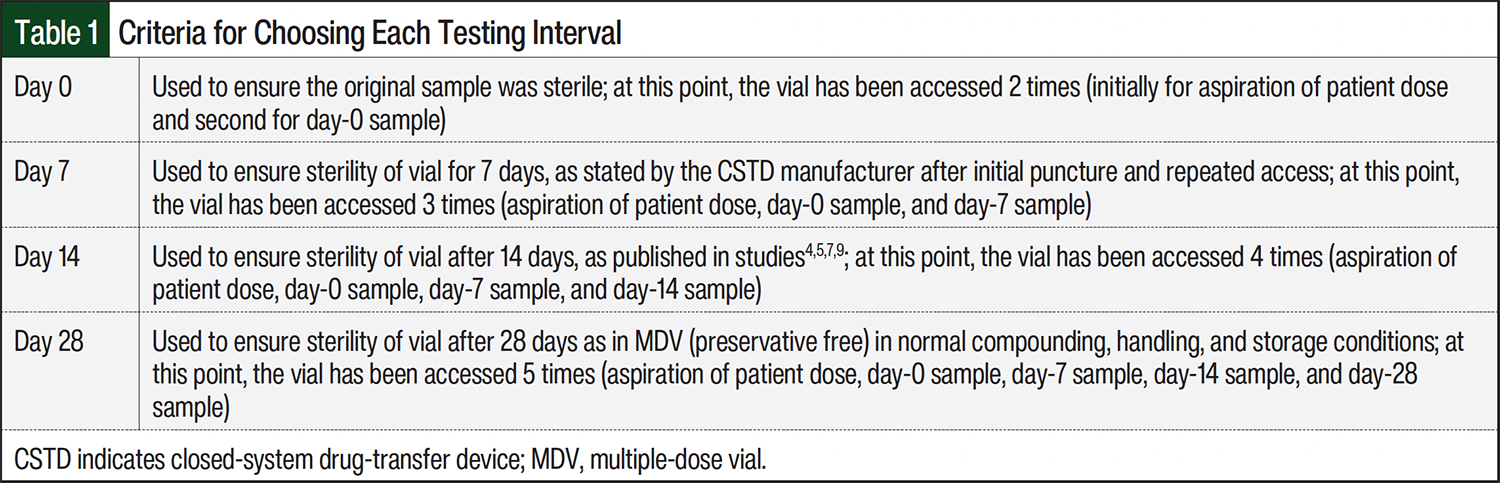
All test syringes were labeled with the sample number, sample interval, compounder initials, and aspiration date. The test syringes were then transferred to the microbiology laboratory for incubation (Table 1).
The 2 temperature ranges used for the incubation of the test syringes were 30-35 °C for 7 days followed by incubation in 20-25 °C for an additional 7 days, to ensure optimal growth conditions for different microorganisms. Negative and positive controls for each growth media were also used with each batch of aspirated samples. Positive results in the culturing step are indicated as turbidity or haziness in the test syringes.
The type of syringe used was BD Plastipak, which has a translucent, colorless plastic cylinder. Therefore, to rule out any fine turbidity that might not be noticed by the naked eye, we opted for an additional subculturing step on TSA. Subculturing is a process of aseptically transferring 1 mL of aliquot from the test syringes to a sterile nutritive medium for additional inoculation of microorganisms, if any, in addition to TSA. This was done at the end of the 14-day incubation period. The test syringes were retrieved and returned to the cleanroom to undergo subculturing by the same compounding pharmacist in the ISO 5 conditions in a biological safety cabinet or compounding aseptic containment isolator. The sample agar plates were then sent to the microbiology laboratory to be reincubated for an additional 2 days at 30°C to 35°C, followed by 5 days at 20°C to 25°C. All test agar plates were labeled with the sample number, sample interval, compounder initials, and test date. A positive result on TSA is indicated as growth colonies detected by the naked eye. A negative result is indicated as a clear yellow–colored test syringe and the absence of bacterial colonies on the TSA plate. All results were read, recorded, and interpreted by microbiologists.
Results
The 20 samples of single-dose vials that were accessed by ChemoLock CSTD and tested for sterility at 4 different intervals and followed by subculturing yielded 80 test syringes and 80 TSA agar plates. A total of 160 test media showed no growth, either in primary culture or subculture, even with repeated access and aspiration from vials in ISO Class 5 air quality. The results were negative regardless of the ISO classification of the storage conditions, as long as the sample was stored in a conventional manner, either at room temperature or refrigerated (Tables 2 and 3).
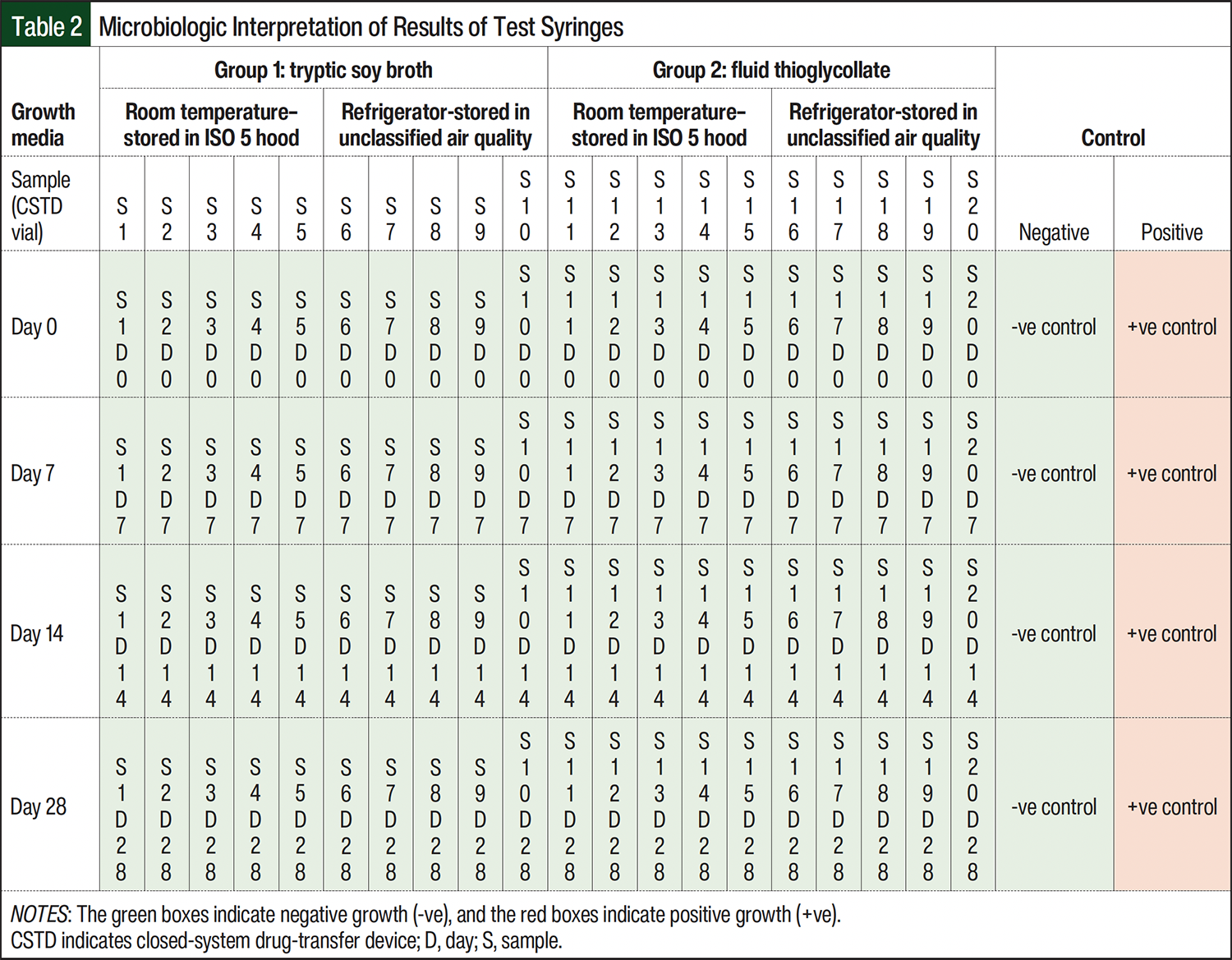
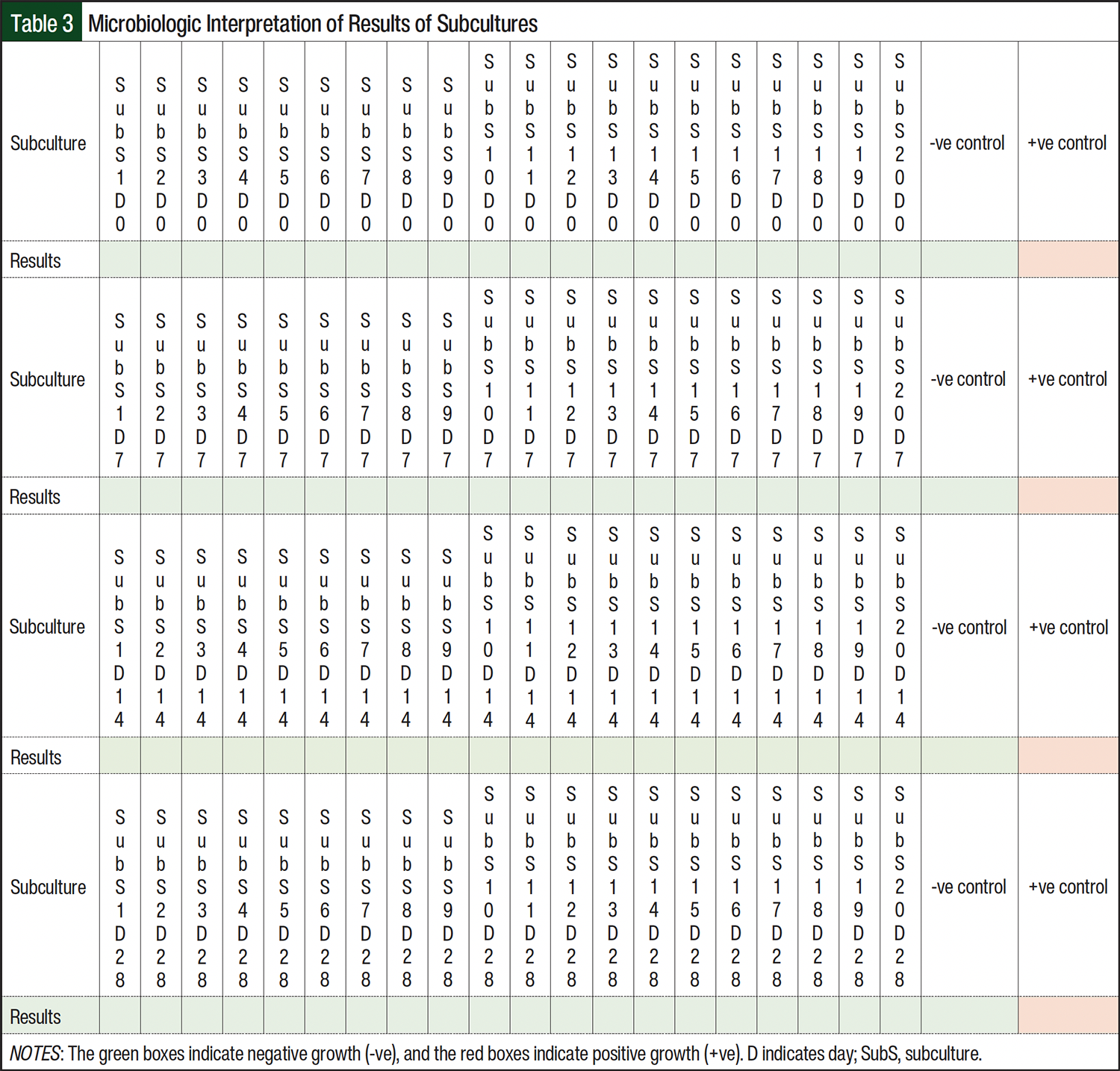
A single sample showed turbidity during incubation; however, during the subculture step it showed no growth in the agar plate, indicating physicochemical interaction between the sample medication and the growth media.
Discussion
Beyond microbiology, several programs reported real drug cost-savings when using CSTDs to extend the usable time of accessed single-dose vials. In a large US oncology center using PhaSeal, Edwards and colleagues documented $96,348.70 saved in 50 days (approximately $703,048 annualized), avoiding a mean 29% waste of each vial and more than offsetting the device’s costs in the same year.18 Rowe and colleagues combined sterility testing with an economic analysis and showed that a strict 12-hour discard per USP <797>1 creates substantial waste, whereas validated extension under an ISO 5 environment can avoid significant medication cost while maintaining sterility.8 In Malaysia, a 3-month evaluation of PhaSeal showed 10.5% medication cost-savings, with the caution of higher spending on nondrug materials, which is useful for budgeting purposes.19
An additional consideration is the practical need for extending vial usability to 28 days. In our institution’s practice, the number of patients requiring alemtuzumab rarely exceeds 3 to 4 cases annually, which means that once a vial is opened, the remaining drug may be unused for prolonged periods unless extended microbiologic stability is demonstrated. Similar patterns are observed with other specialized oncology agents, such as cladribine, clofarabine, and inotuzumab ozogamicin, where the number of eligible patients at any given time may be extremely small. Although operational optimization strategies are implemented, such as scheduling patients receiving the same medication on the same day, dose rounding, and centralized compounding, these measures cannot fully eliminate drug waste when only a single patient requires the medication over a prolonged period. In such circumstances, extending microbiologic stability under validated conditions can substantially reduce drug waste and improve cost efficiency, particularly for high-cost medications. Although this study did not quantify the number of vials that could be preserved beyond shorter time frames, such as 7 or 14 days, future studies evaluating real-world utilization patterns and cost-savings would provide valuable insight into the operational impact of extended vial usability.
Operationally, we aligned billing to the actual quantity administered per mL or per dose, not per vial, for all medications when CSTD is used. To support transparency and payer audit, we capture lot numbers, preparation and administration timestamps, storage conditions, and inventory movements. This framework enabled us to implement per-mL/per-dose charging and avoid charging patients for a full vial when clinically appropriate.
The use of CSTD during compounding of hazardous medications is not considered required by the US National Institute for Occupational Safety and Health20; rather, it is considered as recommended, which may be due to its additional cost. CSTDs are not FDA-cleared for extending the beyond use dates (BUDs), and JCI assesses adherence to FDA-cleared indications and USP <797> time frames. JCI states that the extension of a BUD past USP limits has not been approved as an indication for CSTD.21 Accordingly, we present these results as microbiologic stability evidence intended as reference for institutional risk assessments and future policy development. Any local adoption would require a defined institutional pathway, such as a Pharmacy & Therapeutics (P&T) policy with safeguards (validated storage/stability, environmental monitoring, lot-level traceability, and ongoing in-use sterility surveillance) and alignment with applicable regulators. The use of remaining single-dose vial volumes would be authorized by P&T policy and implemented via a pharmacy’s standard operating procedure. Pharmacy quality assurance would monitor compliance through routine audits.
In our setting, this approach is the most relevant to high-cost monoclonal antibodies supplied as preservative-free, single-dose vials and other hazardous medications. However, we rarely had the occasion to extend the BUD past 7 days. The 6 medications chosen for testing (ie, bevacizumab, cetuximab, nivolumab, ramucirumab, pertuzumab, and rituximab) represent the primary candidates for reuse with a CSTD because these monoclonal antibodies are routinely compounded, are costly, and frequently leave residual volume in the vial, except for pertuzumab, which is very expensive and leaves approximately 0.5 mL as overfill. For other monoclonal antibodies with similar vial presentation and stability characteristics, such as pembrolizumab, atezolizumab, durvalumab, panitumumab, and trastuzumab (preservative-free formulation), the same workflow can be considered after confirming the manufacturer stability and local compatibility checks.
Although our sampling excluded cytotoxic agents for laboratory safety reasons, previous research4,5,8 and our discussion support that the microbiologic findings are likely generalizable to cytotoxic vials handled under ISO 5 conditions with a CSTD.
Comparing the efficiency of using CSTD in compounding with conventional methods, ChemoLock CSTD has ease of use and is less time-consuming in doses that require large volumes. A 2015 study by Berdi and colleagues on different CSTD brands, including ChemoLock, compared the efficiency of CSTD in terms of time consumption and other measures.22 They concluded that there was no significant difference between the time it takes to compound with or without CSTD, but they did not test the time consumed in aspiration of large volumes.22 Further studies about the challenges of CSTDs and time consumed in real practice may be needed in the future.
We have not addressed the chemical and physical stability of the medications in this study; however, we followed the stability reports provided by the manufacturers, which reported the stability of medications in terms of functional integrity (leak) test, drug stability test, and plastic mitigation test for 28 days14 and based on internal reports (from ICU Medical on November 1, 2007, and December 18, 2008). These technical compatibility reports were obtained from the manufacturer on request during the initial institutional evaluation process before adopting the ChemoLock CSTD. Moreover, procedures followed in this study ensured that the medication remained contained in the same vial, was not modified from the original manufacturer’s conditions, and was only spiked using CSTD. However, some studies highlighted concerns regarding the efficacy and safety of CSTD components on antineoplastic agents.23-25 Further studies could be done to assess the chemical and physical stability of medications during the 28-day duration.
Among the strengths of this study, we examined the effects of different storage conditions on maintaining the sterility of the CSTD-accessed vials by storing half the test vials in a refrigerator in unclassified air quality and storing the other half at room temperature inside the hood in ISO 5 air quality. All the sampling steps in our study, including aspiration of the sample vial aliquot, inoculating it into the growth media, and retrieving the test syringes after incubation to undergo subculturing, were all done by a certified compounding pharmacist inside the cleanroom at ISO Class 5 air quality of the biological safety cabinet or compounding aseptic containment isolator; this was to avoid false-positive results and to unify the practice throughout the study. Furthermore, we tested the efficacy of CSTD as a mechanical preservative in different air qualities and temperature ranges, which previous studies did not do.4,5,7,9,10 In addition, we performed a subculturing step for further confirmation of absence of growth, which enabled us to rule out microbial growth in the single sample that showed turbidity.
Limitations
This study has limitations, including that the samples were taken from noncytotoxic medications, despite the fact that CSTD is used with all compatible cytotoxic medications in our setting. We limited our study to noncytotoxic medications to limit occupational exposure to hazardous drugs among the microbiology laboratory personnel.
An additional limitation of this study is its relatively small sample size, with only 20 vials evaluated. Although all tested samples during every interval remained sterile throughout the study period, the limited number of vials may restrict the generalizability of the findings. Therefore, larger studies with bigger sample sizes are needed to further validate the microbiologic stability and confirm the reproducibility of these findings in broader clinical settings.
Another limitation of this study is that only 1 brand of CSTD was evaluated. Different CSTD manufacturers use varying device designs, membrane technologies, and connection mechanisms, which may influence their microbial barrier performance.
Our study’s results may not be generalizable to all settings, because all healthcare facilities do not have access to the same level of resources and infrastructure, and CSTD use for extending the BUD might not yet be approved by their policies and regulations.
In addition to addressing chemical and physical stability as mentioned above, future research may include conducting the study in other settings, applying a cost-effectiveness analysis, and extending the observation period beyond 28 days.
Conclusion
Our findings show that using CSTD with monoclonal antibodies prepared in ISO 5 air quality in a category 2 cleanroom and stored in either ISO 5 or unclassified air quality at room temperature or in a refrigerator resulted in an extension of microbiologic stability to 28 days. Our findings support previous research on CSTDs, extending microbiologic stability for 7 and 14 days, and are consistent with more recent studies demonstrating the maintenance of sterility for up to 28 days using other CSTD systems. This extension may provide advantages in the form of lower costs and environmental sustainability. Additional studies with larger sample sizes are needed to further validate these findings and to confirm their duplicability in broader clinical settings.
Disclosure Statement
Ms Hassan, Dr Al Hashar, Mr Albadi, Mr Borra, Ms Joy, and Mr Al Salhi have no disclosures to report.
References
- United States Pharmacopeia. General Chapter <797>: Pharmaceutical Compounding—Sterile Preparations. In: USP–NF Online. Rockville, MD: US Pharmacopeia; 2022. doi:10.31003/USPNF_M99925_06_01
- United States Pharmacopeia. General Chapter <800>: Hazardous Drugs—Handling in Healthcare Settings. Revision Bulletin. Rockville, MD: US Pharmacopeia; May 31, 2019 (updated September 27, 2019). Accessed September 21, 2025. www.uspnf.com/sites/default/files/usp_pdf/EN/USPNF/revisions/gc-800-rb-notice-20190531.pdf
- Xie L, Chen G, Ouyang Q, et al. A high-efficiency automatic pressure-relief drug transfer device for anticancer medications with superior closed performance. Front Pharmacol. 2025;16:1579771. doi:10.3389/fphar.2025.1579771
- Ho KV, Solimando DA Jr, Edwards MS, Johnson AD. Determination of extended sterility for single-use vials using the PhaSeal closed-system transfer device. J Hematol Oncol Pharm. 2016;6:46-50.
- Uy MR, King S, Ko K, et al. Sterility duration of single-use vials for antineoplastic agents or monoclonal antibodies extended with a closed-system transfer device. J Hematol Oncol Pharm. 2019;9:40-44.
- ICU Medical Inc. ChemoLock closed system transfer device (CSTD) microbial ingress study. 2023. Accessed September 21, 2025. www.icumed.com/media/f30ef2eb/p23-4875_chemolock-microbial-ingress_wp_ada_web.pdf
- Mills A, Yousef M. Sterility testing using a closed system transfer device in oncology medication compounding. Drugs Ther Perspect. 2021;37:206-211. doi:10.1007/s40267-021-00823-4
- Rowe EC, Savage SW, Rutala WA, et al. Economic and microbiologic evaluation of single-dose vial extension for hazardous drugs. J Oncol Pract. 2012;8:e45-e49. doi:10.1200/JOP.2011.000488
- Wilkinson AS, Caspersen VV, Allwood MC, Sutton M. Extending practical (in-use) shelf life of drug vials with the Tevadaptor closed system transfer device (CSTD). Simplivia. Accessed March 12, 2026. www.simplivia.com/files/pdf/Tevadaptor_Brochures/Simplivia_Tevadaptor_Implementation_of_Beyond_Use.pdf
- Terkola R, Pietrzak CNJ, Nebel AS. Evaluation of long-term prevention of microbiological contamination of sterile preparations in a controlled ISO class 5 environment and an uncontrolled environment using a closed-system drug transfer device. Eur J Oncol Pharm. 2025;8:e59. doi:10.1097/OP9.0000000000000059.
- United States Pharmacopeia. General Chapter <71>: Sterility tests. In: USP–NF Online. Rockville, MD: US Pharmacopeia. Accessed September 21, 2025. https://doi.usp.org/USPNF/USPNF_M98810_01_01.html
- ICU Medical Inc. Extended chemical compatibility of CLAVE based products and Spiros. Internal technical report ENG-33. ICU Medical Inc; 2007.
- ICU Medical Inc. Universal vial spike chemotherapy drugs compatibility tests. Internal technical report ENG-219. ICU Medical Inc; 2008.
- ICU Medical. Chemical compatibility of ChemoClave and ChemoLock. San Clemente, CA: ICU Medical; 2018. Customer Informational Leaflet No. P18-3787.
- Chen S, Cao Z, Prettner K, et al. Estimates and projections of the global economic cost of 29 cancers in 204 countries and territories from 2020 to 2050. JAMA Oncol. 2023;9:e2307826. doi:10.1001/jamaoncol.2022.7826
- Environmental Protection Agency. Management Standards for Hazardous Waste Pharmaceuticals. Fed Register. September 25, 2015. Accessed September 21, 2025. www.federalregister.gov/documents/2015/09/25/2015-23167/management-standards-for-hazardous-waste-pharmaceuticals
- be’ah (Oman Environmental Services Holding Co). be’ah efforts in healthcare waste management. Accessed September 21, 2025. www.beah.om/documents/d/guest/beah_hcw_booklet_english_1
- Edwards MS, Solimando DA Jr, Grollman FR, et al. Cost savings realized by use of the PhaSeal closed-system transfer device for preparation of antineoplastic agents. J Oncol Pharm Pract. 2013;19:338-347. doi:10.1177/1078155213499387
- Chan HK, Lim YM. Cost analysis of using a closed-system transfer device for antineoplastic drug preparation in a Malaysian government-funded hospital. Asian Pac J Cancer Prev. 2016;17:4951-4957. doi:10.22034/APJCP.2016.17.11.4951
- National Institute for Occupational Safety and Health (NIOSH). NIOSH list of antineoplastic and other hazardous drugs in healthcare settings, 2016. DHHS (NIOSH) Publication No. 2016-161. Cincinnati, OH: US Department of Health and Human Services; September 2016. Accessed September 21, 2025. www.cdc.gov/niosh/docs/2016-161/pdfs/2016-161.pdf
- Joint Commission. Can a closed system transfer device be utilized to extend the beyond use date of a single dose container? Standards FAQ. First published January 23, 2018; updated January 9, 2026. Accessed June 11, 2026. www.jointcommission.org/en-us/knowledge-library/support-center/standards-interpretation/standards-faqs/000002186
- Berdi F, Gonzalez R, Massoomi F, et al. Assessing the efficiency of CSTDs for compounding. Pharm Purchasing Prod. 2015;12:4-7.
- Chiang SC, Shen M, Lin CC, Chang HP. Establishing a protocol for the compatibilities of closed-system transfer devices with multiple chemotherapy drugs under simulated clinical conditions. PLoS One. 2021;16:e0257873. doi:10.1371/journal.pone.0257873
- Patke S, Gaillat EN, Calero-Rubio C, et al. A systematic approach to evaluating closed system drug-transfer devices during drug product development. J Pharm Sci. 2022;111:1325-1334. doi:10.1016/j.xphs.2021.12.020
- Sreedhara A, Zamiri C, Goswami S, et al. Challenges of using closed system transfer devices with biological drug products: an industry perspective. J Pharm Sci. 2020;109:22-29. doi:10.1016/j.xphs.2019.10.042