

Connecting Science to Practice
In hematology/oncology clinics, drug denials are frequent,
and appealing these denials requires significant time and
clinical expertise. The researchers evaluated the impact of 4
hematology/oncology–trained clinical pharmacy specialists
(CPSs) on drug access after denials. In a large academic medical
center, trained hematology/oncology CPSs overturned
nearly 70% of insurance denials. Even when denials were
upheld or copays were prohibitively expensive, the CPSs and
technicians together facilitated medication access via a manufacturer
patient assistance program in almost half of the cases,
resulting in an 83% overall medication access rate. Trained
hematology/oncology pharmacists are uniquely positioned to
help patients and care teams navigate the medication access
process as a result of their clinical expertise and their insurance
systems knowledge.
Prior authorizations (PAs) are a ubiquitous strategy used by insurance companies to determine the coverage of medications and services. PAs are completed by providers and their staff for medical and prescription drug insurance coverage. Although PAs may reduce healthcare costs, there are concerns about negative impacts on the safety, timeliness, and quality of care.1 PAs for medications and procedures are also time-consuming and add to administrative burden.2-4 Some healthcare systems integrate pharmacy teams into their clinics to streamline the PA process and assist overworked personnel.5-8 Several associations, including the American Medical Association and American Pharmacists Association, released a consensus statement describing opportunities to reduce the PA burden while “promoting safe, timely and affordable access to evidence-based care for patients.”9 It is important for providers and their medical staff to submit PAs in a timely fashion to ensure the continuity of care for patients.
PAs can be challenging for patients who require treatment for complex disease states, such as hepatitis C,10,11 multiple sclerosis,12 psoriasis,13 cancer,14,15 and cancer pain.16 Between 2016 and 2021, the FDA approved 207 cancer treatment drugs.17 The hematology/oncology specialty is subjected to numerous PA requests because of the high cost of these therapies, including first-in-class agents, oral oncolytics, monoclonal antibodies, and specialized supportive care medications. A denial could result in the use of a less appropriate or more harmful treatment, a lack of access to necessary supportive care, and an increased burden to the clinic staff for administrative and scheduling needs.
Several studies illustrate the role of a clinical pharmacy specialist (CPS) in appealing an insurance denial. In a descriptive analysis of hematology/oncology CPS clinical activities at a large cancer center, CPSs frequently documented financial interventions, including appeals, in addition to their broader clinical activities.18 Other groups have also described the integration of a hematology/oncology CPS into a precision medicine program.7,8 In this role, the CPS contributes to individual treatment recommendations based on targetable mutations and facilitates off-label drug procurement. At another large academic medical center, medically integrated specialty pharmacists navigated the appeal process for patients in a digestive disease center.6 Despite 25% of initial PA requests being denied, the CPSs obtained medication access for all of these patients through insurance appeals (97%) or manufacturer assistance programs (3%).6 However, additional data are necessary to describe the impact of the CPS in overturning insurance denials and guaranteeing medication access in the hematology/oncology setting.
Beth Israel Deaconess Medical Center (BIDMC) is a 743-bed academic medical center and is a part of the Beth Israel Lahey Health system. The BIDMC Cancer Center has 4 trained hematology/oncology CPSs working with providers in the outpatient setting on a broad spectrum of clinical activities. The covered specialized clinics include benign and malignant hematology, cellular therapy, and all solid oncology except neuro-oncology.
At BIDMC, specialized pharmacy technicians submit PAs and triage prescriptions to the appropriate specialty pharmacies. The pharmacy technicians also obtain copay assistance if needed. When PAs are denied, the CPSs draw on their clinical expertise and relevant literature to complete the peer-to-peer reviews or draft a letter of medical necessity (LOMN) to appeal the denial. If the denial is upheld, the CPS and technician can complete an application together for manufacturer assistance. Each of these steps can take days to weeks to complete. This study aims to characterize the impact of 4 ambulatory hematology/oncology CPSs on patient drug access after insurance denials.
Methods
This single-center, retrospective study included patients in a hematology/oncology clinic who had treatment or supportive care medications denied by their medical or prescription insurance from August 1, 2020, to August 31, 2022. Patients were included if the CPS personally performed the peer-to-peer reviews or drafted the LOMN to appeal the denial. The patient list was obtained from a tracker built into an Excel file and was verified against the CPSs’ personal LOMN drafts and peer-to-peer records.
The electronic health record was reviewed for data collection. The medical chart review included hematology/oncology provider notes, medication orders, and prescriptions sent to community or specialty pharmacies. The data collected for this review included patient demographics, diagnosis, clinic area/type, medication, health insurance type, pharmacy benefit manager, FDA-approved or off-label use, insurance appeal decision, medication access, initiation of treatment, time on treatment, and clinical impact. This study was deemed exempt by the local institutional review board.
The primary end point was the number of denied medications approved by insurance after the pharmacist completed the appeal process. The secondary objectives included the rate of medication access after a denial was upheld, the association of baseline characteristics with appeal success, the time to treatment, and the clinical impact of medication access in off-label treatment cases. Medication access was defined as either approval through insurance with an affordable copay or approval for a manufacturer patient assistance program (PAP).
Statistical Analysis
Descriptive statistics were used to report the patients’ characteristics. Chi-square or Fisher’s exact tests, as appropriate, were utilized to analyze the associations in categorical differences between the groups.
Results
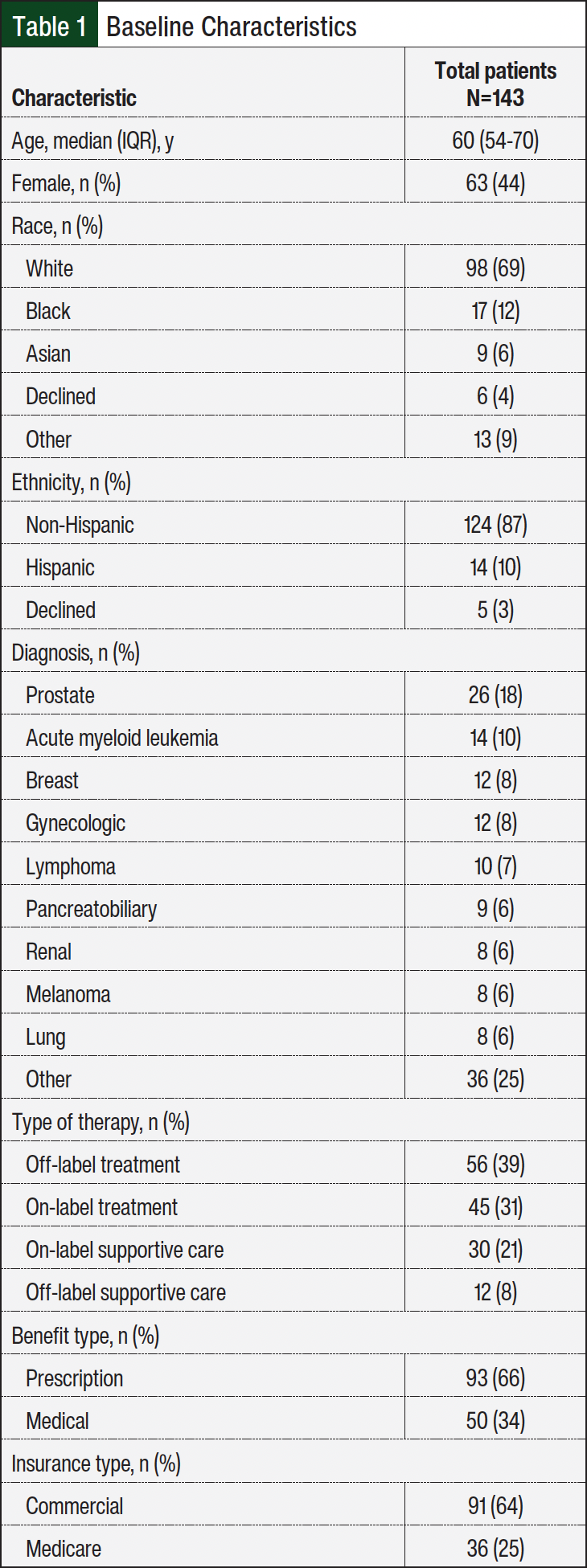
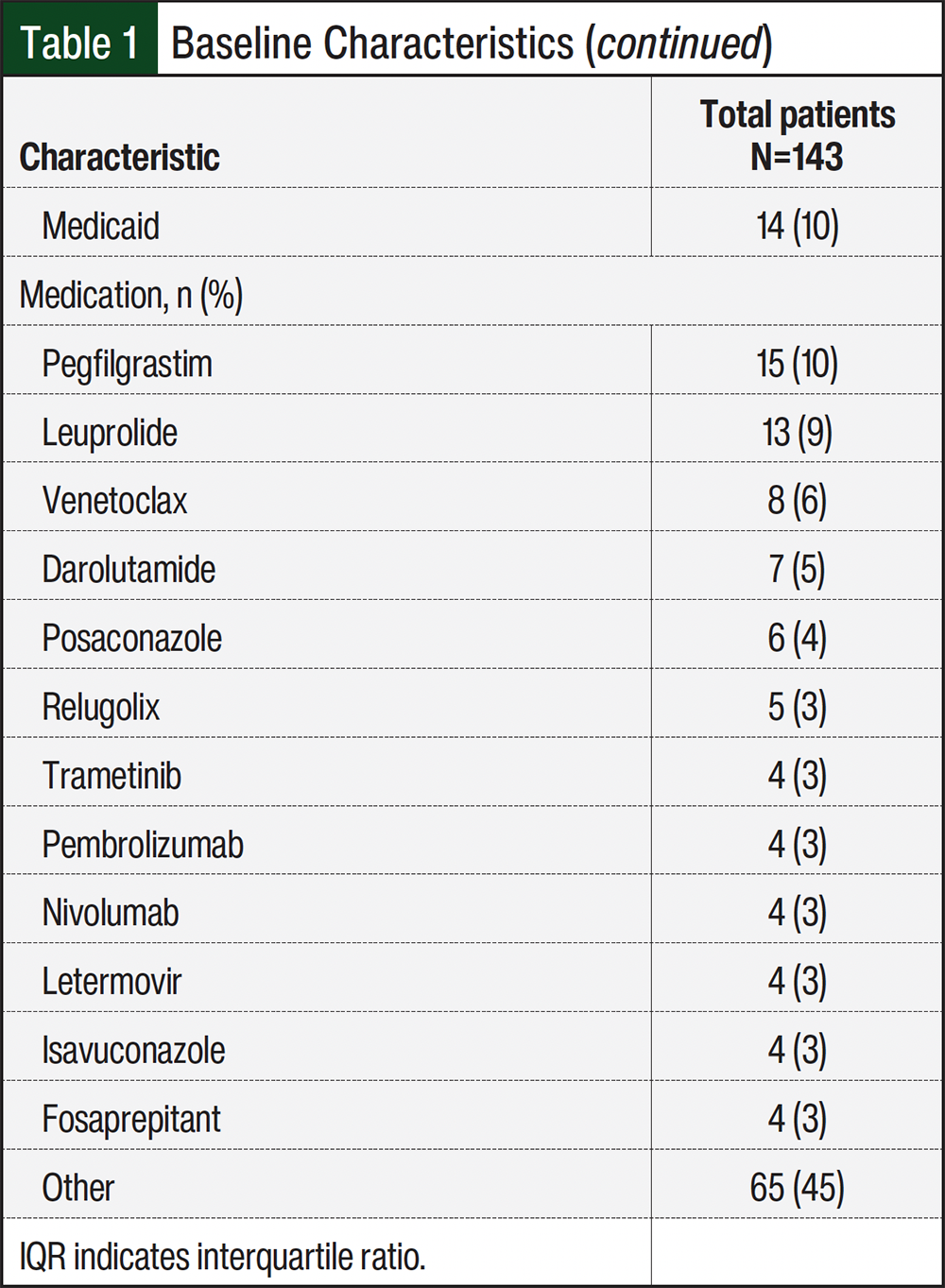
In the selected time interval, CPSs facilitated 143 drug appeals, with most drugs being denied via the prescription benefit (66%) and through commercial plans (64%; Table 1). Most (71%) denied drugs were oral oncolytics, and more than half (52%) were on-label drugs, although off-label treatments were the plurality (39%). A wide variety of primary cancer diagnoses were represented, with prostate cancer (18%) and acute myeloid leukemia (10%) as the most common. Pegfilgrastim, including biosimilars, was the most frequent drug denied (10%). The median age of patients affected by denials in this cohort was younger than the median age of cancer diagnosis in the United States (60 vs 67 years old), which may reflect the high proportion of patients with commercial coverage.19 A diverse population of patients was represented, with 27% of patients identifying as non-White and 10% identifying as Hispanic.
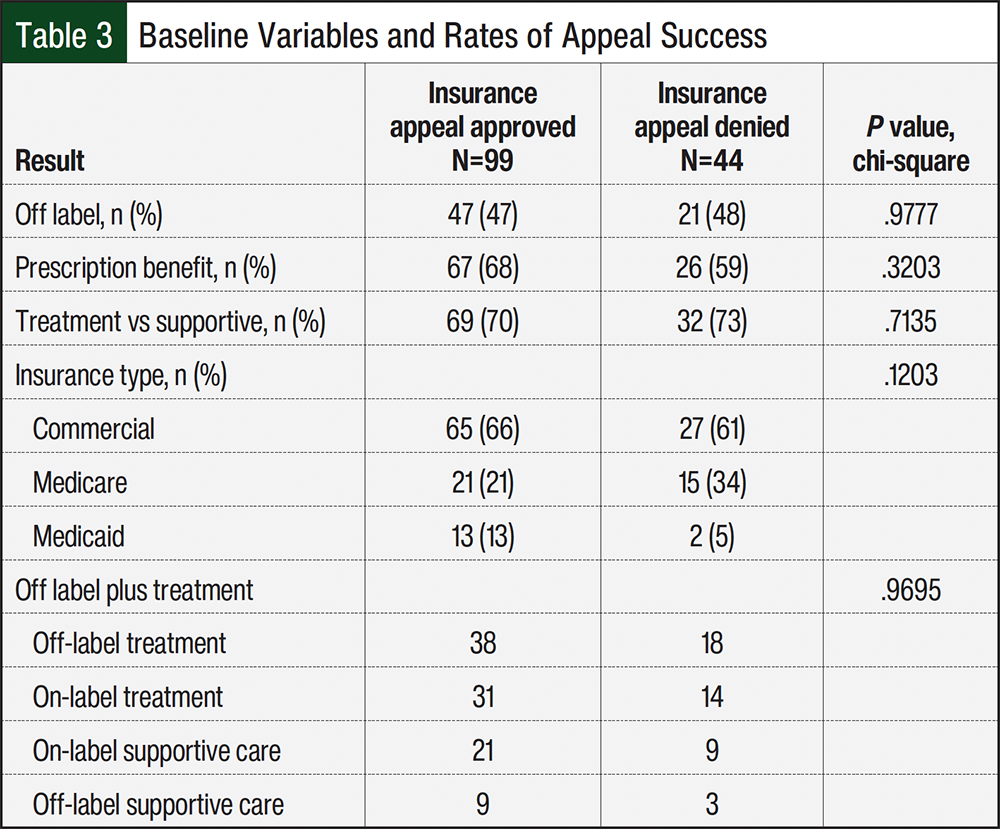
Among 143 instances where CPSs assisted, 99 (69%) denials were overturned by insurance. Almost all (92%) patients in this group initiated therapy, although some of the patients opted for alternative therapies or transitioned to hospice before therapy could be initiated (Table 2). In a univariate analysis, none of the baseline factors were significantly associated with appeal success (on-label vs off-label, prescription vs medical, treatment vs supportive, or insurance type; Table 3).
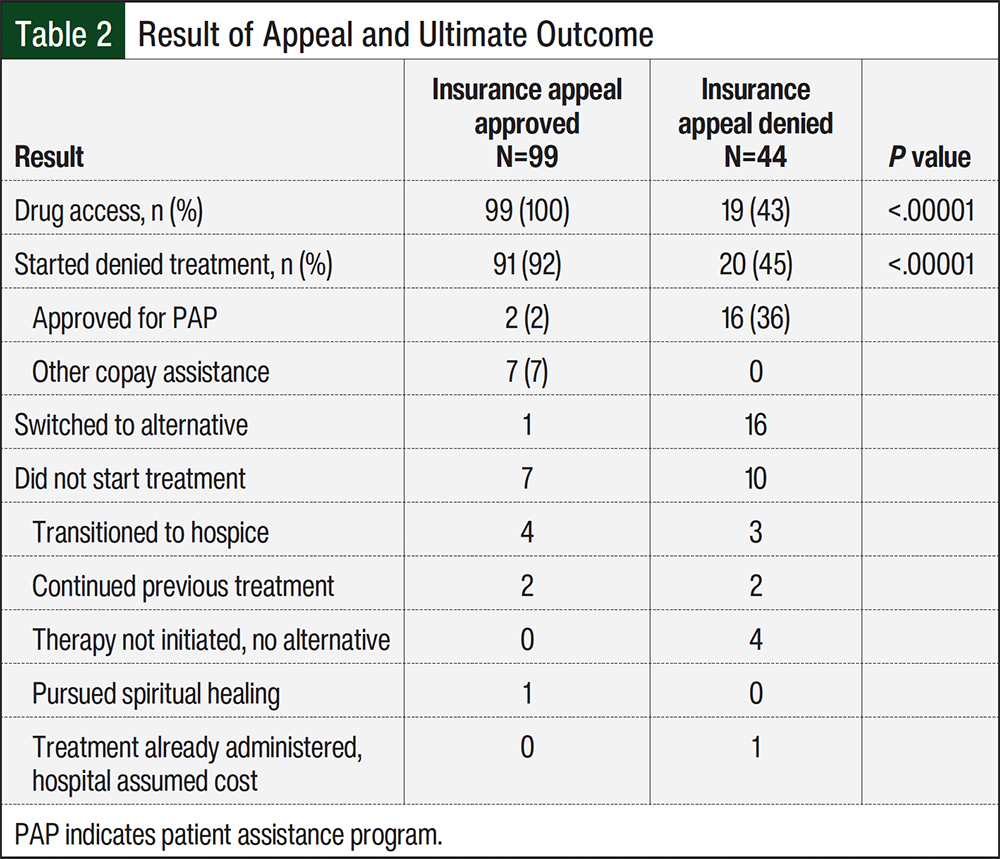
In cases where the denial was upheld, 19 (43%) patients gained access to therapy via a manufacturer’s PAP, but some patients were denied because their income was too high or because the PAP did not allow off-label treatment (n=2 in each group). Many of the remaining patients whose denial was upheld switched to an alternative therapy (n=16) or continued a previous treatment (n=2), but some patients either had no alternative therapy (n=4) or transitioned to hospice (n=3). In one case, the denied drug had already been given via the medical benefit, and the hospital subsequently shouldered the cost of the medication.
In the subgroup of prescription benefit denials where the denial most directly prohibits outpatient drug administration (n=70), 91% of patients gained access to the medication either via overturned denial (n=47) or PAP (n=17). However, this access still came with a significant time cost. Among 40 evaluable patients, the median time between the prescription date and the date of treatment initiation was 22 days (interquartile range [IQR], 10.75-37.5 days), with those requiring PAP taking even longer (median, 32 days; IQR, 20.25-40.75 days).
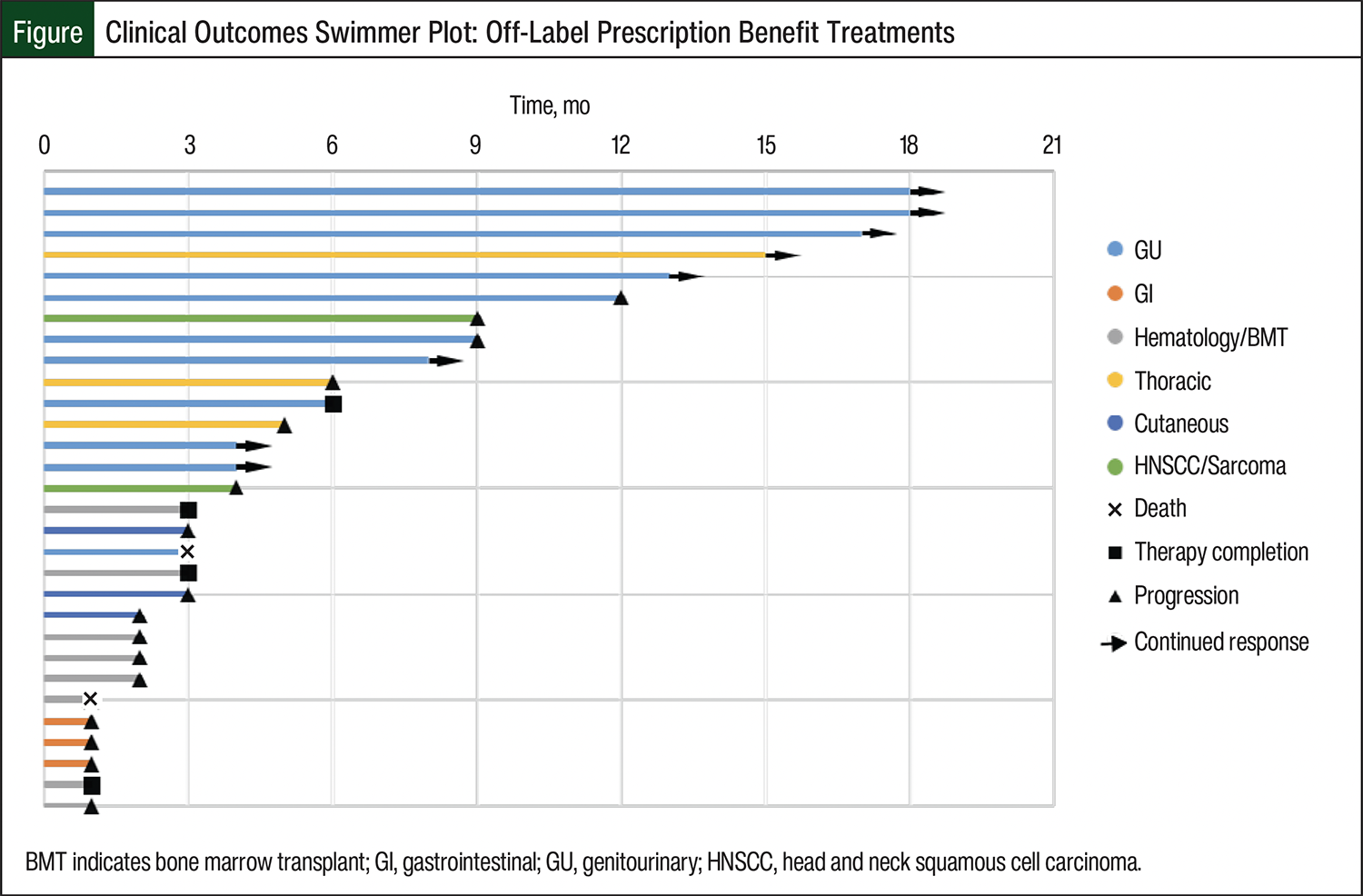
The clinical impact of medication access in off-label treatment cases after pharmacist involvement was gathered after at least 5 months of follow-up. Although many patients had a short response or progression as their best response to this treatment, 4 patients successfully completed their planned duration of therapy and 8 patients had continued responses at the time of analysis, which was up to 18 months in 2 patients (Figure). The median time receiving treatment was 4 months in this cohort.
Discussion
Insurance denials and other utilization management strategies have become increasingly common as the costs of cancer care and treatment have skyrocketed.1,14 In a large academic medical center, trained hematology/oncology CPSs enabled patient access to denied medications by leveraging their clinical expertise and process knowledge. The CPSs overturned nearly 70% of all denials. Even when denials were upheld or copays were prohibitively expensive, the CPSs and technicians together facilitated medication access via a manufacturer PAP in almost 50% of cases, resulting in an 83% overall medication access rate. Although it is difficult to compare across disease states, the appeal success rate in this analysis is less than the 100% reported by a pharmacy team in a digestive disease center, but better than the 21.7% reported by a team of clinicians in a dermatology clinic.2,6 It is also notable that an appeal was only attempted in 30.3% of denied PAs in this dermatology clinic, perhaps reflecting the time burden of appeals and a busy clinician’s lack of ability to spend that time. Writing LOMNs and performing peer-to-peer discussions are cumbersome and highly clinical activities. For clinics without embedded CPSs, appealing numerous denied PAs may be unrealistic.
The CPSs and technicians were able to efficiently navigate these convoluted insurance processes, leading to a median time from prescription date to therapy initiation of 22 days. Although significantly longer than the median time to treatment initiation for hematology/oncology patients served by the Beth Israel Lahey Health internal specialty pharmacy (5 days), this is comparable with the median time to treatment for patients served by external specialty pharmacies (27 days) as described by Academia and colleagues.20 This is remarkable, especially given the complex workflow, slow insurance appeal departments, and competing clinical and operational responsibilities for all team members.
Although none of the baseline factors was significantly associated with success in overturning the initial denial (on-label vs off-label, prescription vs medical, treatment vs supportive, or insurance type), it is concerning that many of the denied therapies were prescribed on label. These included instances of nonpreferred biosimilars, quantity limits, and restricted drug formularies. Quantity limits on antiemetics specifically have long been a harmful cost-saving measure for oncology patients, potentially resulting in distress, treatment delay, dose decrease, and hospitalization.21 Although biosimilars for drugs, such as pegfilgrastim, reduce costs to the healthcare system, payer biosimilar preferences are rarely available to bedside clinicians in a timely way.22 This can lead to frustrating denials and appeals, when the clinician would readily have used the preferred biosimilar.
Although this study was not designed to evaluate clinical outcomes with this cohort of patients, patient follow-up was examined. Among patients who started off-label oral oncolytics, several patients had durable responses or completed the planned duration of therapy. However, not all of the patients benefited. All 3 patients with gastrointestinal malignancies had disease progression within a month of initiating the off-label treatment, and the median time on treatment overall was 3.5 months. In this article, we do not analyze or justify the choice of off-label therapy in these clinical scenarios. Rather, our article supports that the CPS’s intervention in obtaining access to a denied treatment led to meaningful clinical outcomes in several patients.
Limitations
Because this study included only 1 large academic medical center, these findings may not be representative of the experience at other institutions, especially those with a less well-staffed ambulatory pharmacy team. Unfortunately, these data do not allow for the direct measurement of pharmacists’ impact on the outcomes of denied drugs versus any control group. Last, the time spent by providers and pharmacists in facilitating these appeals was not quantified.
Conclusion
In this single-center analysis, ambulatory hematology/oncology CPSs enabled access to denied medications in most cases and in a timely way. Trained hematology/oncology pharmacists are uniquely positioned to help patients and care teams in this scenario because of their clinical expertise and their insurance systems knowledge. Successful appeal letters require a comprehensive understanding of hematology/oncology care, the relevant guidelines and clinical trials, and refined professional writing skills. CPSs can guide their patients and teams through the extensive processes of appealing and obtaining copay assistance.
Disclosure Statement
Dr Academia is currently employed at AstraZeneca and was previously employed at BIDMC; Dr Mejías-De Jesús, Dr Jia, and Dr Stevens have nothing to disclose.
References
- Shah D, Tongbram V, Paly V. Impact of prior authorization restrictions on resource utilization and costs in US health plans: a review of literature. Value Health. 2014;17:A418. Abstract PHP84. doi:10.1016/j.jval.2014.08.1019
- Carlisle RP, Flint ND, Hopkins ZH, et al. Administrative burden and costs of prior authorizations in a dermatology department. JAMA Dermatol. 2020;156:1074-1078. doi:10.1001/jamadermatol.2020.1852
- Gupta A, Khan AJ, Goyal S, et al. Insurance approval for proton beam therapy and its impact on delays in treatment. Int J Radiat Oncol Biol Phys. 2019;104:714-723. doi:10.1016/j.ijrobp.2018.12.021
- Lee V, Berland T, Jacobowitz G, et al. Prior authorization as a utilization management tool for elective superficial venous procedures results in high administrative cost and low efficacy in reducing utilization. J Vasc Surg Venous Lymphat Disord. 2020;8:383-389.e1. doi:10.1016/j.jvsv.2019.10.016
- Martin MT, Telebak E, Taylor PA, Volozhina O. Development of a specialty medication prior-authorization service at an urban academic medical center. Am J Health Syst Pharm. 2016;73:1174-1179. doi:10.2146/ajhp160059
- Bagwell A, Kelley T, Carver A, et al. Advancing patient care through specialty pharmacy services in an academic health system. J Manag Care Spec Pharm. 2017;23:815-820. doi:10.18553/jmcp.2017.23.8.815
- Arnall JR, Petro R, Patel JN, Kennedy L. A clinical pharmacy pilot within a precision medicine program for cancer patients and review of related pharmacist clinical practice. J Oncol Pharm Pract. 2019;25:179-186. doi:10.1177/ 1078155217738324
- Raheem F, Kim P, Grove M, Kiel PJ. Precision genomic practice in oncology: pharmacist role and experience in an ambulatory care clinic. Pharmacy (Basel). 2020;8:32. doi:10.3390/pharmacy8010032
- Consensus statement on improving the prior authorization process. American Medical Association. Accessed May 22, 2023. www.ama-assn.org/sites/default/files/media-browser/public/arc-public/prior-authorization-consensusstatement.pdf
- Do A, Mittal Y, Liapakis A, et al. Drug authorization for sofosbuvir/ledipasvir (Harvoni) for chronic HCV infection in a real-world cohort: a new barrier in the HCV care cascade. PLoS One. 2015;10:e0135645. doi:10.1371/journal.pone.0135645
- Lo Re V III, Gowda C, Urick PN, et al. Disparities in absolute denial of modern hepatitis C therapy by type of insurance. Clin Gastroenterol Hepatol. 2016;14:1035-1043. doi:10.1016/j.cgh.2016.03.040
- Wang G, Marrie RA, Salter AR, et al. Health insurance affects the use of disease-modifying therapy in multiple sclerosis. Neurology. 2016;87:365-374. doi:10.1212/WNL.0000000000002887
- Abdelnabi M, Patel A, Rengifo-Pardo M, Ehrlich A. Insurance coverage of biologics for moderate-to-severe psoriasis: a retrospective, observational 5-year chart review. Am J Clin Dermatol. 2016;17:421-424. doi:10.1007/s40257-016-0194-4
- Agarwal A, Freedman RA, Goicuria F, et al. Prior authorization for medications in a breast oncology practice: navigation of a complex process. J Oncol Pract. 2017;13:e273-e282. doi:10.1200/JOP.2016.017756
- Smith AJB, Mulugeta-Gordon L, Pena D, et al. Prior authorization in gynecologic oncology: an analysis of clinical impact. Gynecol Oncol. 2022;167:519-522. doi:10.1016/j.ygyno.2022.10.002
- Tanco K, Bruera SE, Bruera E. Insurance company denial of payment and enforced changes in the type and dose of opioid analgesics for patients with cancer pain. Palliat Support Care. 2014;12:515-518. doi:10.1017/S1478951514000091
- Benjamin DJ, Xu A, Lythgoe MP, Prasad V. Cancer drug approvals that displaced existing standard-of-care therapies, 2016-2021. JAMA Netw Open. 2022;5:e222265. doi:10.1001/jamanetworkopen.2022.2265
- Meleis LA, Patel MP, DeCoske M, et al. Evaluation of the role and impact of ambulatory clinical pharmacists in an academic comprehensive cancer center. J Adv Pract Oncol. 2020;11:817-824. doi:10.6004/jadpro.2020.11.8.2
- National Cancer Institute. SEER cancer stat facts: cancer of any site. Accessed July 8, 2026. https://seer.cancer.gov/statfacts/html/all.html
- Academia EC, Mejías-De Jesús CM, Stevens JS, et al. Adherence to oral oncolytics filled through an internal health-system specialty pharmacy compared with external specialty pharmacies. J Manag Care Spec Pharm. 2021;27:1438-1446. doi:10.18553/jmcp.2021.27.10.1438
- Haque W, Sedhom R, Chino F, et al. Payer-imposed quantity limits for antiemetics: everybody hurts. JCO Oncol Pract. 2022;18:313-317. doi:10.12 00/OP.21.00500
- Report: 2023 U.S. Generic and Biosimilar Medicines Savings Report. Association for Accessible Medicines. September 2023. Accessed February 23, 2024. https://accessiblemeds.org/resources/reports/2023-savings-report