

Connecting Science to Practice
Studies have evaluated rapid rituximab infusions in malignant
hematology over as quickly as 30 minutes, although little
data exist for classical hematology indications. The purpose
of this study was to assess incidence and severity of
hypersensitivity reactions (HSRs) with rapid rituximab over
90 minutes for classical hematology indications. The main
outcome of this study includes the incidence of HSRs for the
first 2 rapid rituximab doses. The outcomes from this study
add to the limited body of knowledge regarding rapid rituximab
infusions in classical hematology, supporting the safety
of rapid administration as seen by minimal grade 1 or 2 HSRs
and no grade 3 or 4 HSRs. With the ability to utilize rapid
infusions in this population, reduction in chair time minimizes
cost and increases the healthcare system efficiency.
Rituximab is a CD20-targeted, chimeric, monoclonal antibody, indicated for the treatment of malignant and classical hematology conditions. CD20 is expressed on B cells, and rituximab causes B-cell depletion via several mechanisms, including antibody-dependent cellular cytotoxicity, direct CD20 cross-linking, complement-dependent cytotoxicity, and opsonization-induced phagocytosis.1
Although, in general, it is well tolerated, rituximab has a known risk for hypersensitivity reactions (HSRs), which are often infusion related. Infusion-related HSRs are quite common, particularly with the first infusion, with incidences as high as 77% in the literature.2 Of these infusion-related HSRs, 88% were grade 1 or 2, whereas only up to 6% were grade 3 or 4.2 Infusion-related HSRs decrease with subsequent doses of rituximab, and were as low as 6% during the second infusion and beyond.3 Most patients have mild HSRs and symptoms such as rash, pruritus, flushing, and dyspnea. Reactions are typically managed by stopping the infusion and occasionally administering additional rescue medications. Less frequently, patients can have severe, anaphylactic reactions, including bronchospasm, angioedema, shock, or hypoxemia. Severe reactions may be fatal in 0.04% to 0.07% of patients.1
To reduce the risk for HSRs, an antihistamine, corticosteroid, and acetaminophen are required premedications. Although the prescribing information (PI) highlights these recommendations, general practice typically includes diphenhydramine, acetaminophen, and most frequently, dexamethasone. In addition, the initial infusion is administered at a slower rate of 50 mg per hour and is titrated in increments of 50 mg per hour to a maximum rate of 400 mg per hour. If tolerated, per the PI, subsequent infusions may be started at 100 mg per hour and increased by 100 mg per hour thereafter to a maximum rate of 400 mg per hour. On average, a first infusion may take approximately 6 hours with subsequent infusion times of 4 hours.4
Despite the recommendation in the PI, many studies have evaluated the feasibility and safety of rapid rituximab infusion protocols.5-11 Studies reviewed the safety of a 90-minute rituximab infusion for malignant hematology indications in patients who previously tolerated at least 1 dose.5-7 These studies noted that 90-minute infusions were well tolerated, with no patients having an HSR grade of >2.5-7 With the advent of favorable safety data, 90-minute infusions for subsequent rituximab infusions for malignant hematology indications are the standard of care at many institutions, including UofL Health. Additional studies proved the safety of faster infusion rates between 30 minutes and 60 minutes.8-11 These faster infusion rates could incentivize more institutions to implement this approach.
Although rapid rituximab infusions have been studied extensively for malignant hematology indications, little data exist on the safety of subsequent rapid rituximab infusions for classical hematology indications. One previous study reviewed the safety of 90-minute rituximab infusions in pediatric patients and included patients receiving rituximab for classical hematology conditions, such as autoimmune hemolytic anemia, Evans syndrome, and Epstein-Barr virus–associated lymphoproliferative disorders.12 Across 37 rapid infusions, only 1 (2.7%) patient had an HSR, which was categorized as grade 1.12 Another study included pediatric and adolescent patients receiving rapid-infusion rituximab (range, 60-90 minutes) for nonmalignant indications.13 In this population of 22 patients, 97.5% of infusions were given without any AE. Only 2 patients had an HSR, with only 1 patient requiring additional medical intervention (infusion interruption, additional dose of hydrocortisone, and ondansetron for nausea). However, it should be noted that one of the patients was already receiving high-dose methylprednisolone and may have otherwise required an intervention.13 Finally, Ursu and colleagues assessed the safety of 90-minute rapid rituximab infusions for benign indications in an adult population.14 Overall, 29 patients received rituximab for benign indications with only 1 (1.6%) patient having an HSR, which was grade 1 and resolved without additional pharmacologic intervention.14 Although these studies provide evidence supporting the safety of a rapid rituximab infusion for classical hematology indications, additional data in larger adult populations are needed.
Given the aforementioned safety data, although limited, patients who received treatment at UofL Health with rituximab for classical hematology indications receive subsequent rituximab doses at the rapid, 90-minute infusion rate. A retrospective review of the safety of rapid rituximab infusions in this patient population will provide evidence to further guide our practice and infusion protocols. Implementing a rapid infusion over 90 minutes reduces the infusion time up to 150 minutes per subsequent infusion, provides cost-savings of up to $4500 per subsequent infusion based on estimated facility and nursing cost per hour of chair time, and may improve the patient experience. In general, patients with malignant hematologic disorders are presumed to have a higher incidence and increased severity of rituximab-associated HSRs.15 However, evidence describing this risk within the classical hematology setting remains limited, and differences in HSR risk may exist based on underlying disease characteristics.
The purpose of this study was to assess the incidence and severity of HSRs in patients who received rituximab at a rapid infusion rate for classical hematology indications at UofL Health. Findings from this analysis were intended to assess the safety of applying rapid rituximab infusion protocols to patients with classical hematology indications.
Methods
This single-center, retrospective cohort study evaluated patients at UofL Hospital or Brown Cancer Center locations who received rituximab (375 mg/m2) for classical hematology indications at a rapid infusion rate (over 90 minutes) between May 2016 and June 2024. Patient data were collected and assessed for appropriate inclusion and exclusion criteria through the electronic medical record. Data collection included demographic information, rituximab dispensing information, incidence of HSRs including grading, and incidence of additional safety outcomes such as frequency of hepatitis B reactivation and progressive multifocal leukoencephalopathy (PML), given its designation as a boxed warning in the rituximab PI. Included patients were adults that received at least 3 doses of rituximab 375 mg/m2 for a classical hematology indication, with at least 1 dose infused at a rapid rate over 90 minutes. Patients were excluded if they received rituximab for oncology or nonhematologic indications, were given rituximab at doses other than 375 mg/m2, did not receive at least 1 rituximab dose at a rapid rate, or were pregnant or incarcerated.
The protocol of this study was approved by the institutional review board. Because this study was a retrospective analysis without any intervention and the data were anonymous, the requirement for informed consent was waived by the institutional review board.
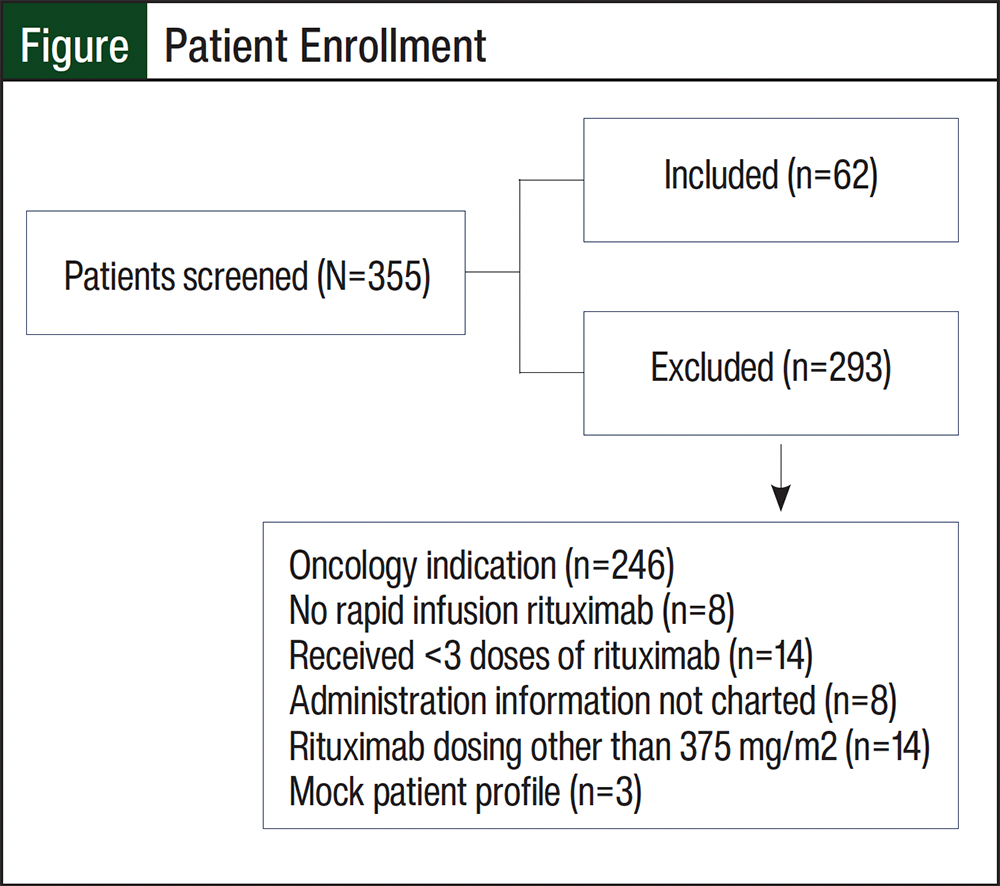
This study compared the incidence and severity of HSRs after the administration of rapid rituximab between the historical data and UofL Health (experimental group). Historical data were used as a control arm to ensure the safety of administering rituximab at rapid infusion rates at UofL Health. The Figure provides a reference for the study consort diagram. The time-savings reflected the difference between the nonrapid (ie, standard) and rapid rituximab infusion chair time.
The primary outcome was the incidence of grade 3 or 4 HSRs according to Common Terminology Criteria for Adverse Events (CTCAE) version 5.0 for the first 2 rapid rituximab infusion doses. The management of grade 3 or 4 HSRs, grade 3 or 4 HSRs reactions requiring hospitalization, and grade 3 or 4 HSRs resulting in treatment discontinuation were also assessed. The secondary outcomes included the incidence of grade 1 or 2 HSRs for the first 2 rapid rituximab infusions, the percentage of patients who completed their planned rapid infusion rituximab doses even if they had an HSR, and the associated time-savings with subsequent rapid rituximab infusions. The time-savings were calculated as the difference in infusion duration between the nonrapid and rapid rituximab administrations. The incidence of inadequate premedication administration was determined by omission of an antipyretic, histamine 1 receptor antagonist, or corticosteroid. Specifically, the institutional policy at UofL Health requires premedication with acetaminophen, diphenhydramine, and dexamethasone or methylprednisolone. Although rituximab is usually ordered through a standardized treatment plan, deviations in premedication may have occurred at the provider’s discretion. The frequency of hepatitis B reactivation and PML were also evaluated after the initiation of rapid rituximab infusion to the present day.
Statistical Analysis
Continuous variables are presented with descriptive statistics (mean, median, standard deviation, range), and categorical variables are presented by frequency distributions (frequency counts and percentages).
Results
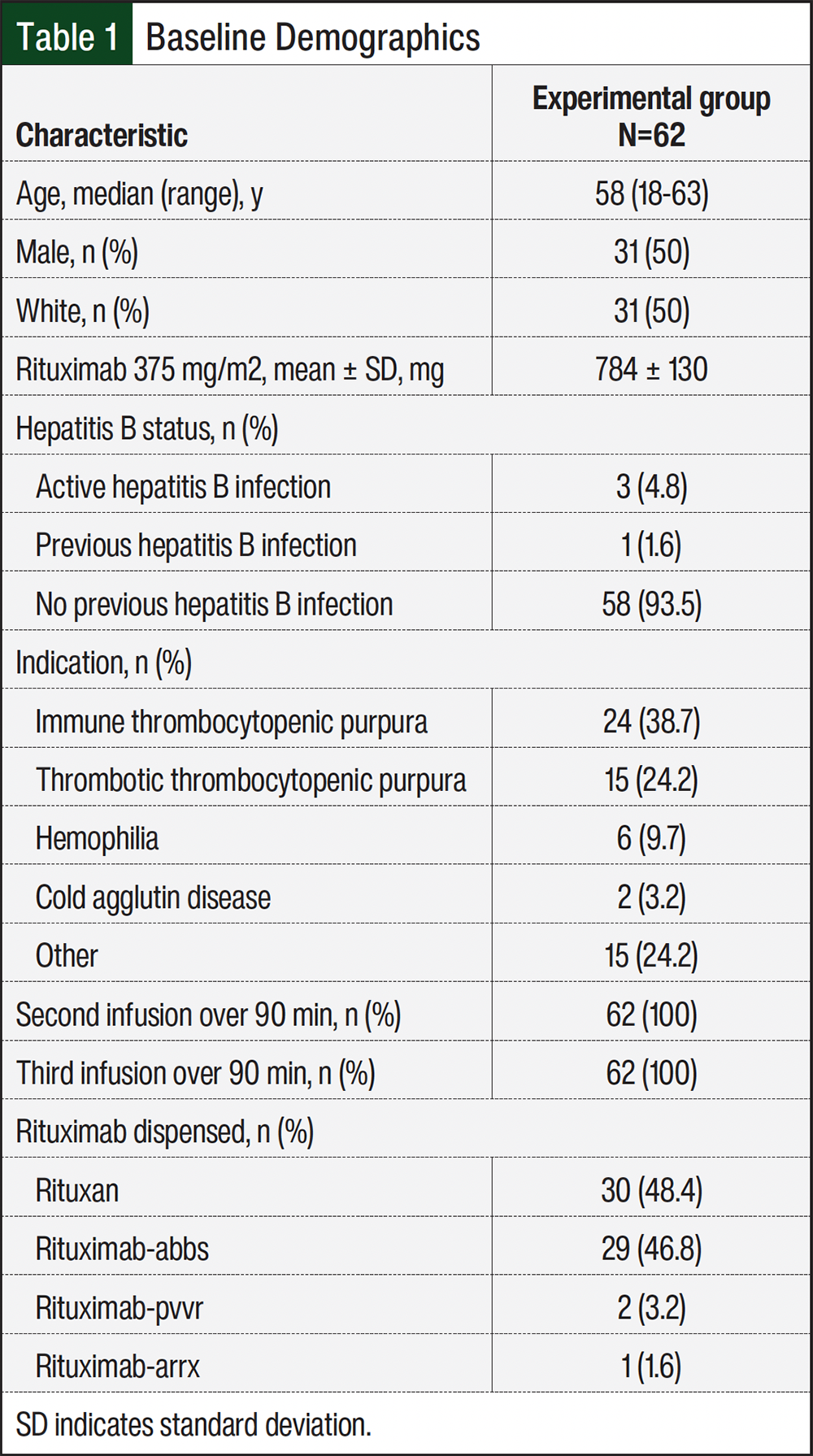
From May 2016 through June 2024, a total of 355 patients were screened for study inclusion. A total of 62 patients were included in the final analysis. The most common reasons for study exclusion were oncology indications and nonrapid rituximab infusion (Figure). Patients across inpatient and outpatient facilities within UofL Health, including UofL Hospital and Brown Cancer Center locations, were included in the study population. The median age of the patients was 58 years (range, 18-63 years), and 50% of the patients were men and 50% were White. The mean rituximab dose was 784 mg (±130 mg). Most (93.5%) patients did not have hepatitis B infection before the administration of rituximab. The rituximab-related indications included immune thrombocytopenic purpura (38.7%), thrombotic thrombocytopenic purpura (24.2%), acquired hemophilia (9.7%), and cold agglutin disease (3.2%). The less common indications were pancytopenia, monoclonal gammopathy of undetermined significance, lupus nephritis, membranous nephropathy, and warm autoimmune hemolytic anemia (24.2%). All patients received the second and third rituximab infusions over 90 minutes, with most patients receiving brand-name Rituxan or UofL Health’s formulary biosimilar, rituximab-abbs (Table 1).
There were no grade 3 or 4 HSRs in our cohort with the first 2 rapid rituximab doses, which was comparable with the historical data (Table 2). Grade 1 or 2 HSRs with the first 2 rapid rituximab doses occurred in 3.2% of the UofL Health population, which was significantly lower than the incidence rate of 17.5% in the historical data cohort (Table 2). The HSRs were graded retrospectively by the investigator performing the chart review using CTCAE version 5.0 under “infusion-related reaction.” The nursing staff was required to document a clinical note in the electronic medical record for any observed HSR, which included relevant details necessary for grading. Additional documentation, including subsequent providers’ notes and medication administration record entries, was reviewed to support and confirm reaction severity.
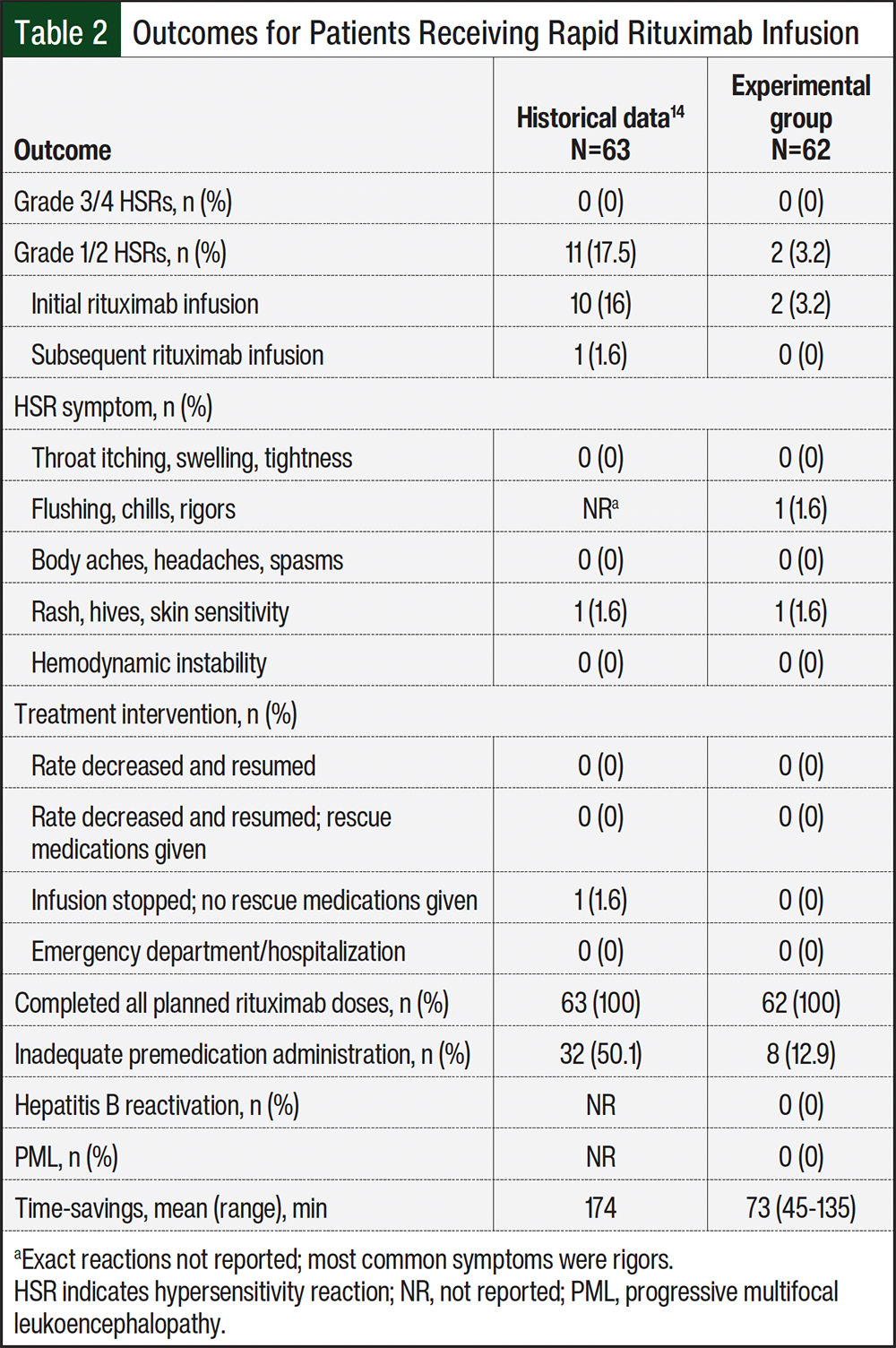
All reactions in our cohort occurred with the initial rituximab infusion. The historical data were similar to our results, with 16% of reactions occurring during the initial infusion and only 1.6% occurring during the subsequent infusion. Among patients who had an HSR in our cohort, the most common symptoms were flushing, chills, and rigors (1.6%), as well as rash, hives, and skin sensitivity (1.6%). In general, this pattern was consistent with the historical population, although the exact symptoms were not consistently documented. In the historical data, rigors was the most common symptom. Throat itching, swelling, tightness, body aches, headaches, spasms, and hemodynamic instability did not occur in either group (Table 2).
Although treatment interventions related to HSRs were limited in both groups, key differences were observed (Table 2). Although the historical data cohort had more grade 1 or 2 HSRs during the initial rituximab infusion, most patients did not have treatment interventions. There was 1 documented intervention for an HSR during a subsequent infusion, which was managed with a reduced infusion rate and eventual discontinuation of the infusion. In contrast, all HSRs in the experimental group (3.2%) occurred during the initial nonrapid infusion and required a reduced infusion rate and administration of rescue medications. None of the patients in either group required emergency department evaluation or hospitalization as a result of HSRs, as shown in Table 2.
All patients in both groups completed all planned rituximab doses (Table 2). Inadequate premedication administration occurred in 8 (12.9%) patients at UofL Health compared with 50.1% of patients in the historical arm. There were no cases of hepatitis B reactivation or PML in the experimental group; these outcomes were not reported in the historical group. Administering rituximab as a rapid infusion over 90 minutes yields an average time-savings of 73 minutes (range, 45-135 minutes) per infusion at UofL Health compared with 174 minutes in the historical arm (Table 2).
Discussion
This study assessed the incidence and severity of HSRs in patients who received rapid rituximab infusions for classical hematology indications. Previous studies have assessed subsequent rapid rituximab infusions over ≤90 minutes in malignant hematology indications after tolerating an initial dose of rituximab.5-11
The data for classical hematology indications are limited to studies focused on small populations of pediatric patients and adults.12-14 This study’s findings contribute to the existing body of knowledge by addressing a significant gap in the historical data regarding the safety of administering rituximab at rapid rates in classical hematology indications, including the incidence of HSRs, adequate premedication administration, frequency of hepatitis B reactivation and PML, and associated time-savings.
Regarding the primary outcome, none of the patients had a grade 3 or 4 HSR at UofL Health, which correlates to the historical comparator arm. Although 2 (3.2%) patients had a grade 1 or 2 HSR, it only occurred during the initial titratable infusion rather than the subsequent rapid infusion. The incidence of HSR in our study was much lower compared with the historical data, in which 11 (17.5%) patients had a grade 1 or 2 HSR.14 The 2 patients who had reactions during the initial rituximab infusion completed all subsequent infusions without issue. The symptoms during HSRs in the study cohort differed from those in the literature. In the study cohort, the most common symptoms were cutaneous reactions, flushing, chills, or rigors (Table 2), whereas abdominal pain, fever, and sore throat were most commonly reported in previous literature.6 Although the sample sizes in each arm were similar, both had small sample sizes which could have influenced the incidence of reactions, particularly with the historical control group.14 The findings from this study are largely consistent with the data in malignant oncology populations, although the incidence of overall infusion reactions was much lower at UofL Health.4 This disparity could be a result of a small sample size, the administration of appropriate premedications, or the potential nature of the malignancy itself, including an increased risk for tumor lysis syndrome or high lymphocyte count, although limited data exist regarding disease-related factors and HSRs.3,16
Premedication administration varied significantly between the historical and experimental groups. Patients in both groups received acetaminophen, diphenhydramine, and dexamethasone, although all 3 medications were more frequently given at UofL Health than in the historical group. Although this approach is not universally adopted at other institutions, our institution includes dexamethasone as part of the premedication regimen for rituximab. This practice was extrapolated from rheumatoid arthritis indications described in the PI and extended to other nonmalignant indications requiring rituximab. Inappropriate premedication administration occurred in 12.9% of patients at UofL health compared with 50.1% in the historical population.14 This may be attributable to several factors, including provider discretion based on patient characteristics and anticipated tolerability, the low risk for HSRs among patients with previous rituximab tolerance, and concerns regarding steroid-related AEs or contraindications. In the historical group, 1 patient had an HSR to the subsequent rituximab infusion and had received appropriate premedications. There were no data on premedication administrations in patients who had a reaction after receiving the initial infusion.14
At UofL Health, one of the patients who had an HSR did not receive dexamethasone as a premedication, whereas the other patient received all appropriate premedications. Given that 75% of cases with inadequate premedication were not associated with an HSR, inadequate premedication cannot be definitively associated with an increased risk for HSRs during rapid rituximab infusion. A higher rate of incomplete premedication administration may have led to more HSRs in the historical arm, although this cannot be definitively concluded.
Rapid administration of rituximab also yielded time-savings among both groups, with an average of 174 minutes with historical data and 73 minutes at UofL Health.14 It should be noted that the time-savings with the rapid rituximab infusion was compared with the initial infusion rate in the historical data, and it was compared with the subsequent infusion rate in the study cohort. Although this likely contributed to the stark difference between the groups, it is still evident that rapid rituximab infusion is associated with significant time-savings. Time-savings results in reduced chair time for patients, potential resource-savings and cost-savings with decreased facility and nursing costs per hour of chair time, decreased workload, and increased efficiency in the healthcare system.
Limitations
Although this study provides valuable insights into the safety of administering rapid rituximab in classical hematology indications, some limitations should be considered when interpreting the results. This was a retrospective, single-center study, which relied on accurate documentation in the electronic medical record. Incomplete or inaccurate records may have influenced the findings, because certain data points may not have been fully captured. Because of the low incidence of HSRs in this study, the ability to identify risk factors for more significant grade 3 or 4 reactions in these patients with nonmalignant conditions is limited.
Another important limitation is the relatively small sample population, which may be more difficult to extrapolate to the general population. Although most patients were excluded because they had oncology indications, some patients did not receive any rapid rituximab infusions as a result of physician preference (N=4), previous anaphylactic reaction (N=1), and inpatient administration for a classical hematology indication (N=3), which was considered ineligible per the health system protocol.
Despite these limitations, this study adds to the limited evidence regarding the safety of administering subsequent rituximab infusions over 90 minutes in classical hematology indications. From this evidence, as well as numerous studies and a medication use evaluation conducted at UofL Health, our facility has recently transitioned to the administration of all subsequent rituximab infusions over 60 minutes, regardless of the indication.8-11 Previous studies that evaluated subsequent rituximab infusions administered over 30 to 60 minutes reported only grade 1 or 2 HSRs.8-11 In the medication use evaluation at our facility, HSRs occurred in 19% of the first infusions compared with 4% of the second or third infusions; notably, 67% of patients who had an HSR during a later infusion also had a reaction after receiving the initial dose of rituximab. All reactions were grade 1 or 2.
Collectively, these findings indicated that rituximab-associated HSRs were usually mild and occurred most frequently during the first infusion, which could be predictive of tolerance to subsequent doses. Rituximab is well tolerated since the recent implementation of the shorter infusion time, although this could be a point of interest to assess as more patients receive 60-minute infusions. Moving to shorter subsequent infusion times yields further substantial time-savings for patients and outpatient infusion centers.
Conclusion
Subsequent rapid rituximab infusions over 90 minutes can be safely administered in classical hematology indications in addition to the established safety for malignant hematology indications. This practice reduces chair time, conserves resources, and adds cost-savings, thus increasing the health system’s efficiency. Future research should aim to evaluate the safety of administering rapid infusion rituximab over 30 to 60 minutes for classical hematology indications, particularly in larger clinical settings and with varying dosing strategies, such as the frequently used 1000-mg flat dose in the excluded population. Furthermore, identifying factors that may predispose patients to infusion reactions would provide important insights for improving safety outcomes and management strategies.
Disclosure Statement
Dr Robertson, Dr Dawson, Dr Burd, Dr Figg, and Dr Volz have no disclosures to report.
References
- Ghrenassia E, Mariotte E, Azoulay E. Rituximab-related severe toxicity. Annual Update in Intensive Care and Emergency Medicine. 2018;579-596. doi:10.1007/978-3-319-73670-9_43
- Fouda GE, Bavbek S. Rituximab hypersensitivity: from clinical presentation to management. Front Pharmacol. 2020;11:572863. doi:10.3389/fphar.2020.572863
- Levin AS, Otani IM, Lax T, et al. Reactions to rituximab in an outpatient infusion center: a 5-year review. J Allergy Clin Immunol Pract. 2017;5:107-113. doi:10.1016/j.jaip.2016.06.022
- Rituxan (rituximab) injection, for intravenous use [prescribing information]. Genentech, Inc; December 2021. Accessed June 1, 2026. www.accessdata.fda.gov/drugsatfda_docs/label/2021/103705s5467lbl.pdf
- Sehn LH, Donaldson J, Filewich A, et al. Rapid infusion rituximab in combination with corticosteroid-containing chemotherapy or as maintenance therapy is well tolerated and can safely be delivered in the community setting. Blood. 2007;109:4171-4173. doi:10.1182/blood-2006-11-059469
- Salar A, Casao D, Cervera M, et al. Rapid infusion of rituximab with or without steroid-containing chemotherapy: 1-yr experience in a single institution. Eur J Haematol. 2006;77:338-340. doi:10.1111/j.1600-0609.2006.00713.x
- Arredondo-Garza T, Majluf-Cruz A, Vela-Ojeda J, et al. Peri-infusional adverse reactions to rituximab in patients with non-Hodgkin’s lymphoma. Arch Med Res. 2013;44:549-554. doi:10.1016/j.arcmed.2013.09.011
- Wahlin BE, Rådman T, Ljungqvist M, Sonnevi K. Rituximab infusion in 30 minutes’ is safe and improves the flow of outpatients with lymphoma treatment (SPEEDR). Blood. 2022;140(suppl 1):10790. doi:10.1182/blood-2022-160028
- Pérez-Persona E, Cuevas Palomares L, Unamunzaga Cilaurren A, et al. Ultrafast 30-min infusion of a rituximab biosimilar (Truxima). Eur J Haematol. 2023;4:1196-1199. doi:10.1002/jha2.812
- Dotson E, Crawford B, Phillips G, Jones J. Sixty-minute infusion rituximab protocol allows for safe and efficient workflow. Support Care Cancer. 2016;24:1125-1129. doi:10.1007/s00520-015-2869-4
- Tuthill M, Crook T, Corbet T, et al. Rapid infusion of rituximab over 60 min. Eur J Haematol. 2009;82:322-325. doi:10.1111/j.1600-0609.2009.01215.x
- Legeay C, Spiesser-Robelet L, Bittencourt H, et al. Rapid infusion of rituximab in a heterogenous pediatric population: safety and feasibility. J Pediatr Hematol Oncol. 2016;38:83-85. doi:10.1097/MPH.0000000000000480
- Wallace G, Myers KC, Davies SM, et al. Rapid rituximab infusion is safe in paediatric and young adult patients with non-malignant indications. Br J Haematol. 2016;173:480-481. doi:10.1111/bjh.13604
- Ursu SG, Rinchuse DL, Lister J. Rapid rituximab infusion is safe and well tolerated in malignant and benign disease. J Oncol Pharm Pract. 2021;27:1919-1922. doi:10.1177/1078155220978450
- D’Arena G, Simeon V, Laurenti L, et al. Adverse drug reactions after intravenous rituximab infusion are more common in hematologic malignancies than in autoimmune disorders and can be predicted by the combination of few clinical and laboratory parameters: results from a retrospective, multicenter study of 374 patients. Leuk Lymphoma. 2017;58:2633-2641. doi:10.1080/10428194.2017.1306648
- Kowalski KE, Adams CB, Voils SA, Wheeler SE. Use of patient and disease characteristics as predictive indicators of rituximab infusion-related reactions in adult malignant hematology patients at an academic medical center. Clin Lymphoma Myeloma Leuk. 2019;19:723-728. doi:10.1016/j.clml.2019.08.001